Living with the Sea of the Hirakubo Peninsula, Ishigaki Island — The Skills and Culture Conveyed by the Traditional Wooden Boat “Sabani”
吉田友厚
Tomohiro Yoshida

Ishigaki [Okinawa]
Tomohiro Yoshida
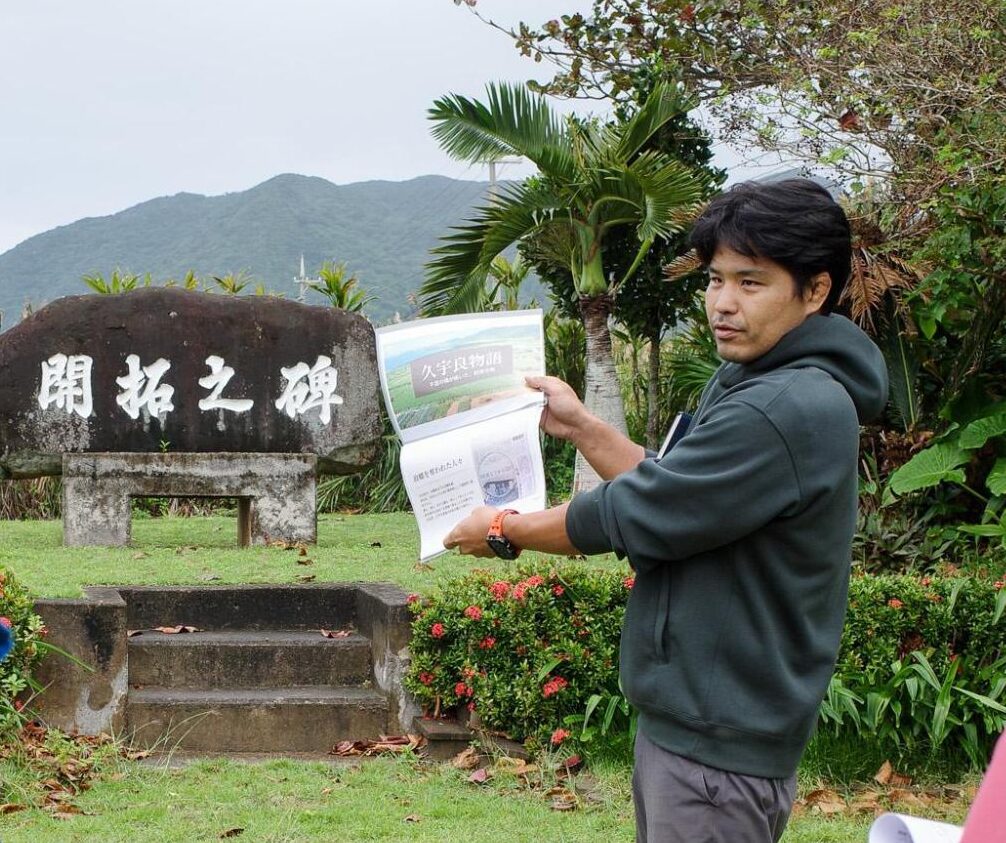
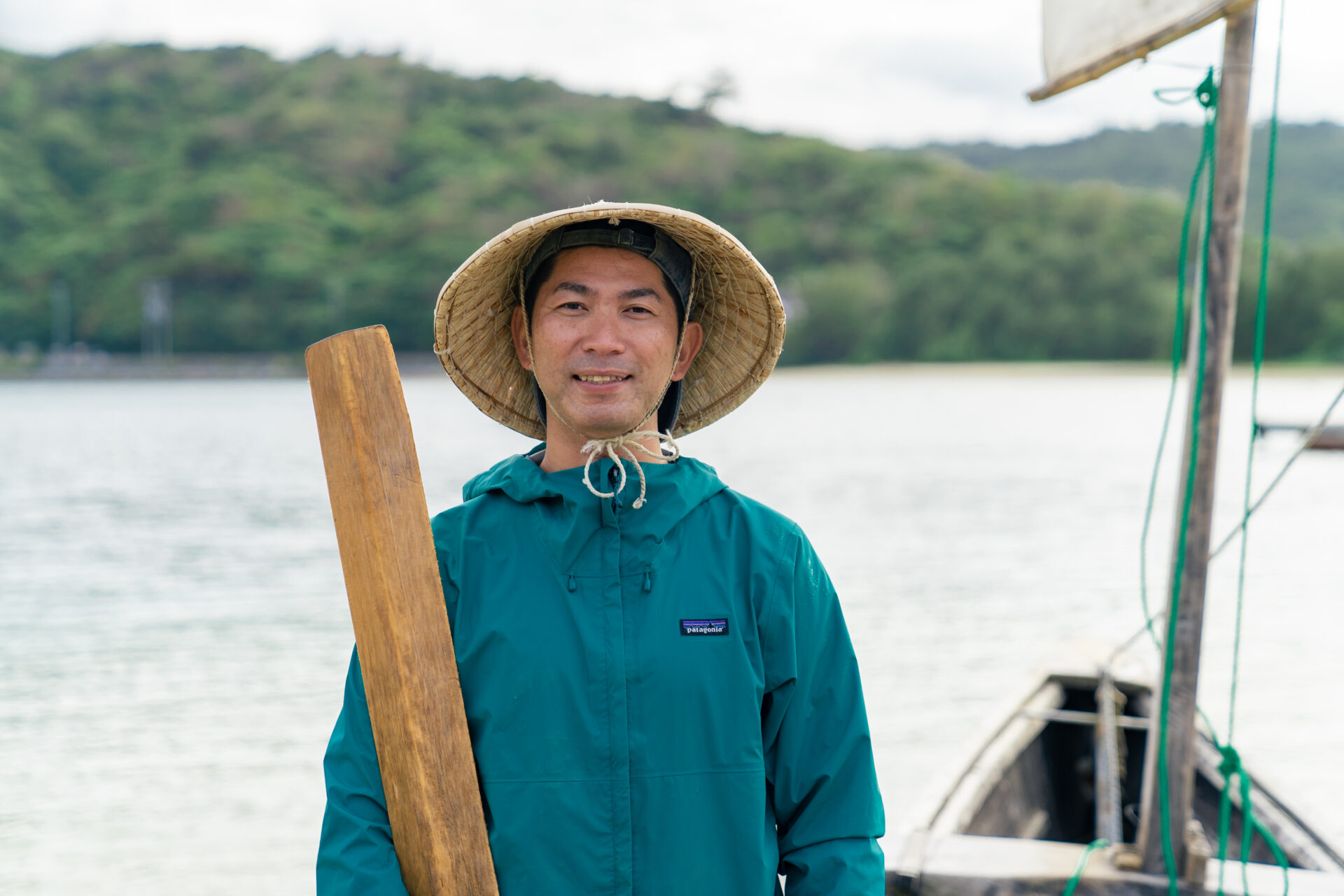
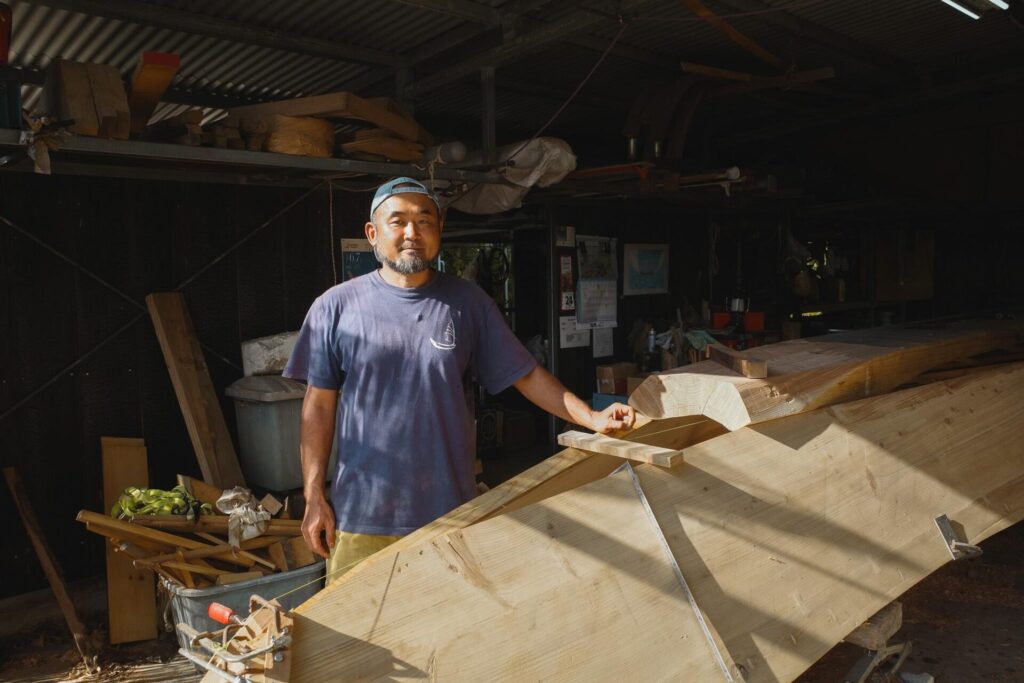
Born in Tokyo. Representative of Yoshida Sabani Shipbuilding. In the Kūra area of the Hirakubo Peninsula on Ishigaki Island, Okinawa, he runs a business building traditional wooden boats called sabani and conducts sightseeing tours using sabani. As the secretariat of the Hirakubo Peninsula Community Council, he is also engaged in activities to protect and nurture the region’s nature and culture.
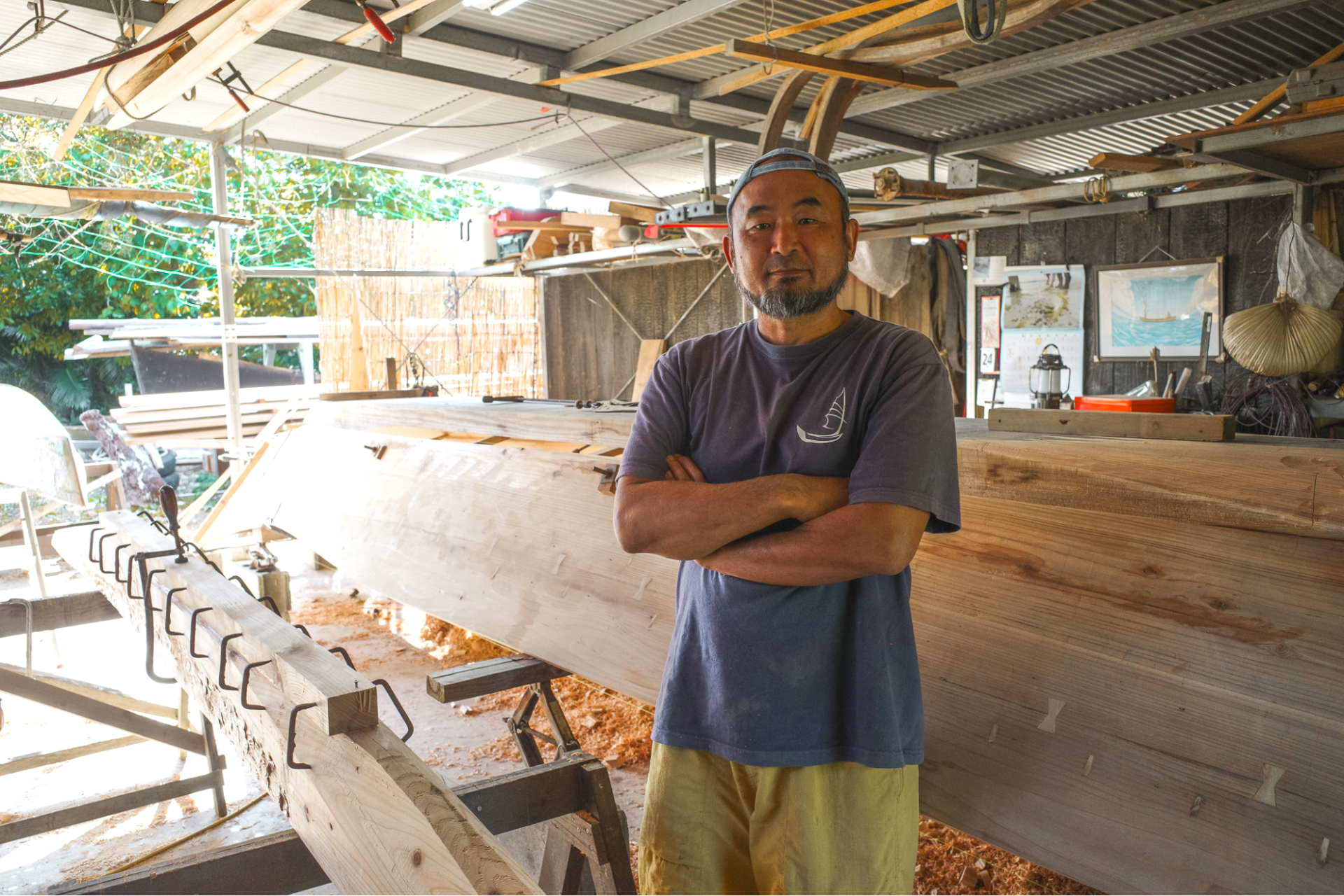
The Hirakubo Peninsula is located at the northern tip of Ishigaki Island in Okinawa Prefecture. It is a place where untouched nature remains strongly even within the island, with a beautiful transparent sea and coral reefs. Floating on that sea is Okinawa’s traditional wooden boat, the “sabani.” It is an old-style boat that moves forward while feeling the wind. There is a person who builds this sabani with his own hands and sends it out to the sea. It is Tomohiro Yoshida, who runs a shipbuilding business in a corner of the Hirakubo Peninsula and provides sabani tours. While cherishing the boat-building skills and approach to work inherited from his master, he conveys the appeal and culture of sabani to visitors to the island and to the younger generation.
Moving to Ishigaki Island and Encountering Sabani
Yoshida, who was born and raised in Tokyo, moved with his family to Ishigaki Island 21 years ago, saying that he “felt a limit to living in Tokyo.” In order to support his family, he engaged in various jobs such as civil engineering and farming, but none of them lasted long.
At that time, many migrants were living while doing various kinds of work. Amid this, Yoshida spent his days searching, wondering, “Is there any work that I can continue until the day I die?”
One day, he heard rumors of Yasuhiro Arashiro, a ship carpenter who makes sabani. The story was that he was going to quit his work due to old age. “When I heard that, for some reason I couldn’t sit still,” Yoshida says, and he immediately went to visit Arashiro. That was his encounter with his sabani master.
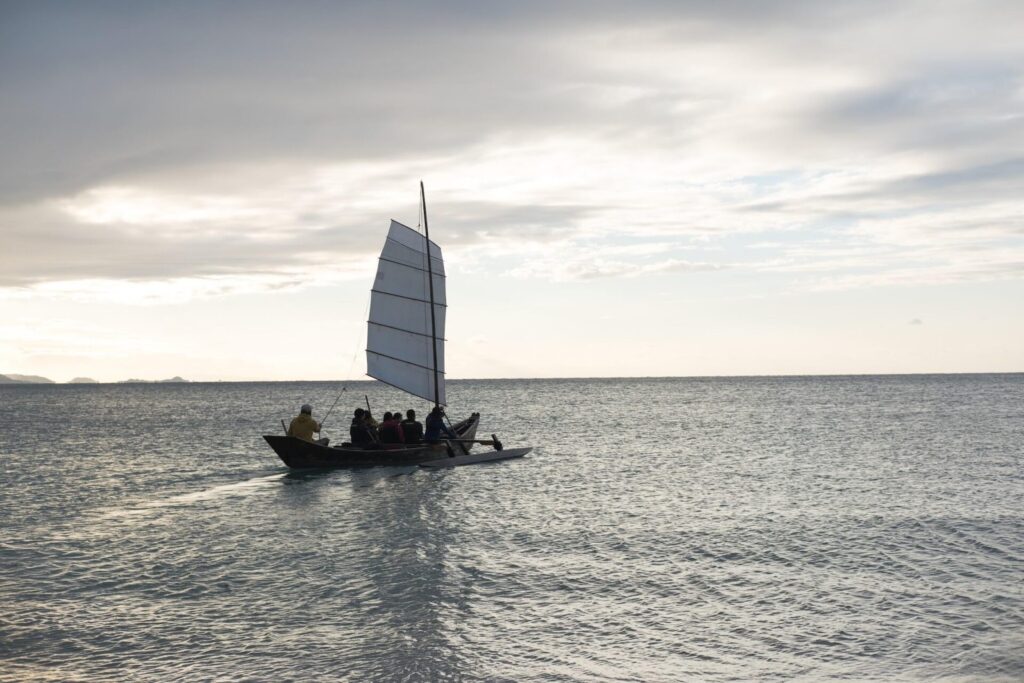
Sabani are traditional wooden boats of Okinawa, and in the past they were used for fishing and transporting goods such as rice. They are characterized by being made by joining many planks together to form a single boat, using a technique called hon-hagi, and assembled with fundō and bamboo nails. They are boats that combine a strong structure capable of withstanding ocean waves with a simple and flexible hull. However, in recent years, they are hardly used for fishing or transporting goods.
Lessons from the Master, the Work of a Ship Carpenter
“I didn’t want to do shipbuilding; I just wanted to own a boat for my own use. It’s cheaper to make one yourself than to buy one, right?” Yoshida says that he became interested in sabani as a boat to use for one of the jobs he was involved in at the time, light-diving fishing.
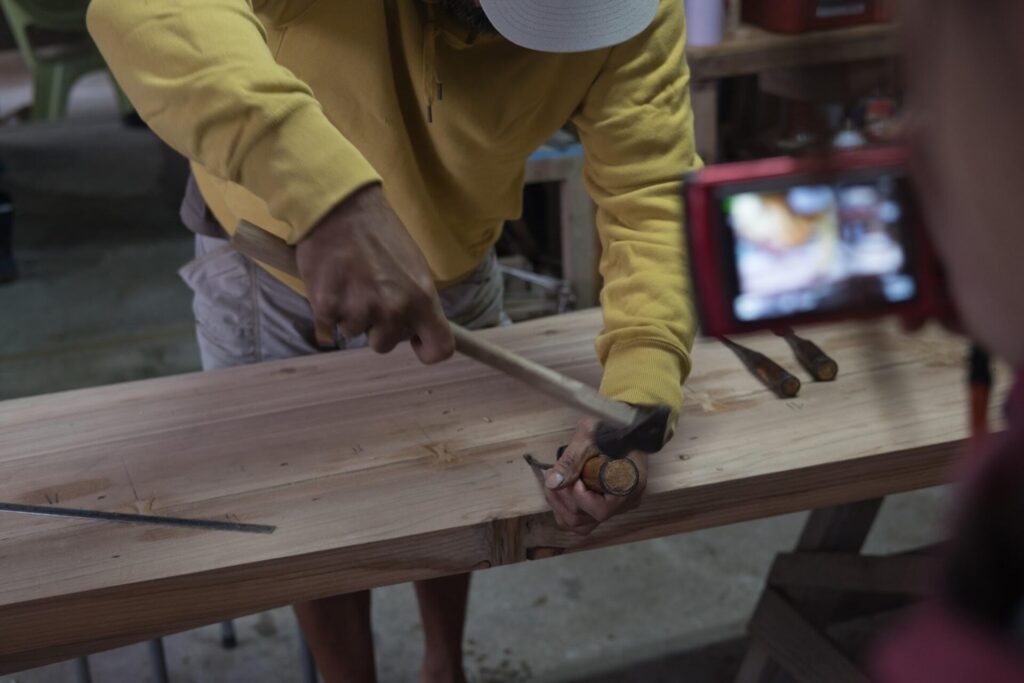
However, as he watched his master Arashiro at work, he gradually came to admire ship carpenters. “Making a living by building boats is really nice,” he thought.
Furthermore, he realized that the boat itself, the sabani, has a kind of charm that somehow stirs his own sense of joy. “If I put it in one word, it’s like a kind of romance engraved in Japanese people, I guess. Sabani is a boat that brings back the exciting feeling of going out into the open sea. Even if you’ve never ridden one before, you can instantly understand that feeling.”
He had loved the sea since childhood and also liked making things such as woodworking. Yoshida, with such a background, puts his self-made boat into the sea and rides it. “It’s incredibly exciting.” That one phrase seems to fully capture the appeal of sabani for Yoshida.
Arashiro was a master of few words. “If you want to live as a ship carpenter, first build three boats.” That was all he said at the beginning. “He was an old-fashioned craftsman who believed that ‘if you face your work, the answers will come.’” Yoshida looks back and says that he was not taught everything from one to ten, but rather was taught the very attitude toward work.
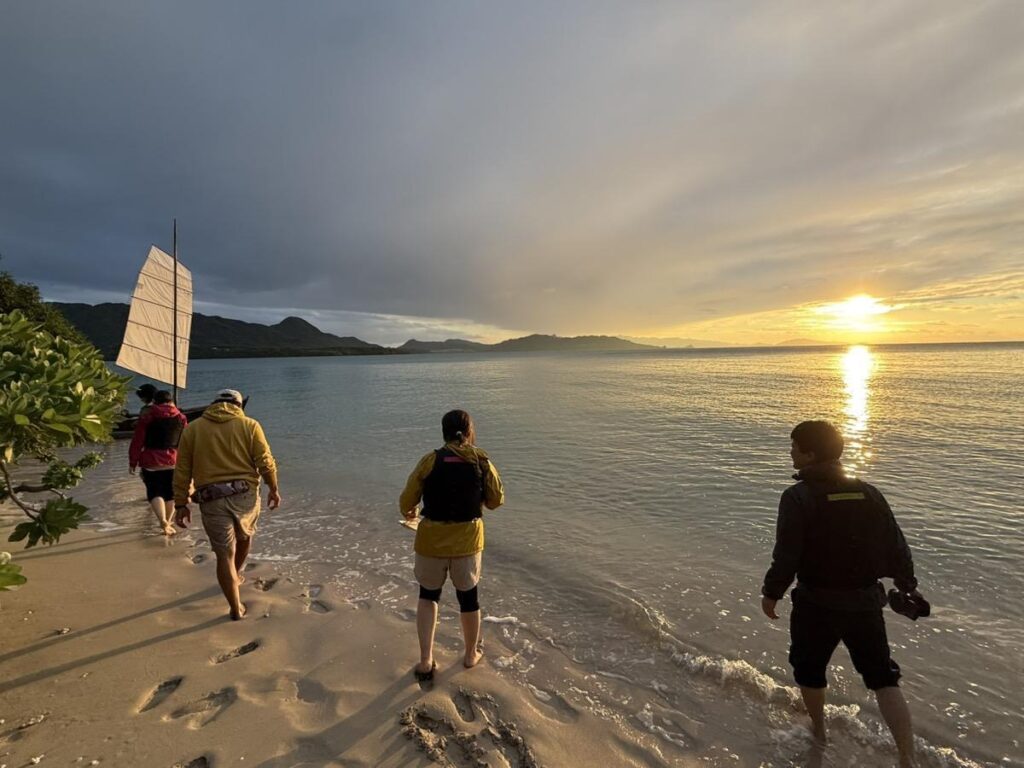
It has been about 13 years since Yoshida became involved in sabani shipbuilding. So far, he has built 30 boats with his own hands. However, even though it is said to be 30 boats, no two are the same. After learning the key points of the processes that cannot be omitted for a traditional boat, he set his own theme for each boat and worked on it. This is because the way of building changes slightly depending on the fishing method, fishing ground, and how the owner uses the boat. By accumulating small failures and trial and error, he has honed his skills as a ship carpenter.
“Arashiro was a master who was not afraid of failure. He left various failures in the form of boats. That’s why we don’t have to repeat the same mistakes. I wasn’t taught much face to face, but somehow, I always feel like I’m facing my master and being taught.”
No matter what job he had done, Yoshida had always approached it thinking, “I will make a living with this work.” “It just happened, but this job has lasted the longest. I guess there was some kind of connection,” he says, speaking with deep feeling about his encounter with sabani and his meeting with his master Arashiro.
Making Use of Built Sabani in the Tourism Industry
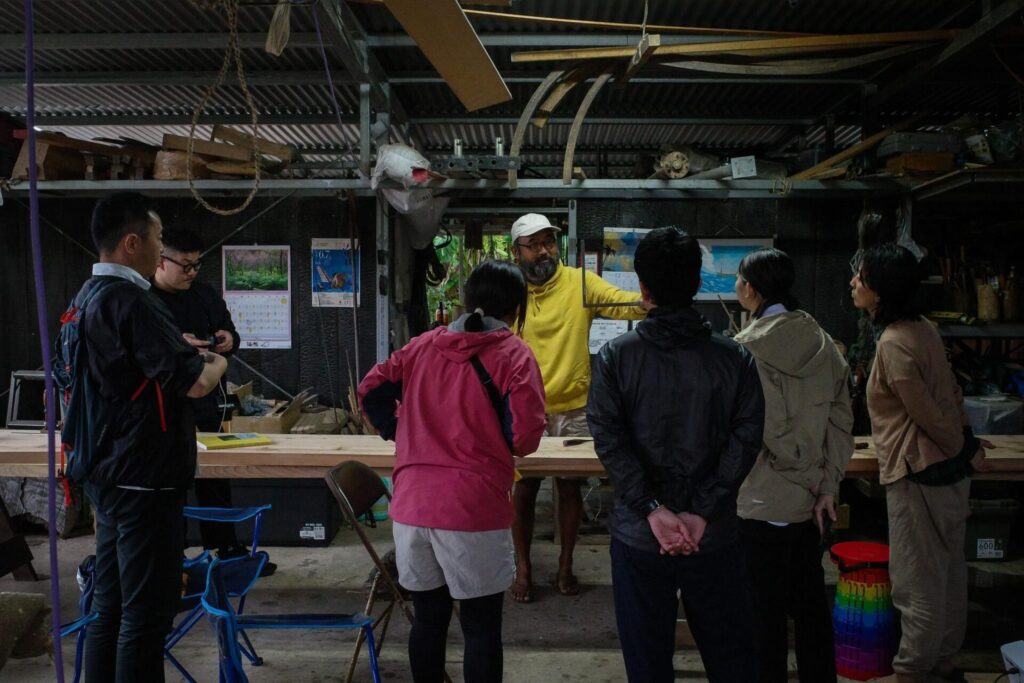
In addition to being a ship carpenter, Yoshida has another business. That is “sabani tours.” On the Yoshida Sabani Shipbuilding website, various programs are listed, such as tours where you ride a sabani to enjoy coral reefs and snorkeling, as well as sunset cruises. All of them are popular with customers from Japan and overseas.
“I started it right after launching the shipbuilding business. I built a shipyard, but I was asked, ‘Who is going to order boats?’ and I thought, that’s true.” In this way, he says he envisioned the business not only as building sabani, but also utilizing them to generate revenue.
The Hirakubo Peninsula where Yoshida lives is located at the northern tip of Ishigaki Island. It is about 50 minutes by car from the city area. It is a region with beautiful coral reefs and where the traditions and culture of the Uminchu (people of the sea) remain. In Yoshida’s words, it is “a place where untouched nature remains.” Based in the Kūra area of the Hirakubo Peninsula, Yoshida runs his business.
At that time, there were almost no businesses on Ishigaki Island offering tours using sabani. In such a situation, the Hirakubo Peninsula, rich in coral reefs, itself becomes a strength in having sabani. It was featured in newspapers and other media, and the response was favorable. There was a period when the number of visitors decreased due to the COVID-19 pandemic, but Yoshida’s business has been gradually growing.
“Maybe because I’m a ship carpenter, many of the customers who come to me are professionals. People involved in shipbuilding or temple carpentry. Of course, there are also families with small children and customers from overseas.”
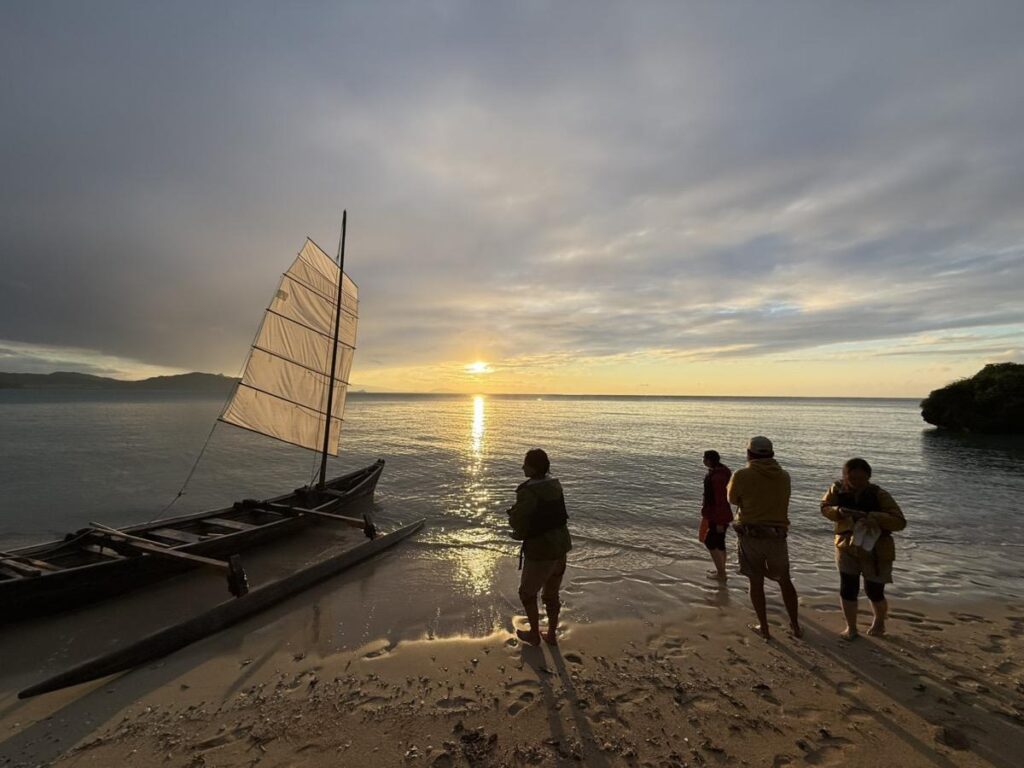
Recently, the number of businesses offering sabani tours has also been increasing.
“Some people question the increase in competitors, but for me, this business started from the idea that I just want to keep building boats until the day I die, so I hope that people who come after will realize, ‘You can do this kind of thing with sabani,’ and that boat orders will increase even more.”
“I run a tourism business, but rather than wanting it to become a widely developed tourist spot, I would be happy if people who like quiet places come, and if I can make a living from that.”
The appeal of this place lies in the untouched nature. Yoshida values that above all else.
What Does He Want to Pass On to the Future?
What is it that Yoshida wants to pass on to the future? We asked from two perspectives: as a ship carpenter and as a tour operator.
“As a ship carpenter, I intend to teach all the skills I have each time without holding anything back.”
Yoshida holds workshops and conveys techniques to the younger generation who are interested in sabani. What he values at that time is “whether the person truly wants to make it.” In fact, many people are interested in sabani, but surprisingly few can clearly say, “I want to make it.” People who think they want to make it but believe they cannot do it do not become Yoshida’s apprentices.
In the past, when his master Arashiro asked him, “Do you want to try making it?” Yoshida answered, “I want to make it.” Only those whose feelings are clear remain until the end. If you want to make it, you can make it through. Being a ship carpenter, in the end, is that kind of work.
Currently, demand for sabani is increasing, and Yoshida Sabani Shipbuilding continues to have a waiting period of two to three years from order. “I think it would be good if there were about ten ship carpenters on the island, making around one hundred boats a year. For that, rather than expanding my own business scale, it is better to nurture people. I think that would also be more interesting for the region,” he says, describing his ideal.
On the other hand, younger generations are also growing in the tour business. For example, people whose grandfathers used sabani for fishing, or people who had completely different jobs on the island. Such people begin to be involved with sabani again in an attempt to reconnect with their roots, and tour businesses are being launched both inside and outside the prefecture.
“We are still halfway there, but I feel that what I am doing to pass on this culture is not wrong. I have that kind of sense of certainty.”
From these thoughts, Yoshida hopes that the people involved can “have a life they can enjoy.” “A future where culture remains while being enjoyed—that is the most dream-like vision.”
The feeling of excitement and uplift in the chest when going out to sea on a sabani for the first time. What Yoshida wants to pass on to the future is that worldview.