

From a Shinto Priest’s Side Work to a 300-Year-Old Kiln — Hongo Ware, a Culture Nurtured by the Nature of Aizu
宗像利訓
Toshinori Munakata

Aizu [Fukushima]
Toshinori Munakata
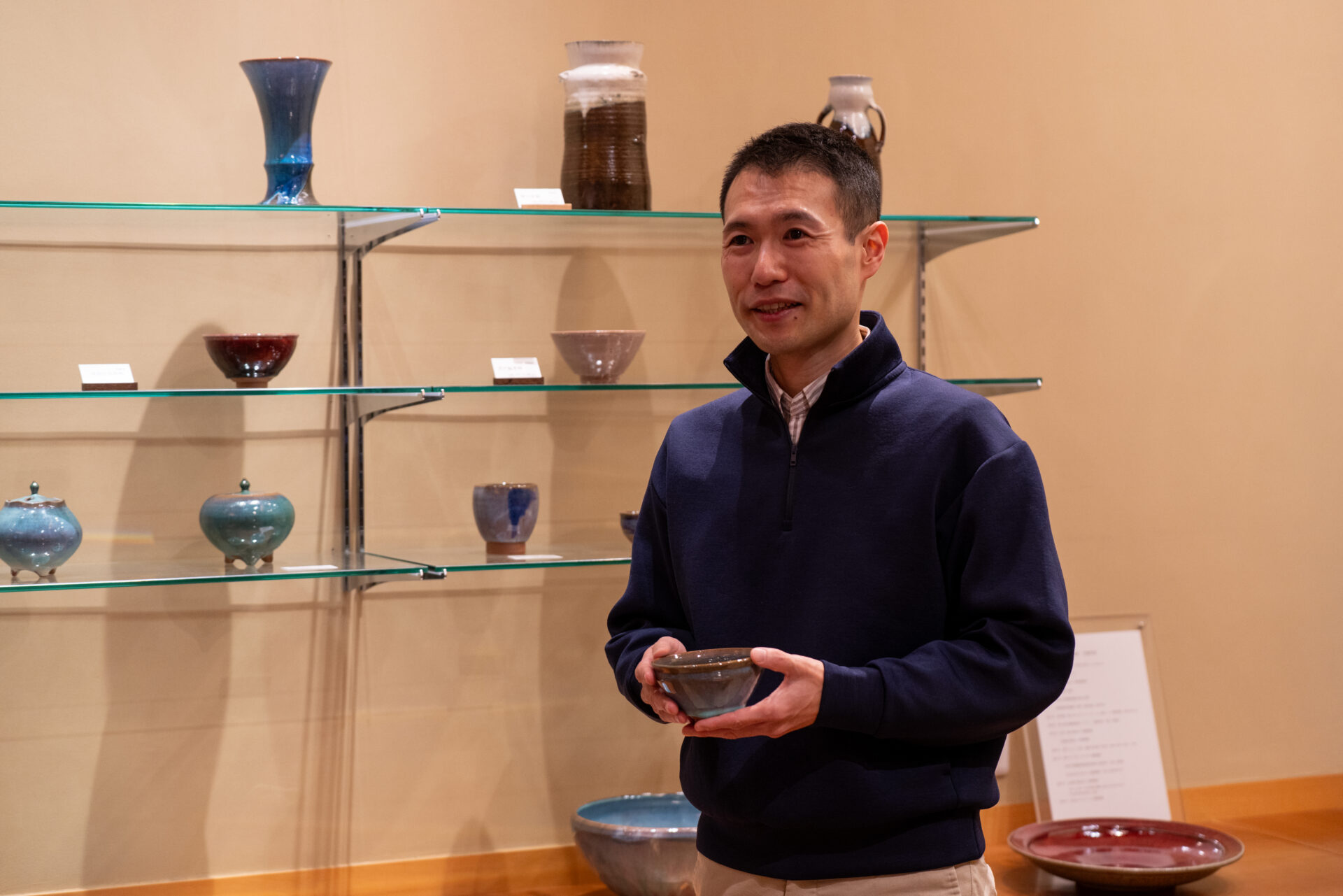
Born in Aizumisato Town, Fukushima Prefecture. After studying at the Kyoto Traditional Arts Super College, he trained for two years at a kiln in Shimane. He is the ninth-generation head of Munakata-gama, a kiln with a history of more than 300 years. Together with his father, Toshihiro, the eighth-generation head, he continues to devote himself to pottery. He also developed Suisai-yu, a glaze inspired by the natural landscape of Aizu.
Aizu-Hongo is a pottery village. At its peak, more than 100 kilns once lined its streets, but today only a little over a dozen remain. In the midst of such a difficult environment, Munakata-gama has continued its history for more than 300 years.
What does it mean to inherit tradition, and what does it mean to live as a craftsperson in one’s own right? We spoke in depth with Toshinori Munakata, the kiln’s ninth-generation head.
Pottery Begun by a Shinto Priest — Suisai-yu, a Glaze That Captures Spring in a Snow Country
Nestled as if embraced by the slopes of Mukaihaguroyama Castle, the village of Aizu-Hongo stretches out quietly below. Within that tranquil landscape stands Munakata-gama, a kiln with more than three centuries of history.
“Oainahansho,” a warm phrase in the Aizu dialect meaning, “Please, come in.”
Stepping through the noren curtain bearing those words, one enters a space filled with an air so soft it seems to make the cold outside disappear. Arranged inside are vessels in deep indigo and pale green tones reminiscent of melted snow. They seem to carry, beyond the category of simple tableware, something almost sacred in their presence.
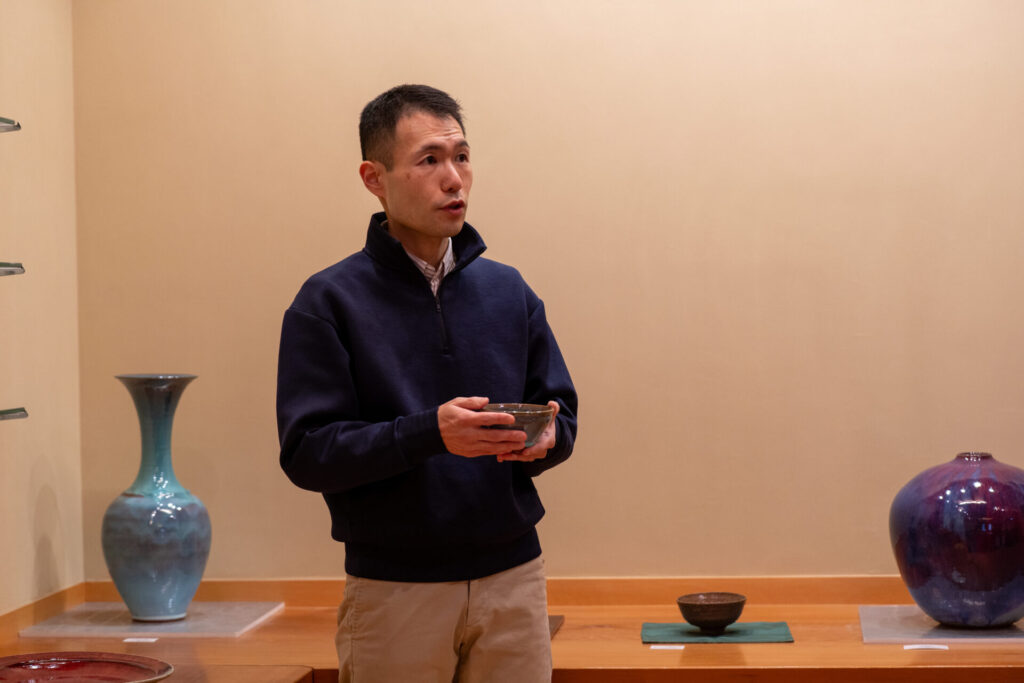
The person who welcomes us is Toshinori Munakata, the ninth-generation head of the kiln. His gentle manner and carefully chosen words seem, quietly, to reflect the fact that this kiln has its roots in Shinto priesthood.
The history of Munakata-gama dates back to 1719, in the mid-Edo period. Yet the reason the Munakata family first came to Aizu was not pottery.
“Originally, they were Shinto priests sent from Munakata Taisha in Fukuoka Prefecture.”
They came to Aizu for missionary work, and while carrying out their duties as priests, they began making pottery on the side.
“As times changed, pottery gradually became the family’s main work. I’m the ninth generation.”
Just as some samurai laid down their swords and took up clay, here was another path: priests who served the gods while also tending flame and earth. It is an episode that symbolizes the diversity of Aizu-Hongo ware itself. Even today, the Munakata family remains connected to the local shrine community, carefully preserving festivals and rituals.
“There may not be any direct trace of priestly work in what we do now, but perhaps we are still connected in a spiritual sense.”
Respecting the earth, fearing the fire, and shaping the gifts of nature—perhaps pottery itself resembles a kind of prayer. The dignified presence of Munakata-gama’s vessels may well arise from that unbroken spirit.
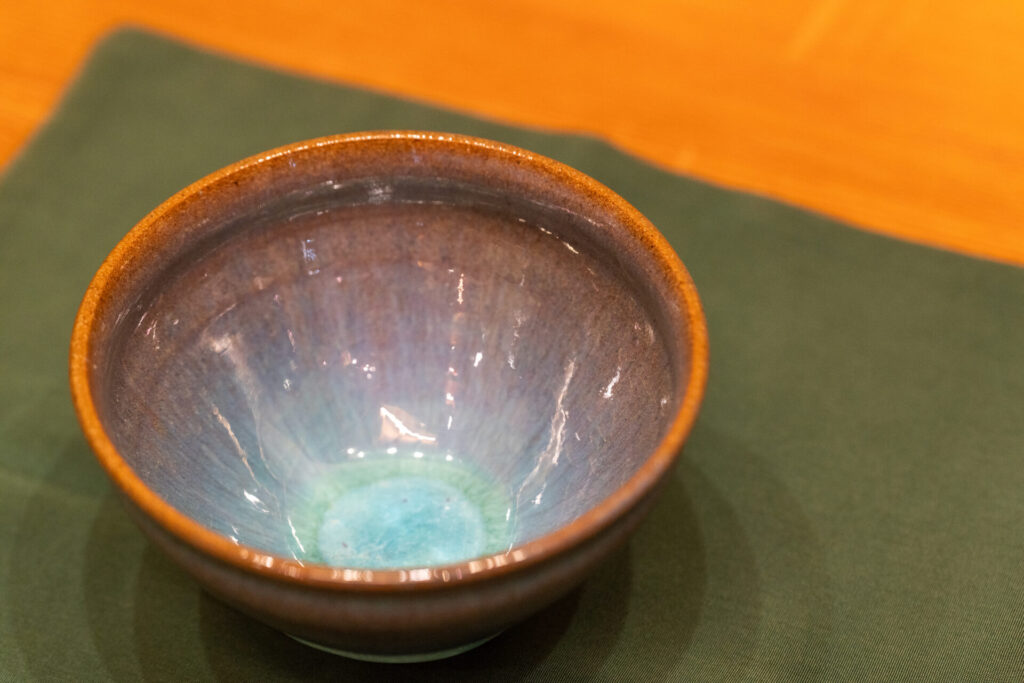
Munakata-gama is known for its weighty works in deep indigo and purple. Yet what Munakata himself created stands in striking contrast: a pale, translucent world of green. He named this glaze Suisai-yu.
“When I returned to Aizu after finishing my training, I was struck all over again by the beauty of the local landscape.”
What he saw, after studying in Kyoto and training in Shimane, was the overflowing joy of spring that arrives after a long, severe winter.
“With the melting of the snow, fresh green shoots appear all at once. Their brightness, their vitality—I wanted to express that special kind of spring emotion unique to a snow country through pottery.”
The character sui comes from the word for jade-green, and sai means color. To create this beautiful glaze, Munakata went through repeated trial and error. Its base is natural ash made from local plant material. Unlike commercially refined ash, it is chemically uneven and difficult to control, but that difficulty allows for deeper, more complex colors.
“First I apply a white glaze, and then I pour over it a mixed green glaze. It’s a technique of layered glazing.”
To apply two unstable glazes on top of each other is, in a way, like gambling—one cannot predict exactly what will happen inside the kiln.
“Every firing feels like an experiment, like dealing with a living thing.”
Yet when it succeeds, the result is a dreamlike gradation, as if trees were emerging through mist. It is, unmistakably, the spring of Aizu itself.
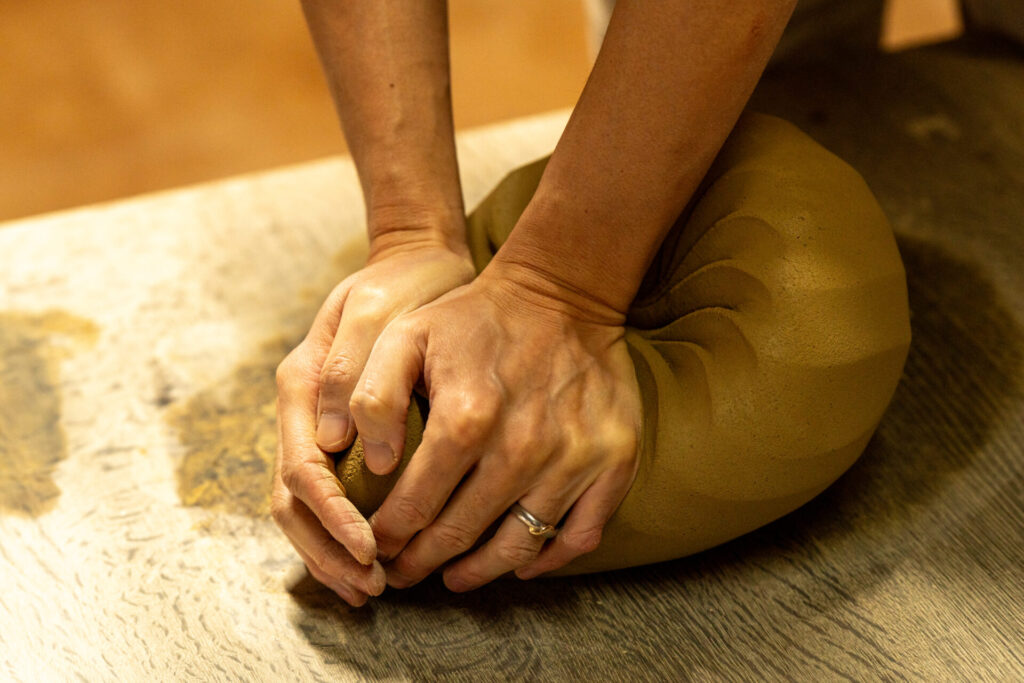
Another of Munakata-gama’s core commitments lies in its clay. The kiln continues to use local clay known as Matoba todo.
“It comes from an area called Matoba near Mukaihaguroyama Castle, which is said to have once been an archery practice ground.”
His ancestors, three centuries ago, must have dug clay from that very same place and breathed in its scent. The memory of that soil now continues into present-day vessels through the fingertips of the ninth generation.
At the back of the workshop stands a grand climbing kiln. Repaired after the earthquake, this large kiln used to be fired once every two years, with wood fed into it continuously for three days and nights in shifts.
“A climbing kiln creates beautiful effects—ashes from the wood settle on the surfaces and form unique textures and scenery.”
And yet, today, the main kiln used for Munakata’s work is a gas kiln. This is not simply because securing firewood and labor is difficult.
“For subtle color variations and delicate gradations like those in my Suisai-yu, a gas kiln is easier to control in terms of temperature and oxidation or reduction.”
He does not reject the traditional climbing kiln. Rather, he chooses the most appropriate tool according to what he wants to express. He is not trapped by the blind belief that old methods are inherently superior; instead, he incorporates modern technology with flexibility. Perhaps that balance and rationality are qualities that come from having seen the world beyond Aizu in places like Kyoto and Shimane.
Living Beyond the Shadow of Great Predecessors
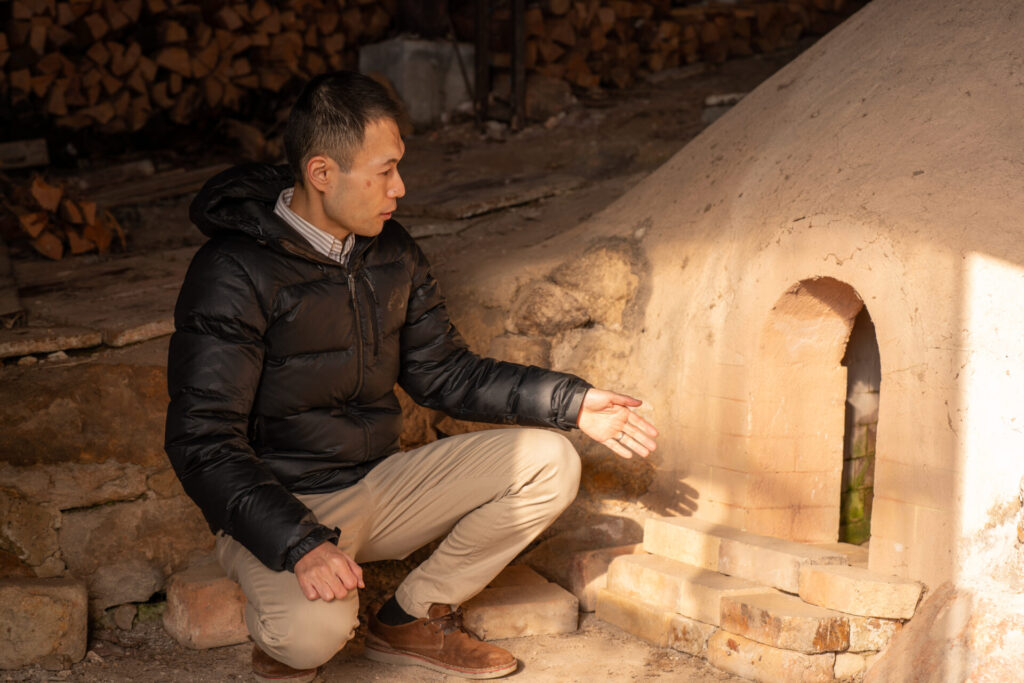
“From the time I was young, I watched my grandfather and father devote themselves to their work. Seeing their passion and pride, I naturally came to want to carry on the kiln.”
So says Munakata, though the path was surely not an easy one. His father, the eighth generation, and his grandfather, the seventh, were both highly respected master artisans.
A 300-year-old name and the presence of such accomplished predecessors—one can only imagine the pressure. Yet Munakata speaks without any trace of strain.
“While using tradition as a base, I want to add new elements. I’m not interested in doing anything overly eccentric, but if something will improve the work, I think it should be adopted proactively.”Quietly but with conviction, he is creating the distinct “color” of his own generation. That is perhaps what Suisai-yu represents, along with the soft forms that fit naturally into contemporary life.
The Climate of Aizu Dissolved into Everyday Life
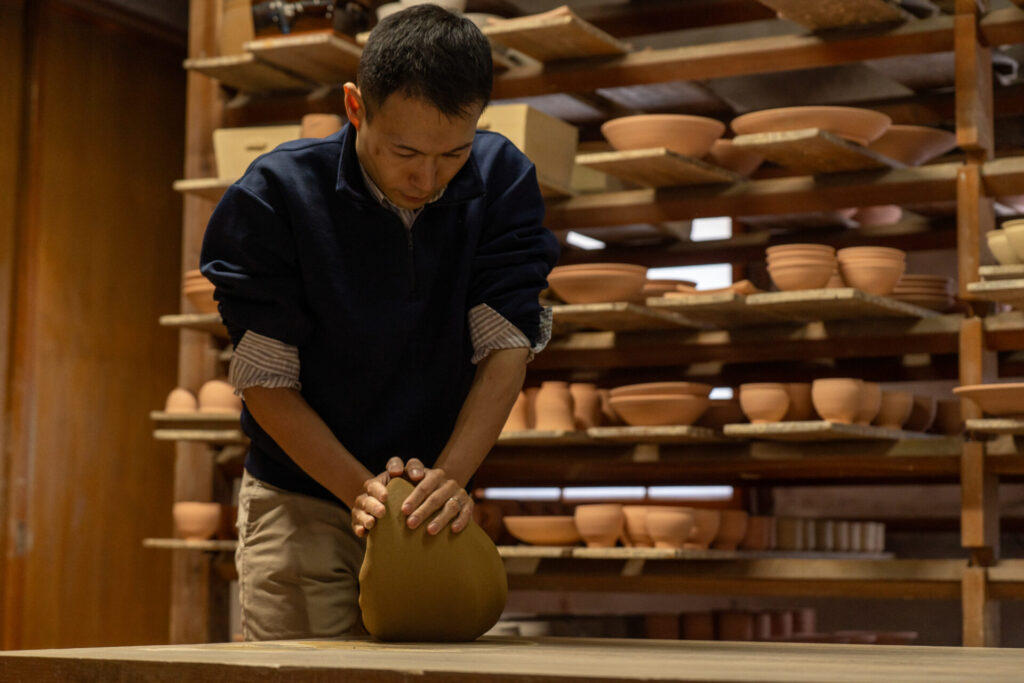
When asked how he hopes people will use his vessels, Munakata answers simply:
“I want people to use them freely in whatever way suits their lifestyle. They can arrange flowers in them, or use them to enjoy Aizu’s wonderful sake.”
He himself uses his own works every day—drinking coffee from them at home, placing a single flower from the garden in one. The spirit of functional beauty lives on in an even more refined way within contemporary life.
Holding one of his vessels, one notices how the grounded solidity of the clay coexists with the smoothness of the glaze. It feels almost like the sensation of spring itself: like the first buds of butterbur pushing up through thawing earth.
“I would be happy if people could feel the history and climate of Aizu through the local clay and natural ash.”
There is no flashy performance, no loud insistence. Only a sincere dialogue with clay and a faithful attempt to reflect the nature of Aizu. Perhaps it is precisely this quiet way of working that has allowed a kiln founded by Shinto priests to continue for three hundred years.
What Do You Wish to Pass On to the Future?
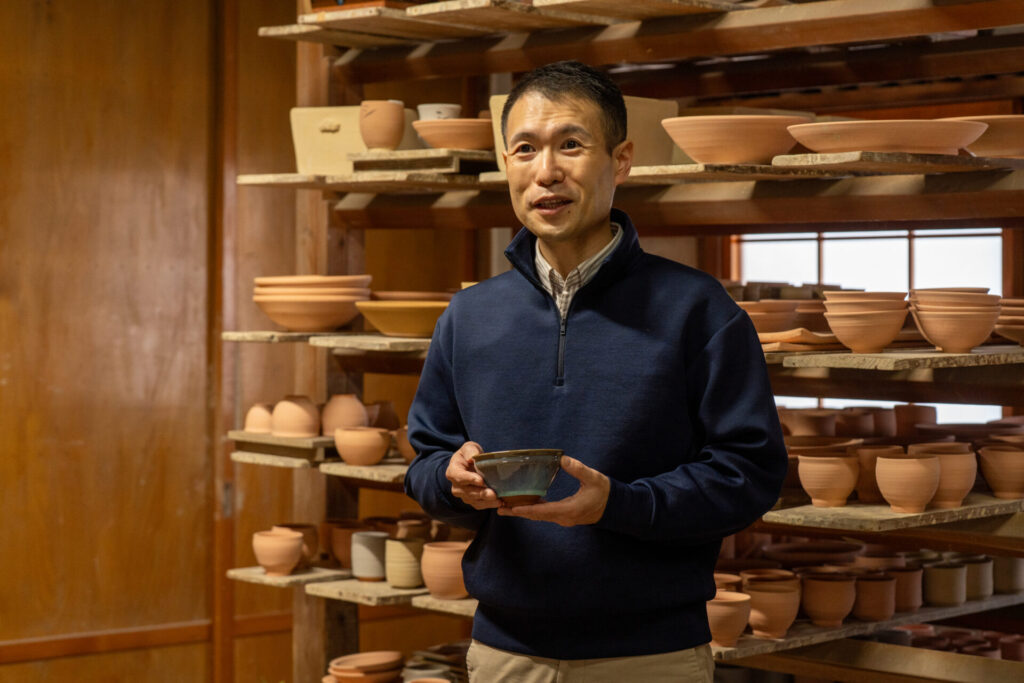
What Munakata hopes to pass on to the future is nothing less than the culture of Hongo ware itself, cultivated by the natural environment of Aizu.
“Aizu is a unique place surrounded by mountains, and that is exactly why it has fostered its own distinctive culture. That originality is our strength.”
Munakata does not speak pessimistically about the future of Aizu-Hongo ware. He wants, little by little, to communicate through his vessels the culture nurtured by this rich natural environment and long history. It is not a flashy ambition, but rather a quiet determination to inherit carefully and to convey carefully.
As the interview ends and we step outside, the ridgeline near the ruins of Mukaihaguroyama Castle is glowing in the evening light. The clay from Matoba, where archery practice once took place, is now becoming beautiful green vessels that brighten someone’s table.
The seeds planted by a Shinto priest have, over 300 years, grown into a great tree—and now, in the hands of the ninth generation, they seem ready to bloom into a new spring.
When we use a vessel from Munakata-gama, we are not simply using an object. We are touching the long winter of Aizu, the joy of the spring that follows it, and a story that has continued for three centuries.