

Flexible and Light — Envisioning a Future in Which Tea Ceremony Is Loved by Everyone
宮﨑宗伊
Soi Miyazaki

Aizu [Fukushima]
Soi Miyazaki
Born in Aizu-Wakamatsu City, Fukushima Prefecture. As an Urasenke tea instructor, she runs the Aizu Charakukai and the Miyazaki Tea Ceremony School. Her grandmother was head of the Urasenke family, and she studied tea ceremony in both China and Kyoto. In addition to traditional lessons, she creates opportunities for people to encounter tea in a variety of settings and styles, proposing new forms of tea ceremony linked to local culture.
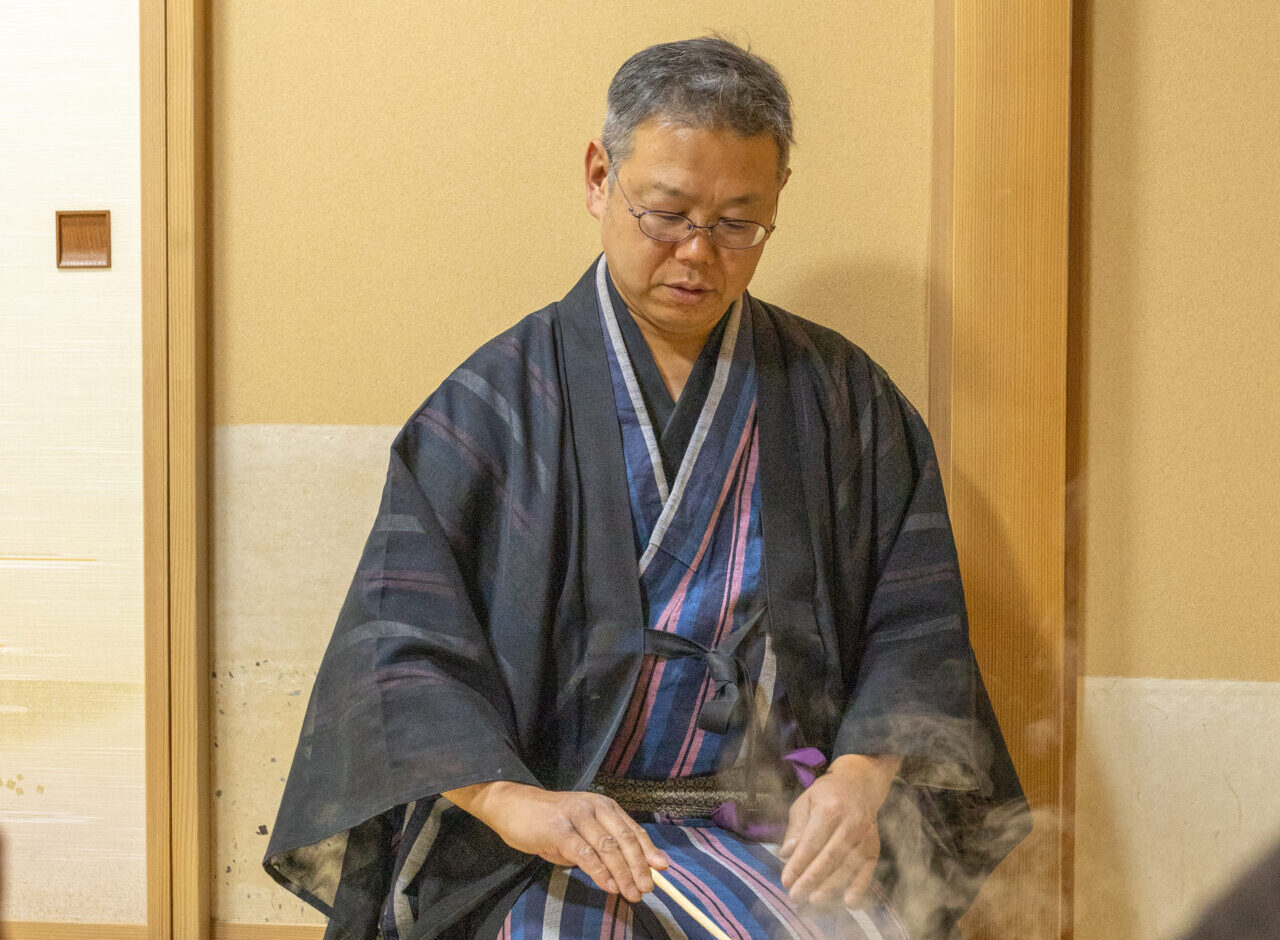
Soi Miyazaki, who runs a tea ceremony school near Tsuruga Castle in Aizu-Wakamatsu, is a tea practitioner who carries on tradition while also opening new gateways into the world of tea through events and markets. At a time when fewer and fewer young people are engaging with tea ceremony, she is exploring ways of making it approachable to everyone by connecting it with local traditional crafts. Grounded in an unshakable orthodox foundation, how does she seek to discover a new form for it? We spoke with Miyazaki to better understand her vision.
The Rational Beauty of Refining Everyday Movements
“When I speak in front of people, sometimes they ask me, ‘Are you a rakugo performer?’ Of course I think, ‘Well, of course not,’” she says with a laugh. “But if my way of speaking and carrying myself helps lower the barrier people feel toward the world of tea, then perhaps that’s not such a bad thing.”
This is how Soi Miyazaki, who runs the Miyazaki Tea Ceremony School near Tsuruga Castle in Aizu-Wakamatsu, describes herself. Dressed in an Aizu-momen cotton kimono, she gives little of the stern impression one might expect from a tea ceremony teacher. The way she gently softens the atmosphere of a place is, in fact, one of her defining qualities.
“My title may be that of a tea instructor, but I also create opportunities to encounter tea outside the classroom—holding outdoor tea gatherings at events, for example, or serving matcha lattes at markets. I believe it’s important to let people enjoy tea casually first, without being bound by a traditional format.”
Behind this approach lies a reality seen not only in Aizu but throughout Japan: a growing distance from tea ceremony itself. For younger generations in particular, tea ceremony is often no longer even part of the conversation when it comes to cultural lessons or self-cultivation. The aging of instructors is also a serious issue. At the annual Grand Tea Gathering held locally each autumn, most organizers and helpers are in their seventies or eighties. Miyazaki says the faces involved have barely changed over the past decade.
“There are structural reasons why it’s hard for young people to enter this world. Even if they become interested, there is very little information about where they can actually learn. And even if the opportunity exists, it can feel psychologically difficult to call someone you’ve just met ‘sensei’ right away. That alone can drain away the motivation they had. That’s why spaces outside formal classrooms are necessary.”
Given that her grandmother was head of the Urasenke family, one might expect that some inherited “tea DNA” was what drove her. But her answer was unexpected.
“When I was little, I used to think, ‘Why does it have to be this complicated just to drink tea?’ Honestly, I looked at it all with a pretty cold eye.”
The turning point came when she was in her third year of high school. A friend planning to run a dumpling stand at the school festival asked if they could also serve matcha prepared by her grandmother. Miyazaki agreed to help make the tea, and in doing so, she came to an unexpected realization.
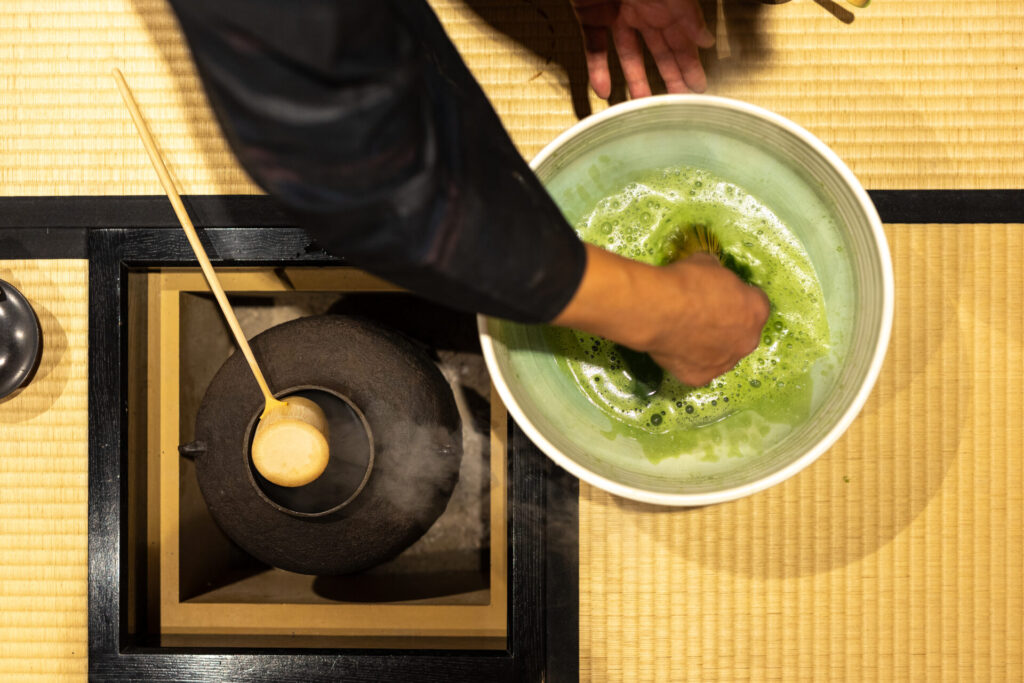
“The procedures of tea aren’t actually made up of special movements. You take the bowl in your right hand and place it in your left. It’s just that kind of action, refined completely and thoroughly. When I realized the rational beauty in that, it was the first time I thought tea ceremony was truly interesting.”
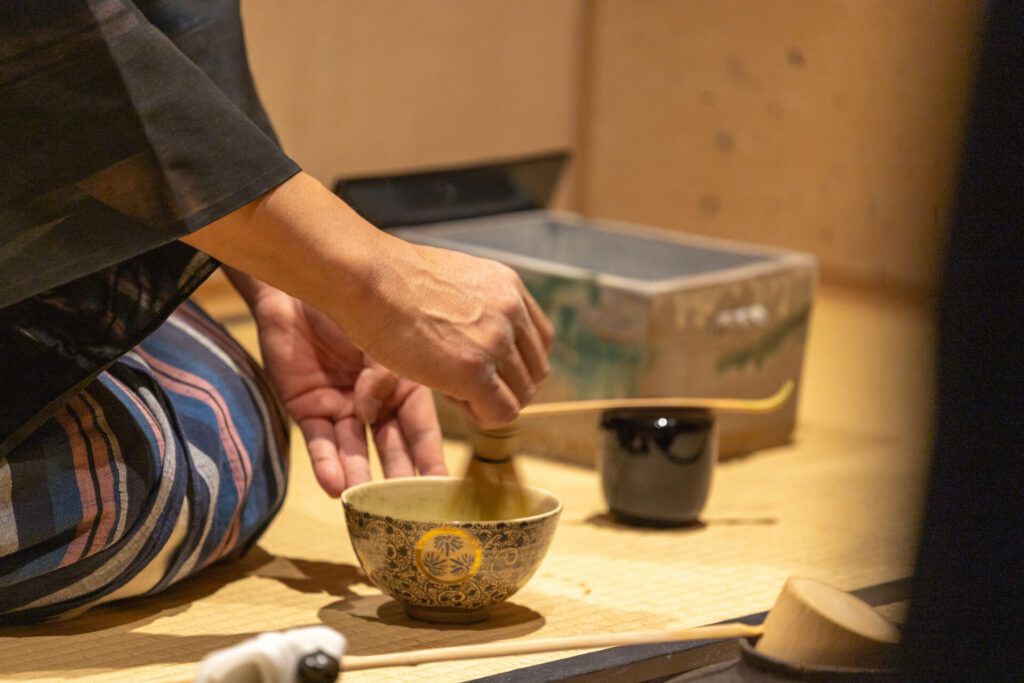
The ordinary gestures of daily life, stripped of waste and refined into beauty—that was the moment when tea ceremony transformed, in her eyes, from a bothersome set of rules into a sophisticated art.
After graduating from university, Miyazaki studied at an Urasenke school in China, then went on to a specialist tea school in Kyoto after returning to Japan. Once she was over thirty, she returned to Aizu and took over her grandmother’s tea school.
But the reality she encountered once she stepped fully into that world would go on to shape everything that followed.
The Path of the Sen Families Connected by Aizu — Then and Now
When speaking about tea culture in the Aizu region, one name is often mentioned as a starting point: Gamo Ujisato, the Sengoku-period lord who ruled this land, along with Shōan, the son of Sen no Rikyu.
Gamo Ujisato is known as the figure who laid the foundations for many of Aizu’s traditional cultures that continue into the present, including Aizu lacquerware and Aizu-Hongo ware. He was also regarded as the foremost among the Rikyu Shichitetsu, the “Seven Great Disciples of Rikyu,” having been recognized for his talent by Sen no Rikyu himself. When Rikyu was ordered to commit seppuku, it was Ujisato who sheltered Shōan in order to prevent the path of tea from being extinguished. Because of that courageous decision, the Sen tradition of tea was later revived and eventually established in Kyoto as the three Sen schools—Omotesenke, Urasenke, and Mushanokojisenke—which continue to this day.
Later, in the Edo period, tea ceremony became rooted in Aizu as part of samurai culture when Hoshina Masayuki, the first lord of the Aizu domain, studied under figures such as Kobori Enshu and Katagiri Sekishu, both central to warrior tea culture. In addition, the firm spiritual outlook of Aizu samurai—shaped by family precepts that prioritized loyalty to the Tokugawa shogunate and the upholding of righteousness—also came to be reflected in their sincere engagement with tea.
What is particularly interesting is that a culture initially rooted as part of samurai education later spread to women in the region as well.
“Toward the end of the Edo period, Urasenke—said to be somewhat more flexible in its etiquette—opened its doors not only to townspeople and merchants, but also to women. That is when women who aspired to become tea instructors began to appear.
One such woman was Yamamoto Yae, who survived the Boshin War and later helped establish Doshisha Women’s College. I’ve heard that tea ceremony was included in the school’s curriculum. Today, when people think of tea instructors, they often imagine women—but the opening of that path began here in Aizu.”
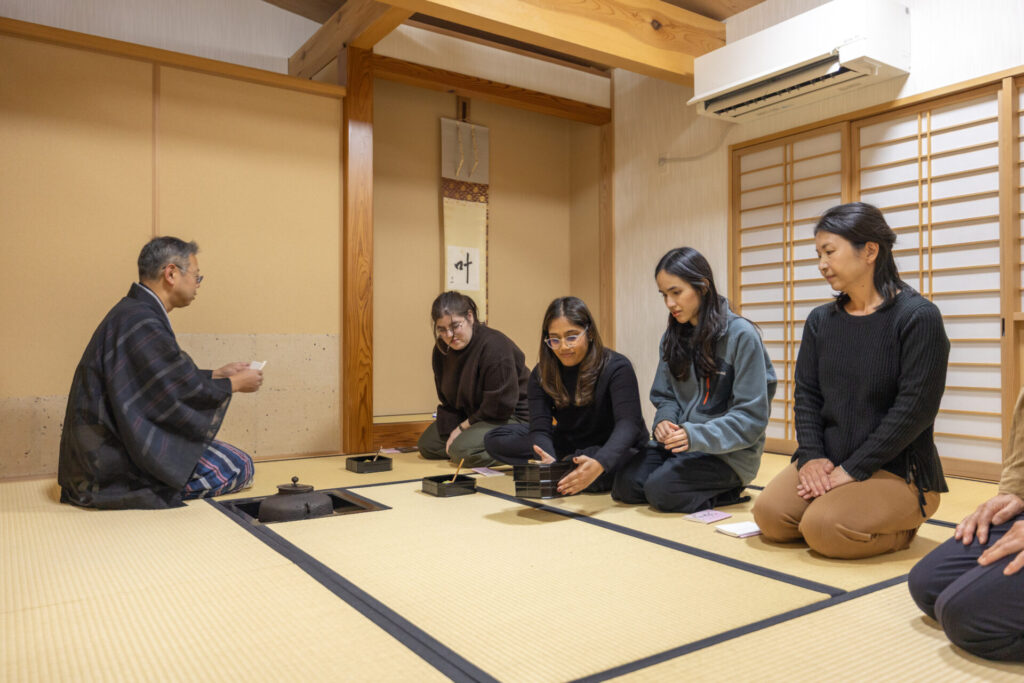
Of course, the flow of tea ceremony in modern Aizu has never been broken. Various schools, including the Sekishu school, which traces its lineage to Katagiri Sekishu, as well as Urasenke, have formed the Aizu Tea Ceremony Association and continue to carry the tradition forward. Even so, Miyazaki feels it is difficult to say that the base of participants is truly expanding.
“To help people avoid seeing tea as something difficult, I often say, ‘For now, just forget about the formal procedure and try drinking it in whatever way feels natural to you.’ People are surprised, but then you see them relax and take the bowl in hand.
Because I myself had those skeptical feelings when I was young, I think it’s important to look at tea ceremony objectively. That way, the possible approaches can broaden.”
Tea Ceremony Exists on an Extension of Everyday Life
At the core of Miyazaki’s work is the perspective that tea ceremony should not be seen as something separate and special, but rather as something that exists on an extension of everyday life. Making tea is, after all, an ordinary act within daily living. Tea ceremony emerged as an art—as a form of the extraordinary—by refining that ordinary act beautifully.
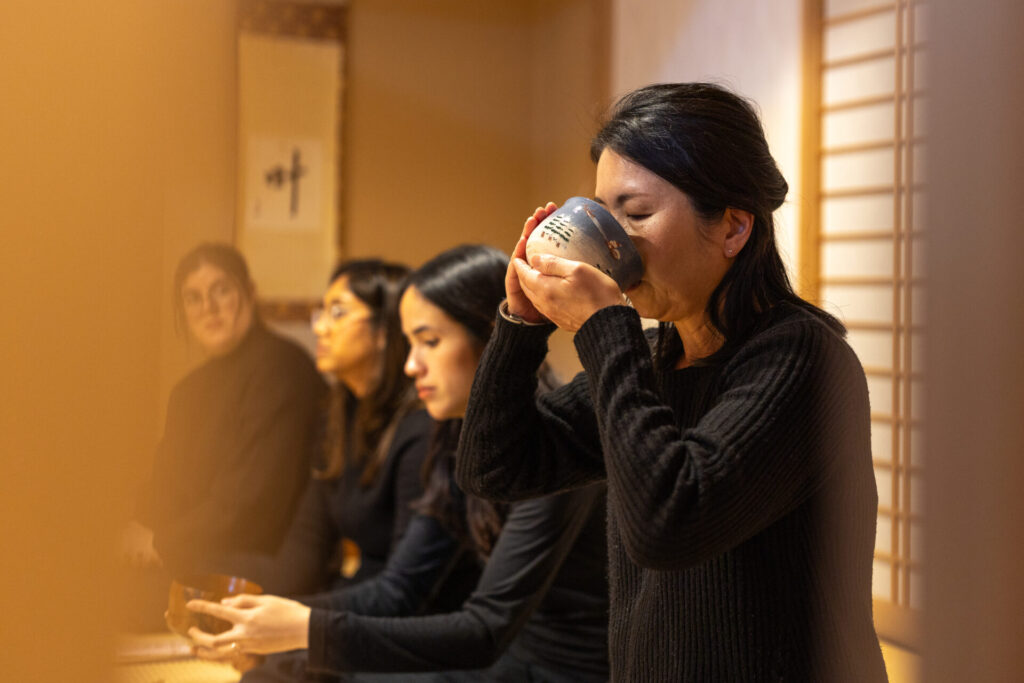
“If someone asks me what kind of art it is, I still don’t think I have a perfectly clear answer. But whatever the definition may be, I’m certain that tea ceremony exists for the joy and happiness of people. That’s exactly why I want people to encounter tea in a relaxed way and enjoy it.
Of course proper etiquette matters too, but I want to prioritize inner richness even more than that.
No matter the style, when someone spends time and money to come and see what we do, I want them to leave feeling, ‘I’m glad I came.’ In that sense, isn’t our attitude really the same as in any other form of entertainment?”
Her way of moving between the ordinary and the extraordinary through the act of drinking tea, while consistently valuing enjoyment and accessibility, runs through all of her activities.
At the same time, Miyazaki continues to think deeply about diversity within the tea world—a world that often places great emphasis on tradition.
“If you ask people about the great masters of classical music, they’ll name Beethoven, Mozart, Bach, and many others. But in the world of tea, people mention only Sen no Rikyu. And that’s true not just for the general public, but for those of us inside the tea world as well—we still repeat things like, ‘Learn from Rikyu,’ or ‘Return to Rikyu.’
There’s no question that Rikyu was a great figure. But even after four hundred years, for there to be only that one path—it somehow feels like a waste.
Tea should be allowed to have more diversity in style and values. And that’s exactly why I hope we can create a tea culture here in Aizu that feels a little different.”
That same aspiration is also reflected in her commitment to “Made in Aizu.” The center of tea culture may be Kyoto, and the utensils used in tea are often made there no matter where in Japan one practices. Yet Miyazaki finds meaning in using utensils made in Aizu when enjoying tea in Aizu. She does so because she wants tea ceremony to communicate the value not only of local traditional culture but also of the artisans who sustain it.
There is a saying that beside every master artisan stands a master tea practitioner. No matter how beautiful a vessel may be, if it is never used, its beauty will never truly move people.
“Today, many traditional crafts are on the verge of disappearing because of a lack of successors. If, fifty or a hundred years from now, those cultures were gone and all tea utensils had become plastic, nothing could be more heartbreaking. Tea practitioners, I believe, should also serve as protectors of the means by which artisans can survive.”
What Do You Wish to Pass On to the Future?
When asked what she hopes to pass on to the future, Miyazaki answered without hesitation.
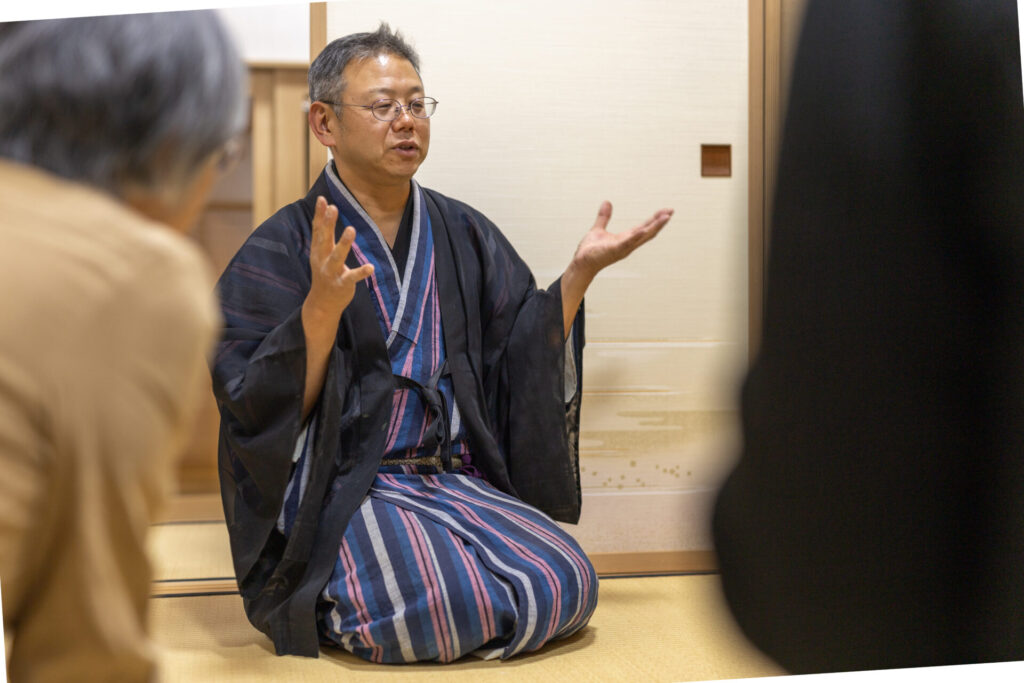
“Without question, tea ceremony itself.
I spoke earlier about Rikyu, but the fact that the path of tea he left behind has continued until today is proof of its enduring strength. The reason I can propose many different ways of enjoying tea is precisely because that orthodox path established by Rikyu exists. If I had to compare it to something, it feels a bit like playing under the protection of one’s parents.
So I want to continue, freely, searching for new ways of being with tea. I want to open up aspects of it that make first-time visitors think, ‘Oh, so this is another way tea can be enjoyed.’”
Those who gather at Miyazaki’s tea gatherings range widely—from children and people with disabilities to visitors from overseas. What they all share is an atmosphere in which everyone can enjoy tea warmly and without stiffness. It is a genuinely lovely space.
“The model I think of is the California roll. Japanese rolled sushi changed form in America and became loved there as a new food culture, didn’t it? I hope tea ceremony can do the same—that instead of existing only in Kyoto, it will develop different ways of being enjoyed in different regions and grow into a diversity of schools and styles.
If one day tea crosses the sea and takes root as its own culture in different countries, I can’t imagine anything more wonderful.”
Miyazaki deliberately looks at the mainstream from the position of what might be considered a side current. There is something endlessly flexible and light in the way she does so.
Culture changes with the times, and only when it is embraced and loved by people can it be handed on to the next generation. Miyazaki’s words and actions reveal that simple yet powerful truth with remarkable clarity.