To See the Milky Way Unchanged 100 Years from Now — Protecting the Night Sky of the Hirakubo Peninsula, Ishigaki Island
新垣信成
Nobunari Arakaki

Ishigaki [Okinawa]
Nobunari Arakaki
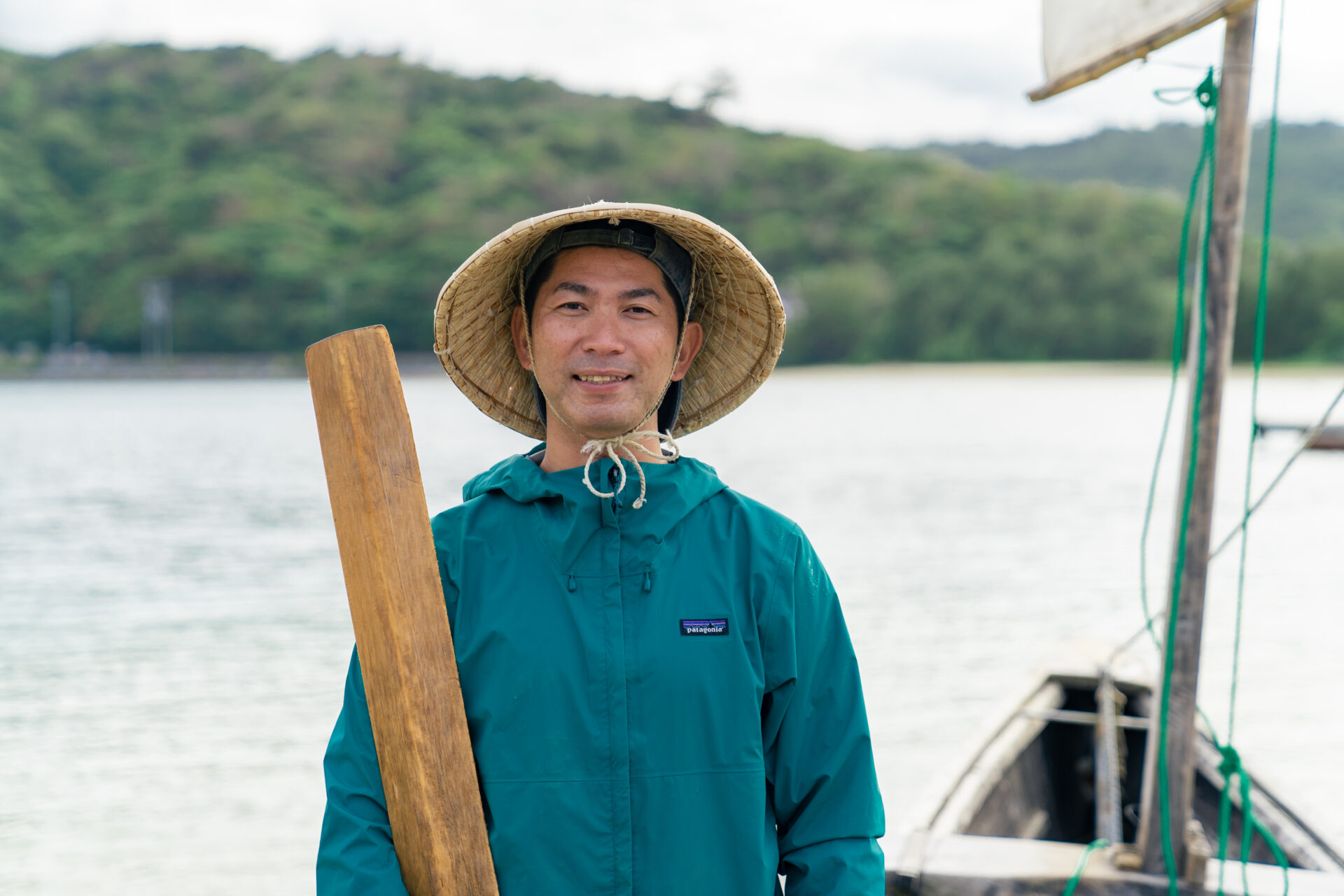
Born on Ishigaki Island, Okinawa Prefecture. Starry sky guide / Hoshihaku Observatory (Representative of Hoshihaku LLC). Chairman of the Hirakubo Community Council. He has operated starry sky tours for over 10 years on the Hirakubo Peninsula, Ishigaki Island, guiding more than 60,000 participants from Japan and overseas. He is also actively engaged in awareness activities to protect the night sky and initiatives to prevent light pollution.
“To see the Milky Way unchanged even 100 years from now.” There is a starry sky guide who envisions such a vision. It is Nobunari Arakaki, who works on the Hirakubo Peninsula of Ishigaki Island in Okinawa Prefecture. Arakaki, who is from the Kūra area of this region, confidently says, “The night sky of the Hirakubo Peninsula is more beautiful than any starry sky I have seen anywhere in Japan.” What is the reason for that? And what do the people who come to see it feel? We asked him about his activities to convey the charm of the starry sky and to protect it in its natural state.
A Connection to the Hirakubo Peninsula, Ishigaki Island, Continuing Since His Grandfather’s Generation
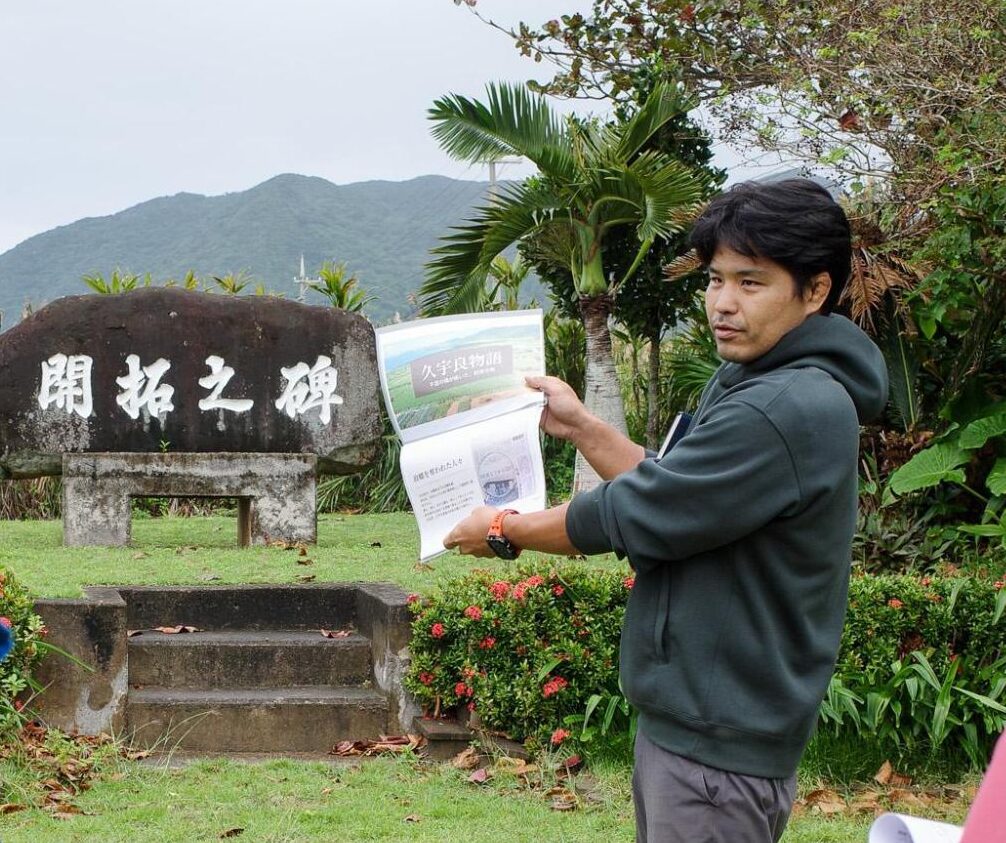
Arakaki’s connection to the Kūra area of the Hirakubo Peninsula dates back to his grandfather’s generation. About 70 years ago, his grandfather came to this land from Okinawa’s main island as a postwar pioneer settler. Since then, three generations have lived in this area.
In Arakaki’s childhood memories, about 50 to 60 people lived in the Kūra area at the time, and the bonds among residents were strong. Arakaki showed promise in judo, won an international competition, and was even selected as a member of the Japan national team. The local community came together to support him.
Watching this, his parents told him, “You’ve been supported this much, so in the future you have to do something for your hometown,” and he grew up with those words.
After that, Arakaki devoted himself to judo in a corporate team in Tokyo, and after retiring, he was also involved in managing a food and beverage business. Then, about 10 years ago, he returned to Ishigaki Island.
The Kūra settlement, which once had been lively, has now seen its population decline to about five or six households. This is because more people have moved to the urban area of Ishigaki or to Okinawa’s main island due to the inconvenience of daily life. In such a situation, Arakaki has continued to search for something he can do for the region.
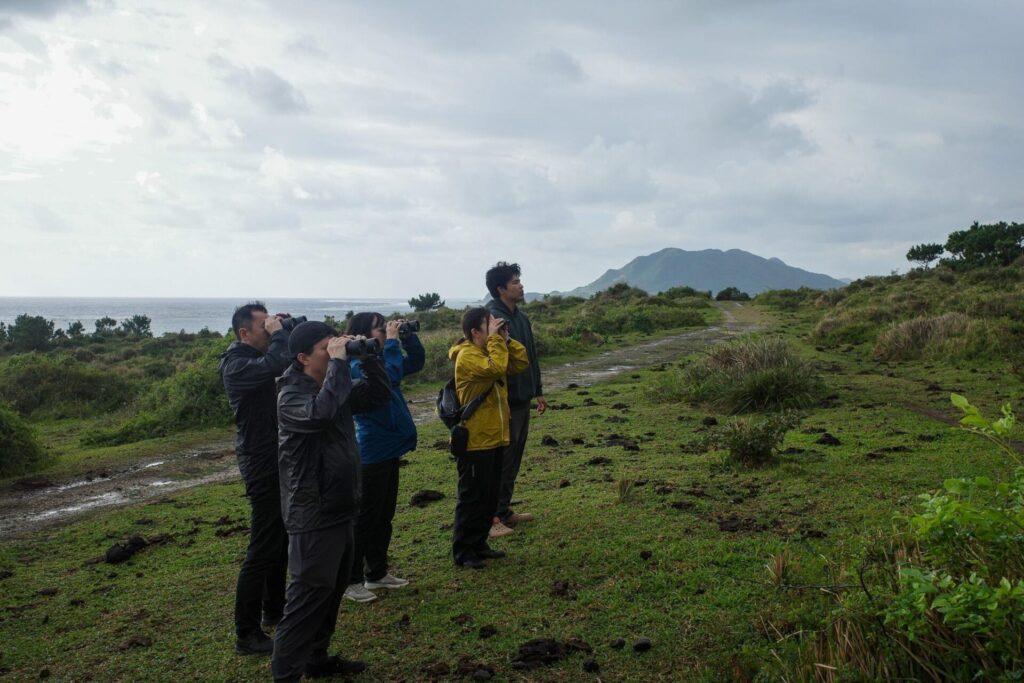
The work he chose was as a starry sky guide. Based in the Kūra area, he operates tours to view the night sky and has guided more than 60,000 customers so far.
Why did he start this work? He explains the reason as follows.
“When I was in Tokyo, I visited a village in Nagano Prefecture that was reputed to have a beautiful night sky. I heard that it attracts about 20,000 visitors a year just for the stars, and I thought that was amazing.”
However, when he actually looked up at the night sky there, what came to his mind was the sky of his hometown.
“The night sky of the Hirakubo Peninsula was overwhelmingly more beautiful. That’s when I started to become interested in the stars.”
Overwhelming beauty. And the potential to attract people while making use of nature as it is. “If stars alone can captivate this many people, then it’s perfect for the Hirakubo Peninsula.” With that conviction, he began working as a starry sky guide.
What Makes the Night Sky of the Hirakubo Peninsula Especially Beautiful
The Hirakubo Peninsula is located at the northern tip of Ishigaki Island. It is about 50 minutes by car from the city area. In Arakaki’s words, it is “a place where the original landscape of Okinawa remains.”
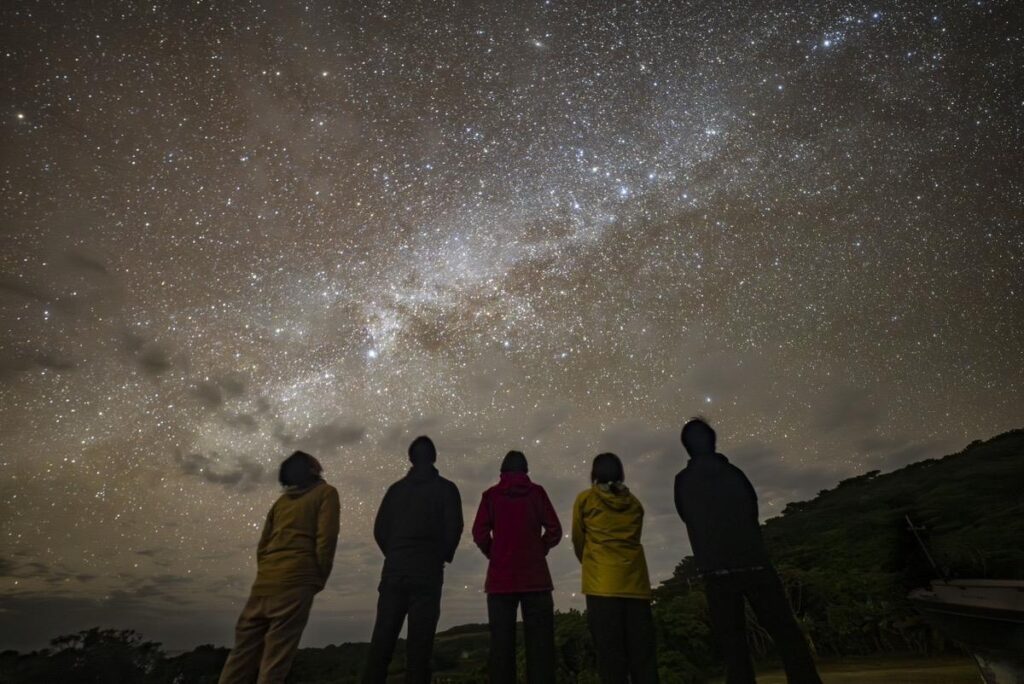
There are reasons why the night sky of the Hirakubo Peninsula is especially beautiful. One is its topography. Between the city area of Ishigaki Island and the Hirakubo Peninsula lies a mountain called Omotodake. It is the highest mountain in Okinawa Prefecture. This Omotodake serves to block the light from the city. Like a breakwater of light, its presence maintains the peninsula’s independence jutting out into the sea, creating an environment where the Hirakubo Peninsula is less affected by artificial light.
Another reason is the scarcity of artificial structures. Since there are originally few settlements, there is almost no street lighting or building lights at night. Arakaki explains this characteristic as follows.
“In places on the mainland of Japan that are said to have beautiful stars, they are usually on mountaintops. There, you don’t see light above your line of sight, but when you lower your gaze, you can see the lights of the town. That light illuminates the night sky, so on the mainland it is difficult to see even the faint stars.”
“You can also tell the difference by the color of the clouds. Normally, clouds floating in the night sky look white, right? That is because the clouds reflect light from the ground. On the Hirakubo Peninsula, you don’t see white clouds in the night sky. That’s because they are not affected by light.”
On a night without a single cloud, the Milky Way appears, shining like an arch. On the Hirakubo Peninsula, even small stars that cannot be seen in other places come into view. Arakaki describes that scene as “rather than a starry sky, it feels like looking at the universe itself.”
“The starry sky you see in the city area of Ishigaki Island is beautiful too, but the Hirakubo Peninsula goes beyond that. I want people to know that.”
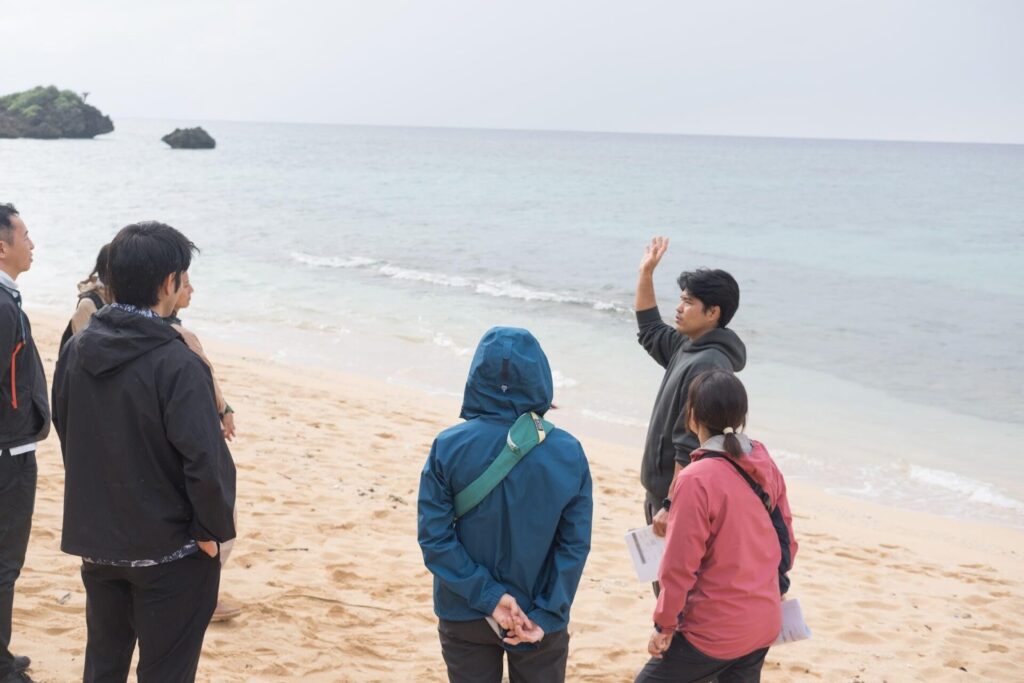
The people who have participated in the tours so far are of all ages and genders. Each person has a different reason for coming. One person came carrying a photo of his mother, saying, “I wanted to show my mother the Milky Way.” There was also a man who came from a hospital room, carrying an oxygen tank. Some people had been told a serious diagnosis and said, “I don’t know if I will be able to move next year.” There are also people who propose under the Milky Way.
After watching such scenes for 10 years, Arakaki says that his way of thinking has changed.
“When people want to see the stars, it’s a turning point in their lives.”
When he first started the tours, Arakaki would simply promote the beauty of the night sky, saying, “There’s no place with such beautiful stars, right?” However, after meeting many customers, he now feels that “the stars have a healing power, something beyond life, something of another dimension.”
Many people who see the overwhelming starry sky are moved to tears. Messages and letters arrive saying, “It was a starry sky beyond imagination,” and “It became an unforgettable experience.”
Through facing such people, Arakaki has come to strongly feel, “I want to protect this place.”
A Sense of Mission to Protect, Beyond the Emotion
In addition to being a starry sky guide, Arakaki also serves as the secretary-general of the Hirakubo Peninsula Community Council. This council was established in 2024, centered around five community centers on the Hirakubo Peninsula. Led by the local community, it created the Hirakubo Peninsula Charter and aims to convey the value of the peninsula while protecting its nature, history, and culture.
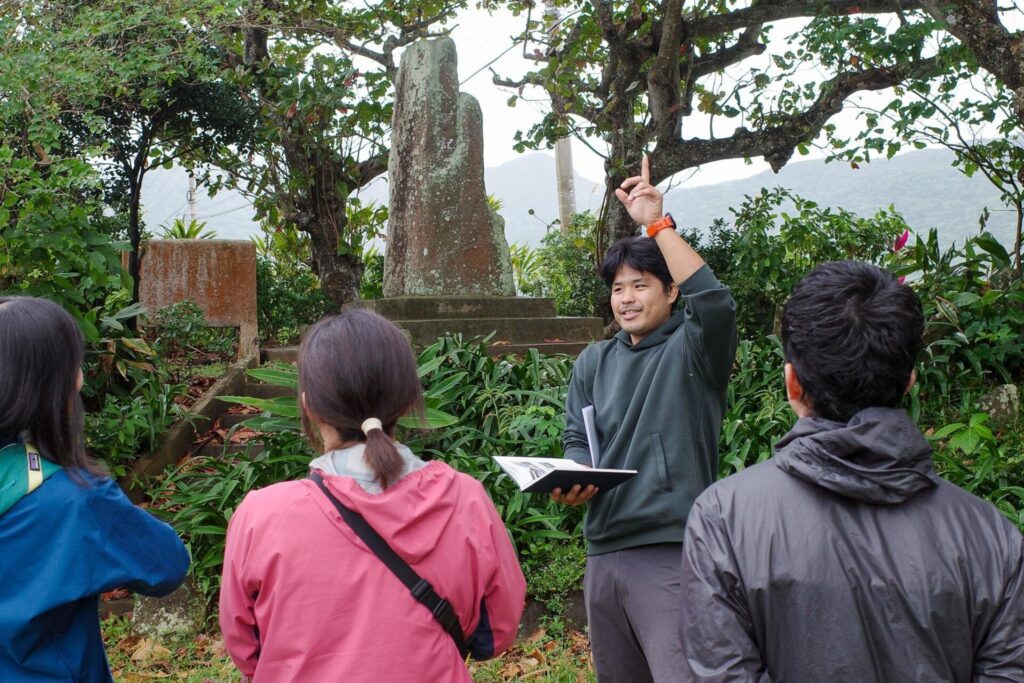
Arakaki describes the purpose of this council as “balancing making it known and protecting it.” In general, in the tourism industry, increasing awareness and attracting visitors is considered the standard path to success. However, there are many cases where excessive tourism damages the very resources of the place. In particular, the sea, the starry sky, and the original landscape of Okinawa that the Hirakubo Peninsula seeks to protect are difficult to restore once they are destroyed.
“We want people to know about it, come, and experience it. And then be moved by its value and feel, ‘I want to protect this place.’ That is our job. If it ends with ‘the stars were beautiful,’ then I think the activities of the council have no meaning.”
For example, in order to protect the starry sky, it is essential to prevent light pollution. It is important not to indiscriminately create artificial structures that block starlight. For that, it is necessary for the entire region to share a common understanding and to consider establishing regulations.
“For that, the best thing is for visitors to say, ‘This starry sky is rare even on a global scale.’ Even among people living on Ishigaki Island, many have not realized this value.”
Although there have been 60,000 visitors over 10 years, Arakaki says, “That is still only a few percent of the people who come to Ishigaki Island.” Increasing recognition of “Hirakubo Peninsula when it comes to starry skies”—he believes that will ultimately lead to protecting this environment.
What Does He Want to Pass On to the Future?
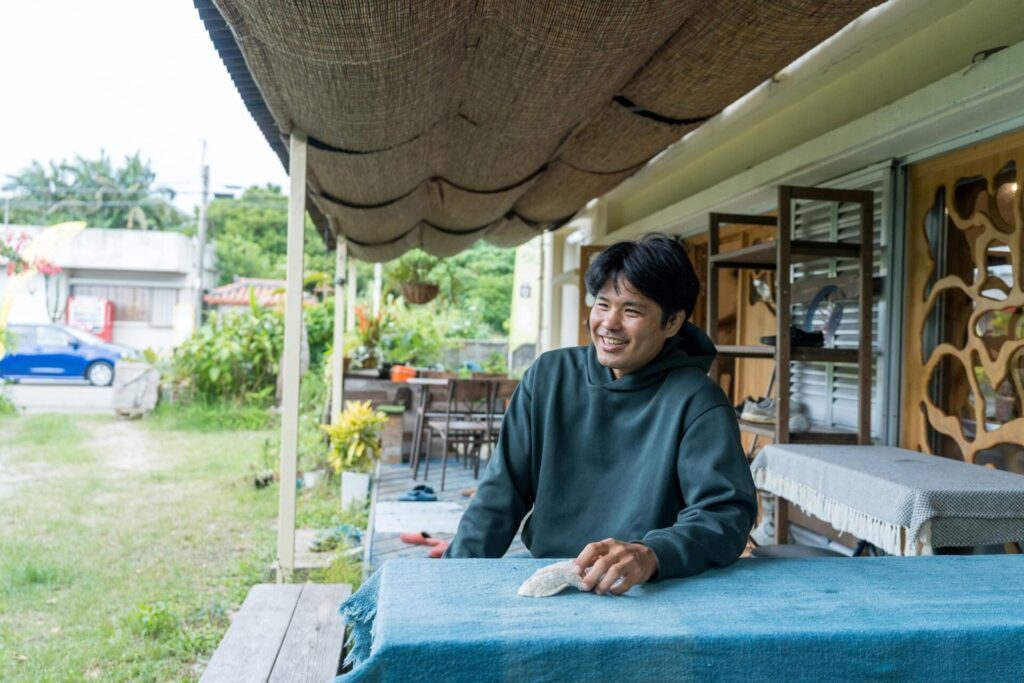
What Arakaki wants to pass on to the future is clear.It is “being able to see the Milky Way in this place even 100 years from now.”
Arakaki shares the following thoughts.
“Each of the stars we can see has a different distance from Earth. The closest ones are about 4.6 light-years away, and the farthest are said to be 9 billion light-years away. In other words, all the light we are seeing is from the past. Within such an endless span of time, the time we live is just a tiny moment. That’s why it feels wasteful to worry. I want to live as fully as I can.”
He also conveys these thoughts to the people who participate in his tours.
Environments where stars can be seen are surprisingly few. As land development accelerates, even the addition of a single small light can instantly make the stars disappear. It is said that over the past 200 years, since the Earth began to have artificial light, the Milky Way can no longer be seen in about 70% of locations in Japan. Environments where the Milky Way can be seen will likely become even more precious in the future.
“I think there are many people who are saved by looking at the night sky amid all the things that happen in daily life.”
That feeling is what gives strength to protecting the starry sky 100 years into the future.