An Outlier Yet a Standard-Bearer of Aizu-Hongo Ware — The “Strength” and “Technique” of Vessels Made for Everyday Life
弓田修司
Shuji Yumita

Aizu [Fukushima]
Shuji Yumita
Born in Aizumisato Town, Fukushima Prefecture. The fifth-generation head of Ryumon-yaki. Although he originally went to a vocational school in Aichi to prepare to take over the family business of manufacturing porcelain insulators, his growing interest in pottery led him to move to Mashiko instead. After four years of training there, he returned to Aizu and succeeded the family kiln. In addition to insulators and Ryumon-yaki tableware, he also produces architectural materials such as tiles.
When people think of “Hongo ware,” Ryumon-yaki is one of the first names that comes to mind. Its pieces are often seen in local restaurants and souvenir shops, yet the kiln’s origins lie not in tableware but in the production of insulators—the porcelain fittings that support electrical wires. How did a workshop for electrical insulators come to make pottery, and how did Shuji Yumita—who once aimed to become a Mashiko ware artist—end up inheriting the kiln? We spoke with him in depth.
The “Guardian” That Never Falls — Supporting Electricity
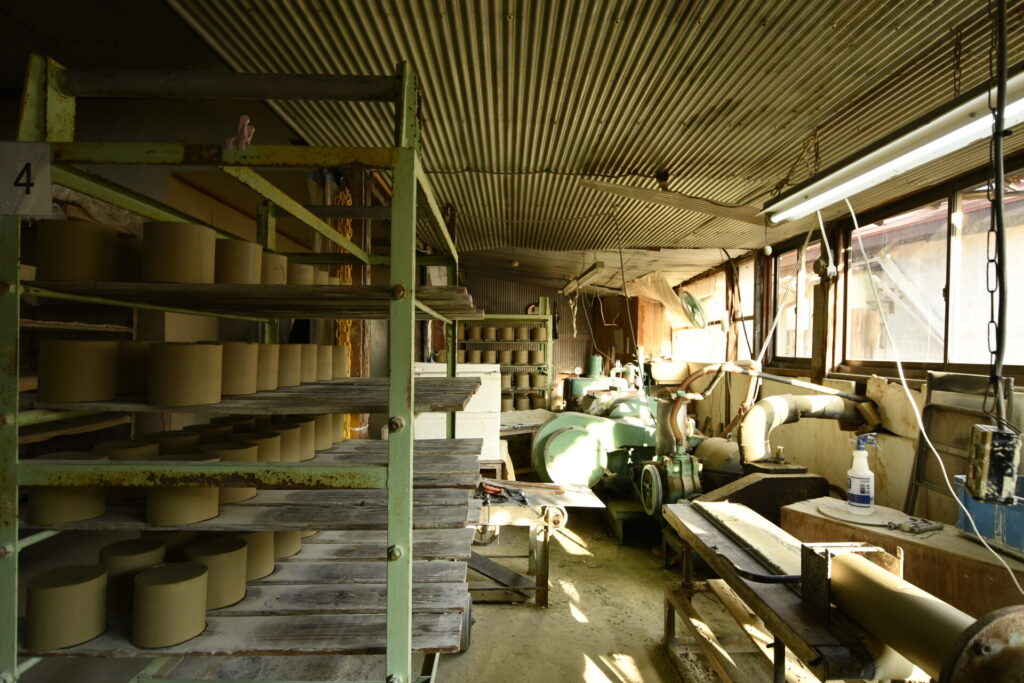
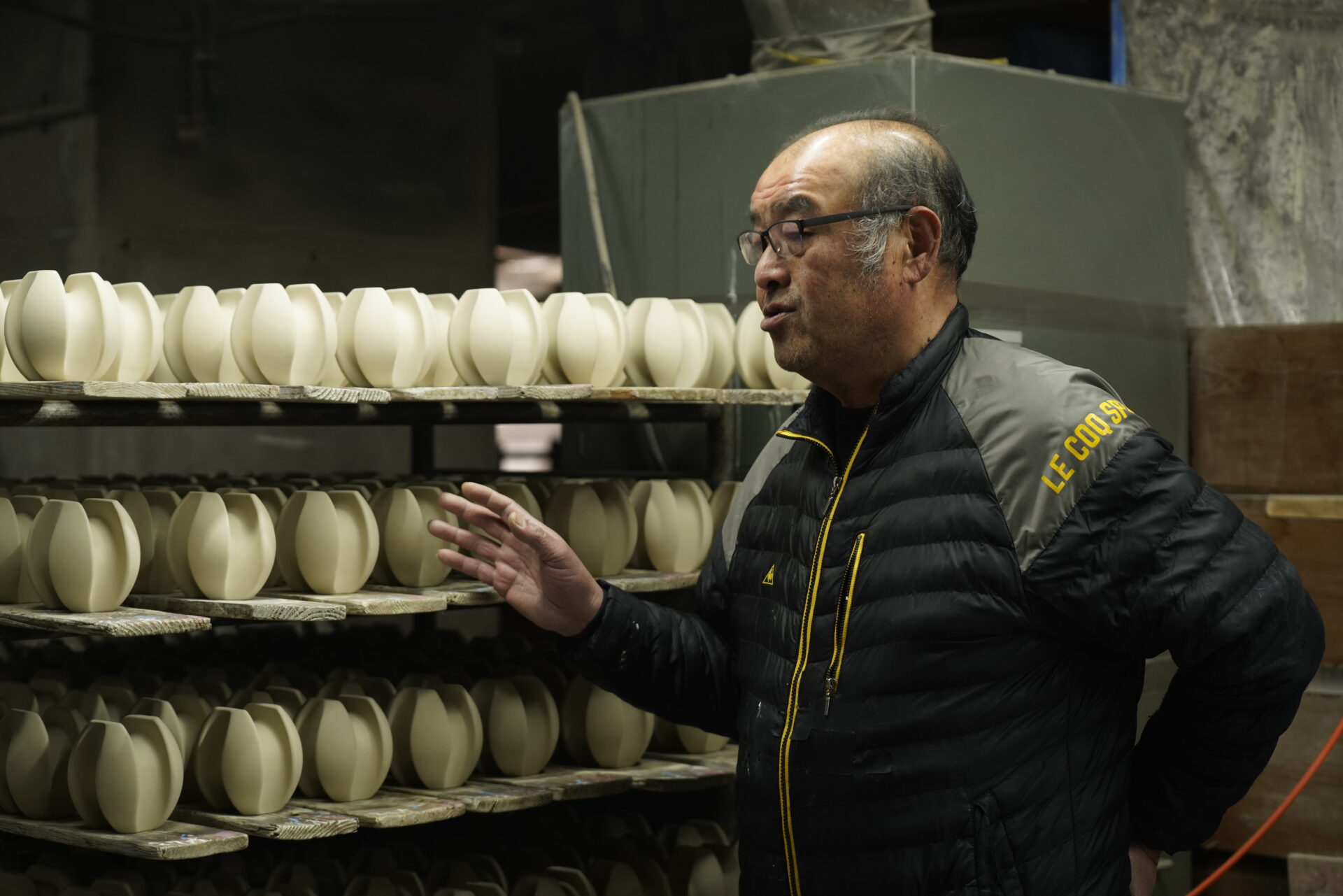
Beyond the quiet residential streets of Aizumisato Town, not far from a road where students pass by each day, stands an especially large workshop. In the winter-cold workspace, several kinds of glaze run over the surfaces of vessels, fusing in the kiln into intricate patterns of purple, blue, and green.
This is Ryumon-yaki, a kiln instantly recognizable within Aizu-Hongo ware for its distinctive colors and flowing glaze patterns.
The man who greets us is Shuji Yumita, the fifth-generation head.
“I can’t answer anything too troublesome, you know,” he says with a grin.
Behind that bold, easy manner lies the pride of an artisan who carries the signboard of a 120-year-old kiln, yet moves through the times with surprising lightness.
Tracing the history of Ryumon-yaki reveals an unexpected origin. When it was founded in 1902, it was not what one would normally call a pottery workshop at all.
“It originally started as a factory making insulators.”
Insulators are those white porcelain fixtures seen on utility poles, supporting electrical wires. Essential for the safe transmission of electricity, they too are made of porcelain.
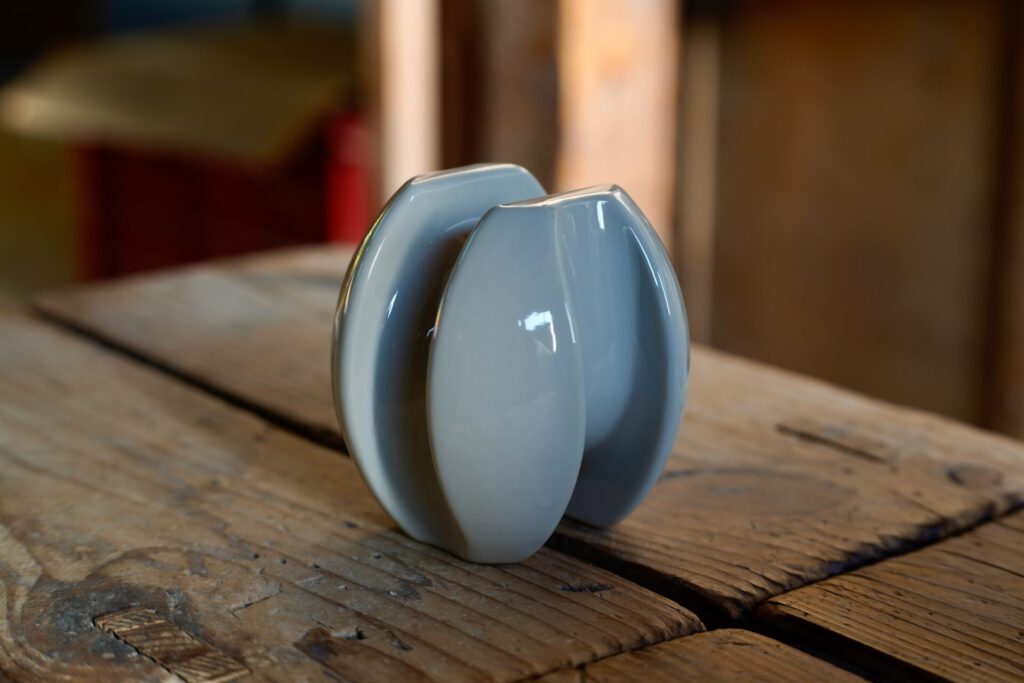
“People always say, ‘If one of those fell and hit someone, they’d die.’ But not a single one has ever fallen.”
Yumita laughs as he says it, but the words carry complete confidence. The clay used for insulators demands far greater strength than ordinary clay used for tableware.
“They won’t break even if you pull them with a force of 1.2 or 1.3 tons.”
That same technical foundation—materials that withstand wind, rain, and high voltage—still supports the making of Ryumon-yaki vessels today.
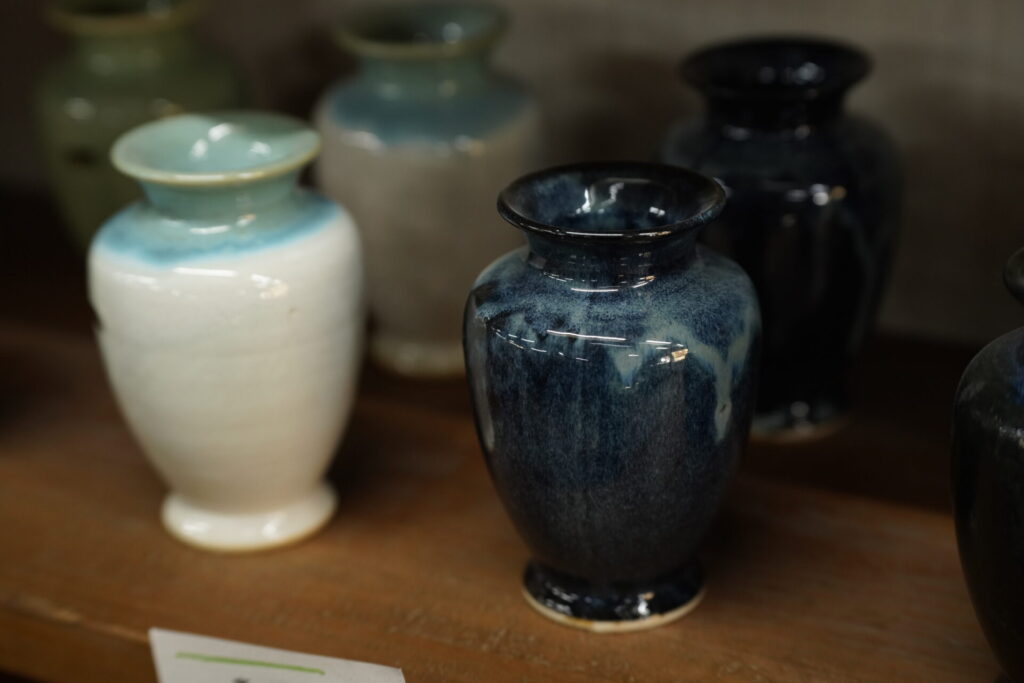
In the 1950s, the workshop began applying its insulator-making technology to art and craft production.
“At some point they decided not to make only insulators, but to start producing art and craft objects too. That’s how Ryumon-yaki pottery began. In Aizu-Hongo ware, being all different from one another is kind of the standard.”
Because both earthenware and porcelain materials can be found in this region, each kiln has developed its own independent style. What Ryumon-yaki chose was a method in which glazes are poured and allowed to flow, with the accidental patterns created by their movement in the kiln becoming part of the beauty itself. At first there were only three colors—red-brown, blue, and a greenish kinyo glaze. Today, there are fifty to sixty variations.
More Wheel Than Lecture — What Mashiko Taught Him, and the Pride of a Technician
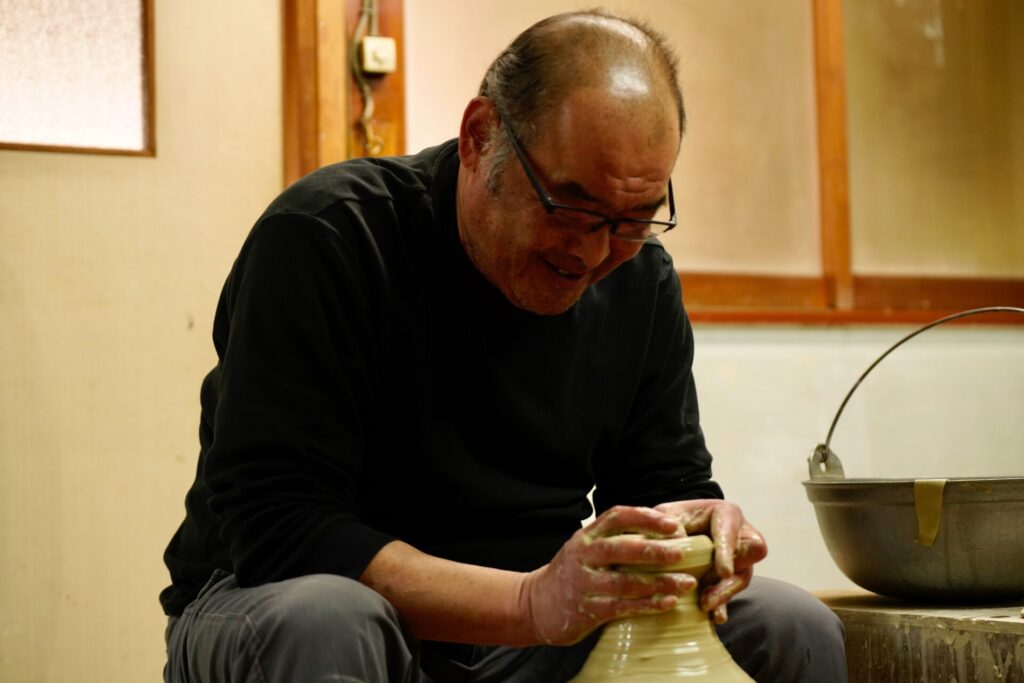
Yumita did not originally set out to become a potter.
“At first I wasn’t really interested in the wheel. If anything, I wanted to study the technical side of insulators.”
After finishing high school, he went to a ceramics vocational school in Seto, Aichi Prefecture. But there, fate intervened. Next door to the classroom where he was learning theory, students in the ceramics department were freely throwing clay on the wheel.
Watching a mass of clay change shape in human hands like a living thing stirred something in him.
“I thought, there’s something good about making things directly with your own hands.”
That was the moment when a young man who had imagined becoming a technician felt the spark of becoming a maker.
“If I was going to do it, I wanted to train in an actual production area.”
With that, he moved to Mashiko in Tochigi Prefecture, apprenticing himself to a local kiln. After four years of training, he was called back to Aizu by his father.
“He said, ‘Come back, will you?’ I’d been planning to stay in Mashiko and work as an independent maker, so it came as a bit of a surprise.”
A young man with no intention of taking over the family business thus returned to Aizu and became the new bearer of Ryumon-yaki. What he brought back with him was both the freedom of Mashiko’s style and a perspective that placed the user first.
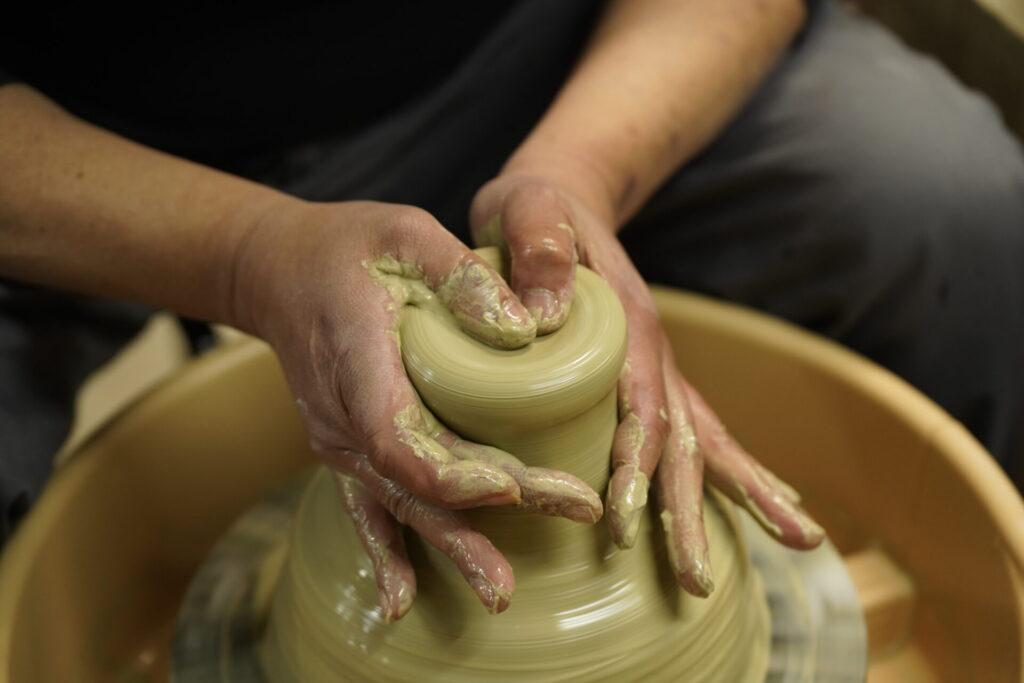
The “color” he added to Ryumon-yaki was not primarily color at all, but a renewed pursuit of form.
Take, for example, the natto bowl.
“When I was training in Mashiko, I was making water pitchers one day and suddenly thought: what if I put the handle on the left side, so you could hold it easily with your left hand while stirring natto with your right?”
When mixing natto, if you hold the rim of the bowl directly, your hand can get sticky or slip. But with a sturdy handle, you can really stir with force. And if it has a spout, you can pour it straight over rice afterward.
“I love natto,” Yumita says with a laugh.
This bowl, born from a deeply personal but very practical everyday insight, has become one of Ryumon-yaki’s popular items.
His vessels are also known for being extremely hard to break.
When asked, “Ryumon-yaki pieces really don’t break easily, do they?” he answers immediately:
“Of course not. They’re made from the same clay as insulators.”
Porcelain clay with tensile strength exceeding one ton. Even when washed roughly every day, it hardly falters.
“If people keep using them, they won’t break—and if they don’t break, the next sale never happens,” he jokes.
But beneath the humor lies an overwhelming sense of trustworthiness as practical ware.
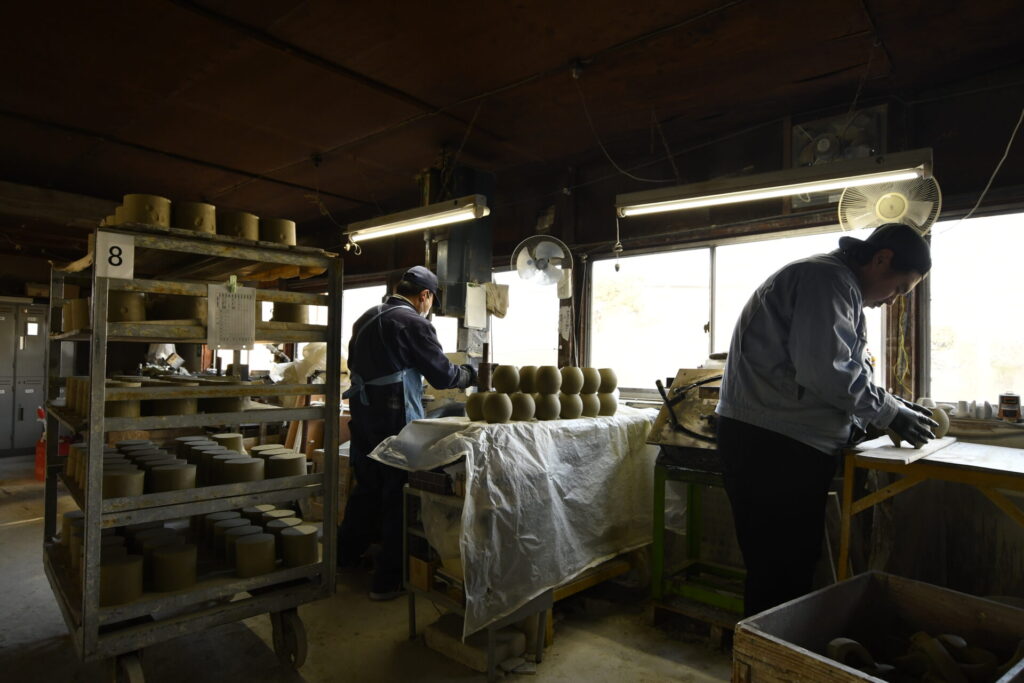
Ryumon-yaki is not only a maker of tableware. It has another face as well: that of a supplier of architectural materials.
One can see its work locally in places such as the sinks of the Fukushima Prefectural Museum and the tiles of Aizu Chuo Hospital. But commissions also come from as far away as Sendai, Osaka, and Fukuoka.
“People at design offices somehow hear about us and start asking, ‘Is there anywhere in Tohoku that can make special tiles like this?’”
Such requests are often highly demanding. Ceramic pieces shrink during firing. Something made at ten centimeters may come out at eight and a half. The shrinkage rate must be calculated so that final pieces fit exactly into the dimensions required at the site.
“Sometimes you’ve got to fit them into a frame with only two millimeters of tolerance. And it’s not enough just to make them square. From the point of view of someone who actually makes things, I still want to keep some handmade warmth.”
Rather than being discouraged by unreasonable requests from designers, Yumita says he finds them exciting.
“I think, all right then—let’s do it.”
Warmth that factory-made industrial products cannot provide, combined with the precision expected of industrial products: that balance is only possible because his foundation is that of a technician, built through insulator production.
Ryumon-yaki as a “Company” — Passing On a 120-Year Baton
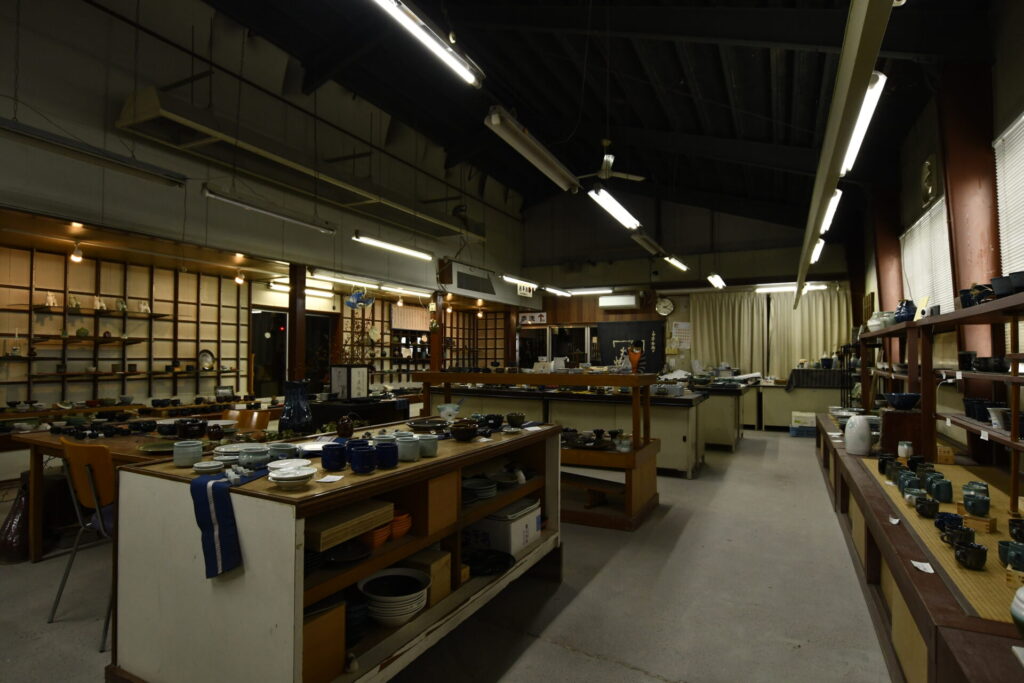
In fact, the Yumita family only became involved in running Ryumon-yaki in his father’s generation.
“We originally weren’t the founding family. The business was run by a company called Uematsu Co., Ltd., and after three generations it ended up going through something like civil rehabilitation. My father had worked there for many years, and he took over as president.”
He is not heir to the original bloodline. But precisely because his father had spent years sweating on the ground floor of the business, there were things he could protect. Yumita calls himself the fifth generation, but that title does not refer simply to lineage. It reflects the resolve to carry the history of this workshop on his back.
That may also explain why his view of succession is both cool-headed and deeply warm.
“I’ve never once said to my kids, ‘You have to take this over.’ They each have their own lives and the work they chose. If that makes them happy, then that’s enough.”
He does not cling to the idea that a son must inherit the kiln.
“If the company can keep going, that’s what matters most. If someone wants to do it, then that person can do it. And if continuing would only make someone miserable, then closing it should be an option too.”
This is not coldness. It is the kind of deep affection that only someone who knows the harshness and the fascination of pottery down to the bone can have—as both a parent and a manager.
What Do You Wish to Pass On to the Future?
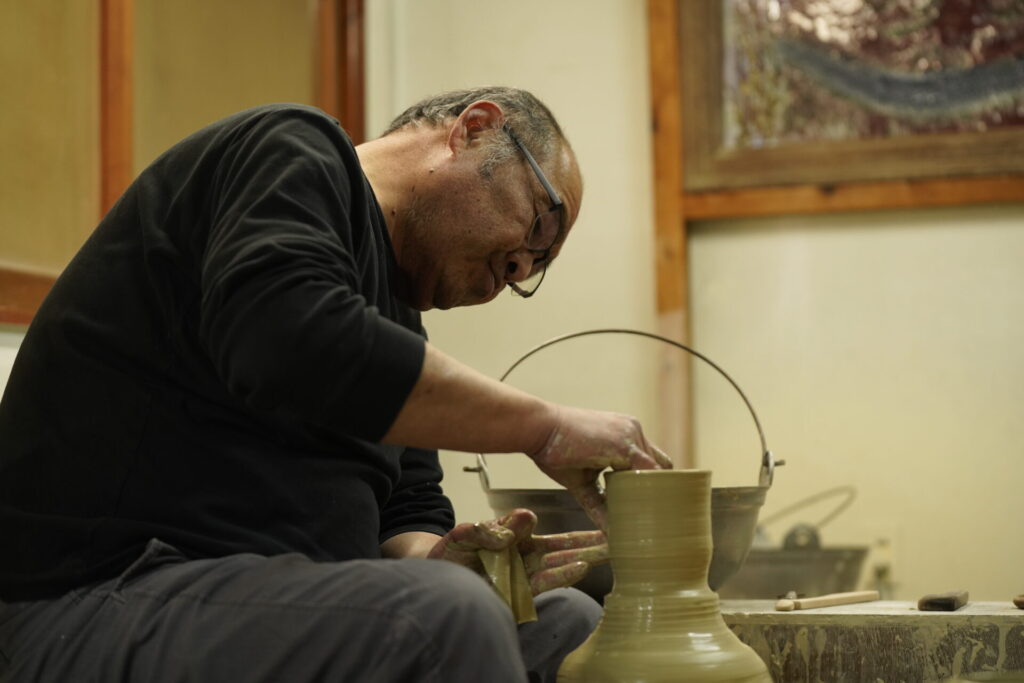
“Insulators may someday disappear. But as long as they’re needed, we’ll keep making them. And we’ll keep making new kinds of tiles too.”
Yumita does not fear the changing times. The factory that was born in the Meiji era to support electricity later rode the folk-craft boom of the Showa period, and in the Heisei and Reiwa eras expanded into the world of architectural art.
Its path is, in a sense, much like the glaze of Ryumon-yaki itself—melting in the kiln, flowing in unexpected directions, and finally settling into a singularly beautiful surface.
What Yumita hopes to pass on to the future is tableware for everyday life, inheriting the strength of insulators.
“I want people to use them, not just look at them. You can’t really understand things like how they feel on the lips or in the hand unless you actually use them.”
When he says this at the end, his face is no longer that of an insulator maker or even a business manager. It is simply the face of a potter.
Strong, free, and beautiful.
In the vessels of Ryumon-yaki are fired the spirits of artisans who have endured the severe winds and snow of Aizu for 120 years—artisans who, even so, continue to laugh brightly as they work.