Rich and Full-Bodied Aizu Sake — The Future of Local Brewing Woven by a Sixth-Generation Heir at the Foot of Mt. Bandai
宮森優治
Yuji Miyamori

Aizu [Fukushima]
Yuji Miyamori
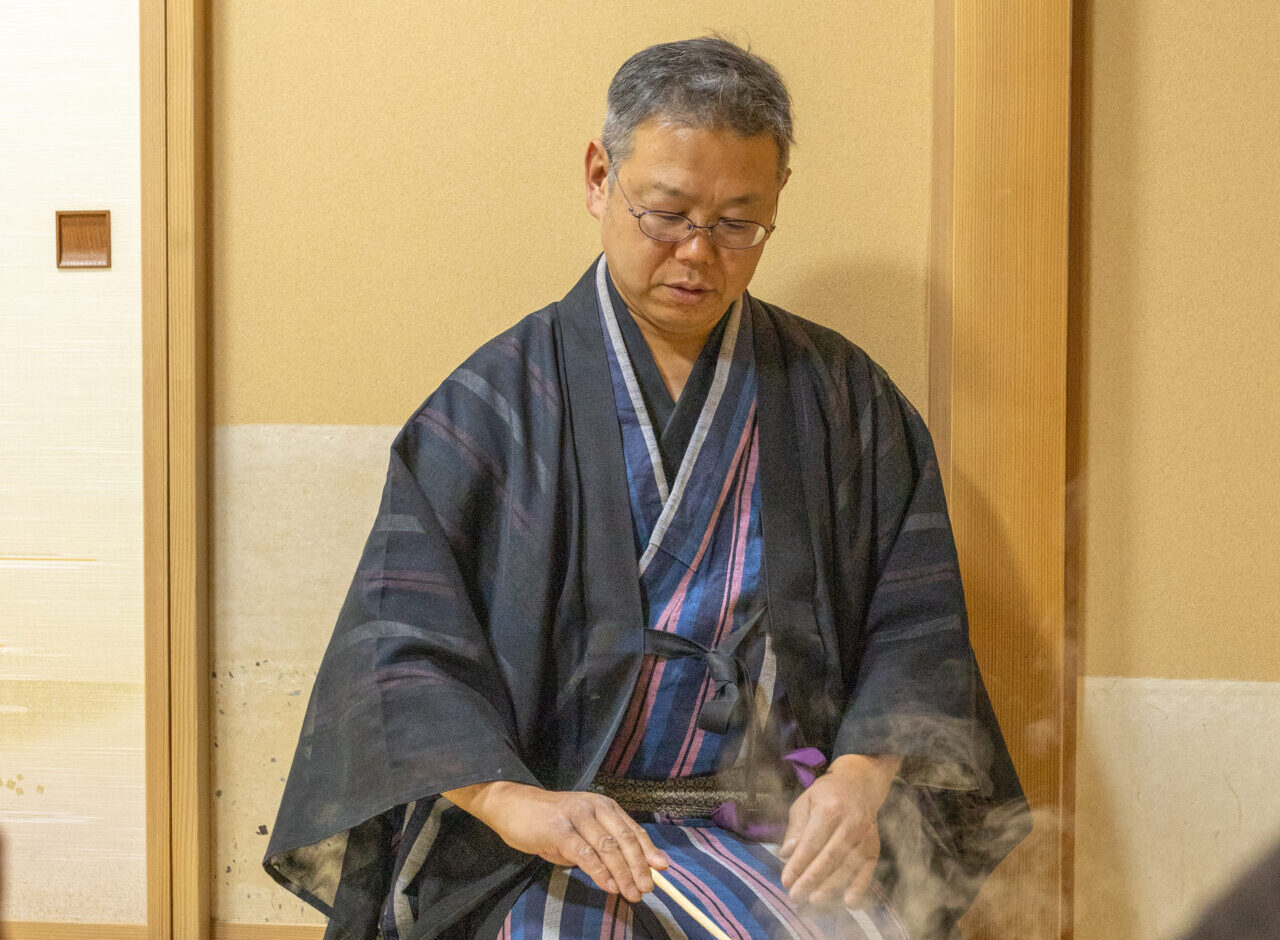
Born in Aizu-Wakamatsu City, Fukushima Prefecture. Sixth-generation head of Eisen Brewery (merged into Tenkyo Co., Ltd. in 2026). After graduating from university, he gained experience at a major sake manufacturer before entering the family business at the age of thirty. Centering his work on sake brewing that makes full use of the renowned Ryugasawa Spring water, he is also engaged in regional revitalization and in sharing the culture of local sake.
At the foot of Mt. Bandai, Yuji Miyamori carries on the craft of sake brewing. As the sixth-generation head of Eisen Brewery, he produces rich, full-bodied local sake rooted in the famous waters of Ryugasawa Spring, the rice of Aizu, and the skills of master brewers. Yet his gaze extends beyond the brewery itself. What he envisions is the development of the entire region, with sake at its center. Through his words, we begin to trace the future he has in mind.
The Rich, Full-Bodied Sake Nurtured by the Climate of Aizu
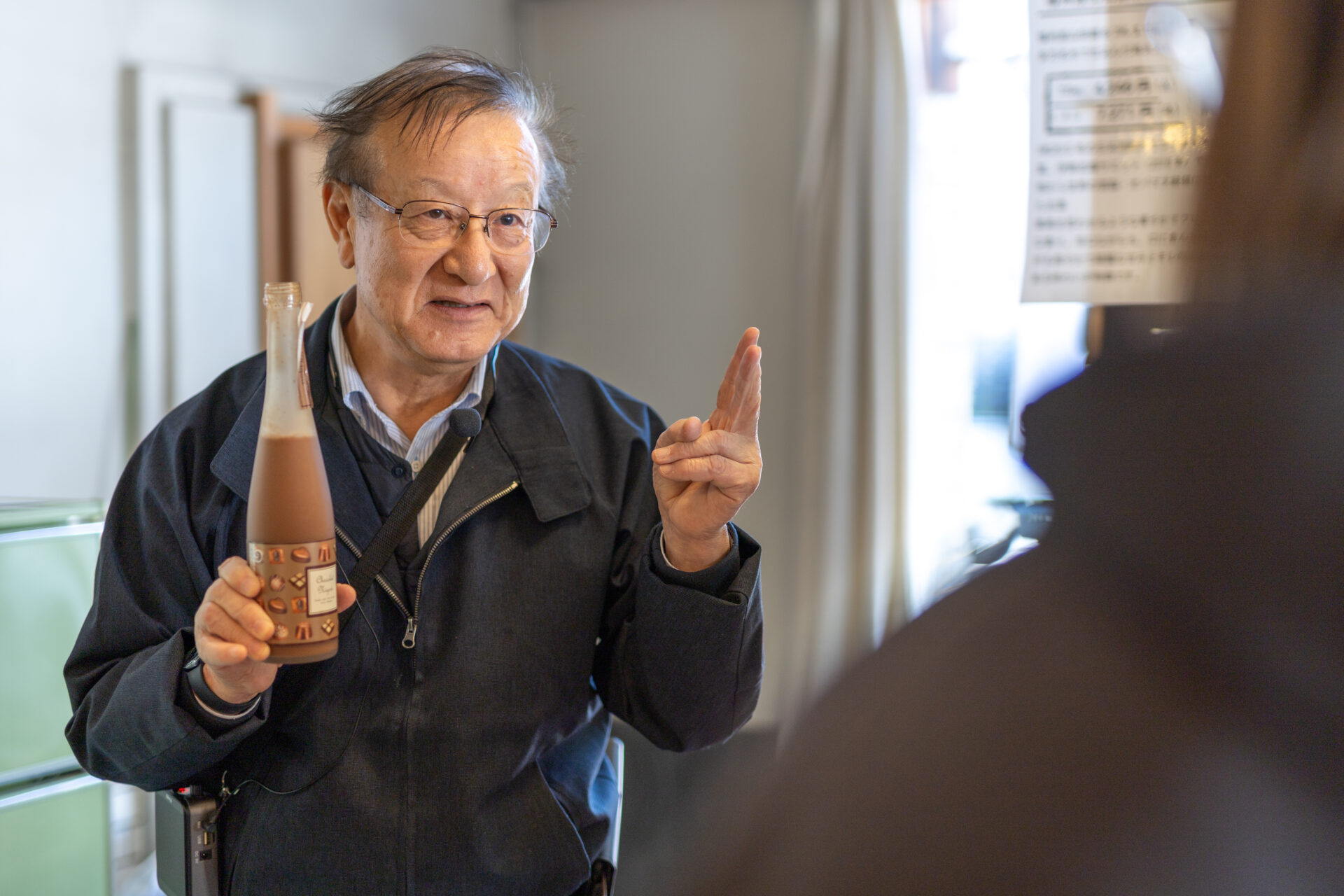
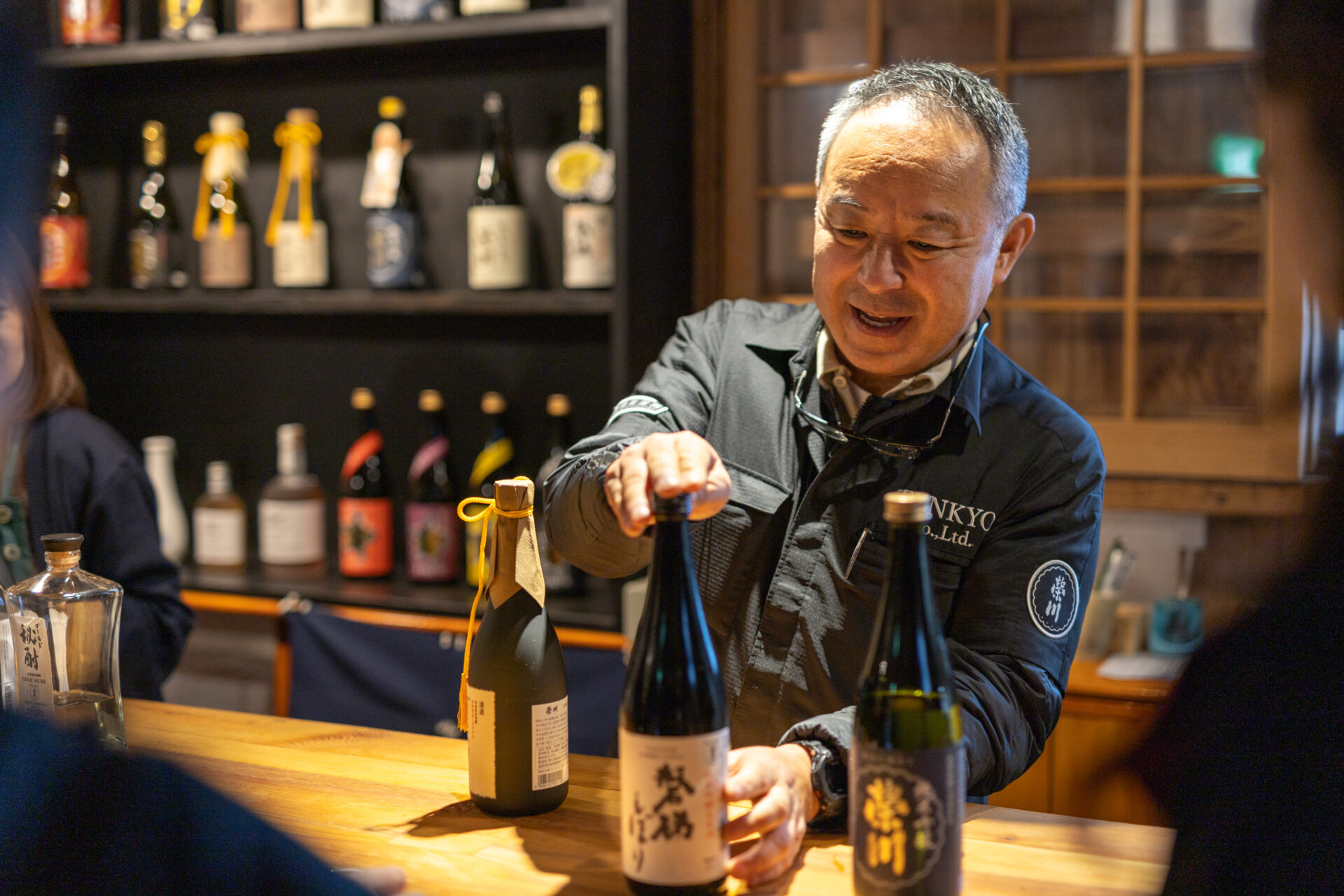
Yuji Miyamori, who describes his title simply as “the sixth generation,” now oversees the long-inherited Eisen Brewery, which currently operates as part of the Tenkyo corporate group. During the day, in addition to sales work, he stays busy serving customers and selling sake at the brewery shop Yukkura, as well as guiding visitors around the brewery grounds. At night, he heads out to visit restaurants and long-standing business partners.
“Half of my evenings are work, and the other half are personal,” he says with a smile. “But in the end, I’m a sake brewer. I never meet people without thinking about Eisen, and I never drink alcohol outside that context. Eisen is my life itself. My way of living revolves around the brewery.”
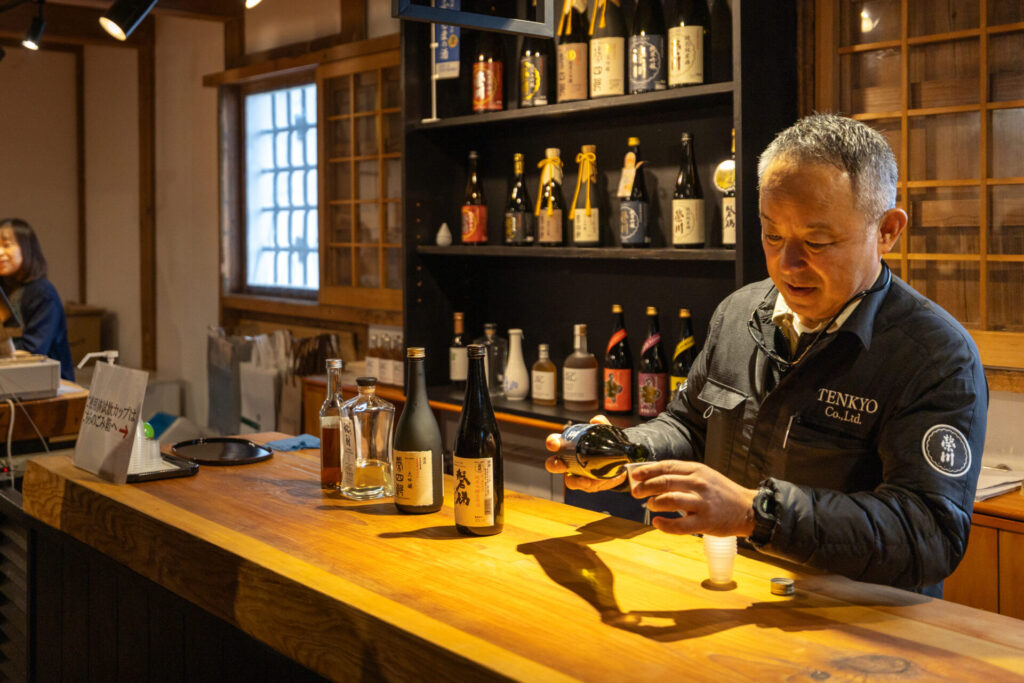
Miyamori joined the family business at the age of thirty. After graduating from university and working for a major sake maker, he returned to Eisen Brewery. Although he was the second son, he says he had always been conscious that he might one day inherit the brewery. His family home stood on the brewery grounds, and he grew up playing with the brewers, thinking of them almost as family.
“I wanted to keep living together with these people.”
In that sense, it felt natural for him to imagine his future within the brewery.
The roots of Eisen Brewery trace back to Miyamori Bunshiro Shoten, founded in 1896. The first-generation head, Eishiro Miyamori, branched off from that sake-brewing shop and established an independent brewery. Since then, the family has continued brewing local sake in Aizu.
Sake brewing in the Aizu region itself dates back to the late sixteenth century. It is said to have begun when Gamo Ujisato, upon entering Aizu-Wakamatsu, invited master brewers from Nada as part of efforts to promote local industry. During the Edo period, brewing flourished further under the protection of the Aizu domain. Even today, the region remains one of Japan’s prominent sake-producing areas, with around forty breweries. Much of this is thanks to the region’s natural environment.
“To brew sake, you need rice, water, and a climate suitable for fermentation,” Miyamori explains. “Rice cultivation has flourished in Aizu since the Edo period, and the region is blessed with underground water flowing down from the mountains surrounding the Aizu Basin. On top of that, the sharply defined seasons—hot summers and cold winters—make it ideal for brewing.”
The sake produced in such conditions has a flavor quite distinct from that of other regions. Instead of crisp, light, dry styles, Aizu sake tends to be rich and full-bodied, with a strong sense of the umami of rice and a solid, well-rounded profile.
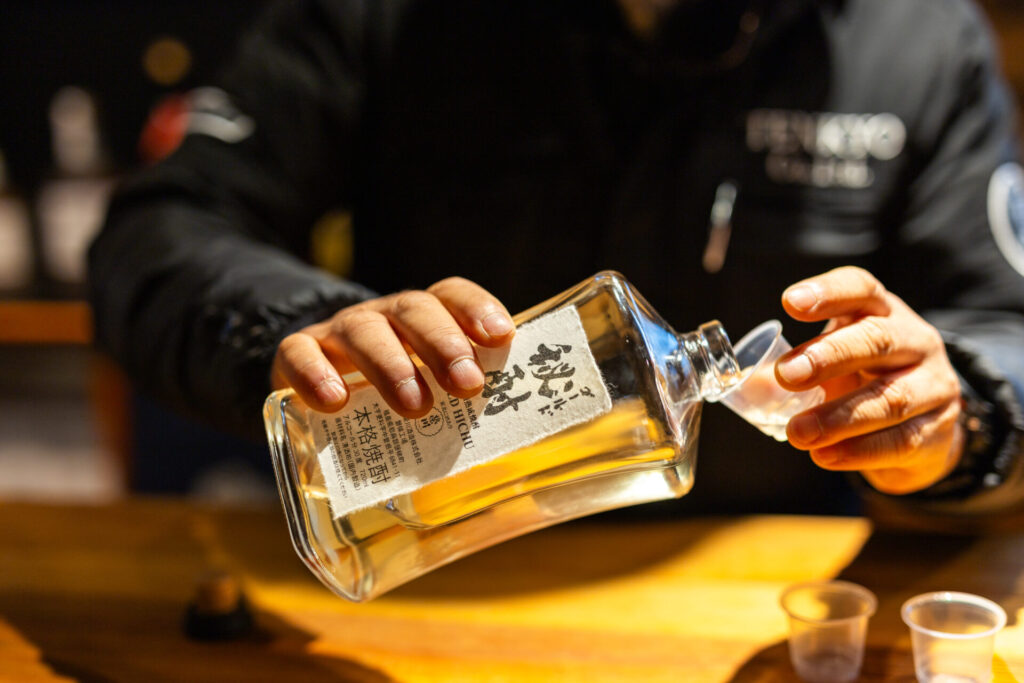
“You could say that the food culture of Aizu shaped this flavor,” Miyamori says. “Because this is a heavy-snow region, preserved foods seasoned strongly with salt or soy sauce have long been common. Sake had to be robust enough not to be overpowered by those flavors.”One symbolic dish is nishin no sansho-zuke, a traditional Aizu specialty. Dried herring, known as migaki nishin, is marinated with soy sauce, mirin, vinegar, and Japanese pepper leaves and slowly matured. The dish concentrates deep umami flavors. When the fragrant sharpness of the sansho and the firm texture of the herring meet the richness of local sake, the result is a perfect pairing—an expression of Aizu’s culinary culture.
The “Traditional” Flavor Shaped by the Character of Aizu
Within this brewing culture, Eisen Brewery adopted a notable approach early on: employing full-time in-house master brewers.
In earlier times, many brewers were farmers who grew rice from spring through autumn and worked in sake breweries only during winter. Eisen chose instead to cultivate its own brewers within the company.
“At the time, the third-generation head of the brewery questioned a system in which brewers were involved only during the brewing season,” Miyamori explains. “Sake for an entire year is brewed during the winter. But the maker should also observe how its flavor and quality change through spring and summer, and how bottled products are evaluated by customers. He believed that was the brewer’s responsibility.”
Later, Miyamori’s father, the fifth generation, made another crucial decision that would shape the brewery’s future: relocating in search of better water.
Although the previous site in Aizu-Wakamatsu still had abundant groundwater for brewing, urbanization around the 1970s began to affect both the quantity and quality of the water supply.
“Our production volume was increasing significantly, so my father started thinking about the long-term future,” Miyamori recalls. “He traveled throughout Aizu searching for the best water source and eventually arrived here in Bandai Town.”
The water he discovered was Ryugasawa Spring. The year after the relocation decision was made, the spring was selected as one of Japan’s 100 Famous Waters. Had the decision been delayed even slightly, the brewery might not have been granted permission to build there.
With support from the town, Eisen Brewery developed a forested site at the foot of Mt. Bandai and built its new facilities on a site of about 30,000 tsubo (roughly 99,000 square meters).
Because Ryugasawa Spring is soft water, unlike the harder water previously used, brewing with it presented a new challenge for the master brewers responsible for managing fermentation. Yet the brewery began a new chapter of sake production surrounded by the natural beauty of the region.
Relocating to Bandai Town also deepened the brewery’s connection with the community as a true local sake producer. The sake rice Miyama Nishiki is cultivated by local farmers in the town whenever possible, and additional rice is sourced from elsewhere in Aizu and Fukushima Prefecture. Brewery staff often work with farmers to learn more about rice cultivation and strengthen local agricultural cycles.
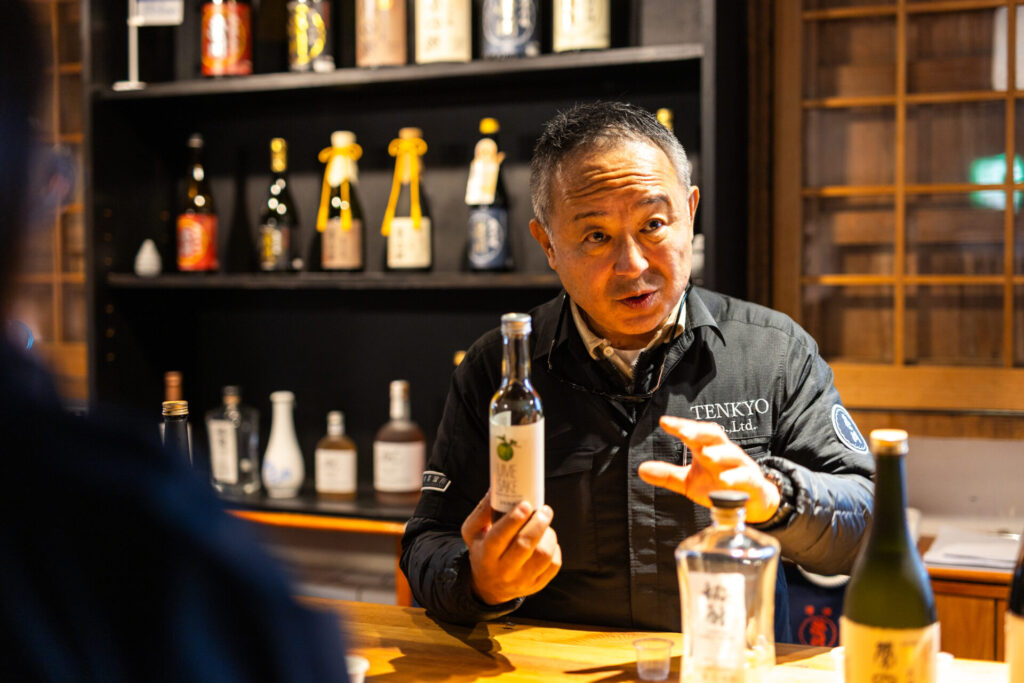
“The appeal of sake is that the climate and character of the land are reflected directly in its flavor,” Miyamori says. “And it’s also fundamental that sake is brewed to match the food of the region. If you visit ten sake-producing regions, you’ll encounter ten different combinations of sake and cuisine. That diversity comes from the regions themselves.
Of course, when I travel elsewhere, I enjoy the local sake and food there too. That’s the true pleasure of local sake.”
The central pillars of Eisen Brewery’s lineup are the flagship junmai daiginjo “Eishiro” and the long-loved everyday junmai sake “Eisen.” Around these core products, the brewery now produces nearly one hundred varieties, including unpasteurized sake, undiluted sake, and different pasteurization styles.
Despite this variety, the overall taste remains intentionally traditional. Even in an era when fruity aromas attract attention, Eisen Brewery continues to emphasize the rice-derived aroma that defines classic sake.
“We place importance on the five characteristic tastes of sake—sweetness, acidity, spiciness, bitterness, and astringency,” Miyamori explains. “When those are balanced and spread pleasantly across the palate, that is what I consider true deliciousness in sake.
But I think this also reflects a certain stubbornness typical of people from Aizu. Many brewers here have a strong desire to preserve inherited techniques. They’re not necessarily quick to create something entirely new.”
In other words, while Aizu brewers may not be quick to follow trends, they have a strong determination to refine flavor within the framework of tradition.
That stubbornness is also consistency—and trust. Whenever someone picks up a bottle of Eisen sake, they know they will encounter the same reliable flavor. That reliability is perhaps one reason the brewery has enjoyed such lasting support.
The Role of the Sixth Generation: Embodying the Flavor of Sake
Bandai Town, where Eisen Brewery now stands, lies beneath the iconic Mt. Bandai, with Lake Inawashiro—Japan’s fourth-largest lake—stretching out before it. Even during Japan’s bubble-era development boom, this region remained largely untouched. Surrounded by abundant nature and historic townscapes reminiscent of traditional Japanese towns, it offers a sense of timeless Japanese scenery.
Within this environment, what kind of sake does Miyamori hope to create?
“Above all, sake that reflects the character of this land,” he says.
“In fact, it’s not uncommon for local residents themselves not to fully realize how good their local food and sake are. When I think about the future of the town, that worries me. If Aizu is to remain a destination, the people who live here must first feel pride in the flavors created here.
What I can do is make local sake that draws out the strengths of this land—and then increase the number of people who pick it up. That’s why I visit restaurants night after night. I believe that embodying the deliciousness of our sake myself is part of my role as the sixth generation.”
He adds that the time spent enjoying sake together is just as important. When people gather around sake and food and connect with one another, something special happens. Those who enjoy sake are, in their own way, also helping nurture it.
Water, rice, climate, brewers, and the people who share cups together—only when all of these elements come together can the future of sake truly take shape.
What Do You Wish to Pass On to the Future?
When asked what he hopes to pass on to the future, Miyamori pauses before answering.
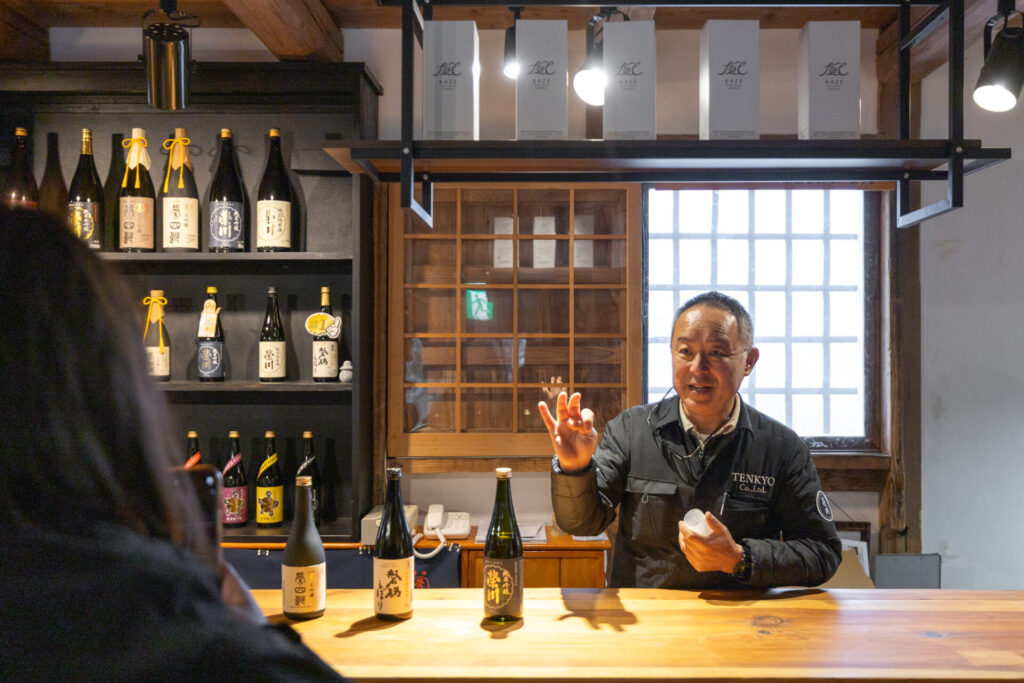
“Perhaps it’s the connections across the entire region, centered around sake brewing.
There are local farmers who grow the sake rice, and local people who drink our sake. I want to expand that circle further.
And that circle should include children as well. We could teach them about sake brewing or rice cultivation, or help them learn about the importance and taste of good water. Through those experiences, communication that transcends generations and positions can emerge. If that happens, the region’s appeal will naturally be passed on to the next generation.
And if sake is present in those moments of connection, all the better. After all, some of the most interesting ideas for making a town more exciting might only emerge after sharing a drink.”
Though he says it jokingly, his words reveal deep affection for both the sake he brews and the community that sustains it. The story of the brewery is not merely a corporate history. It is a continuing effort to protect water, cultivate rice, and connect people.
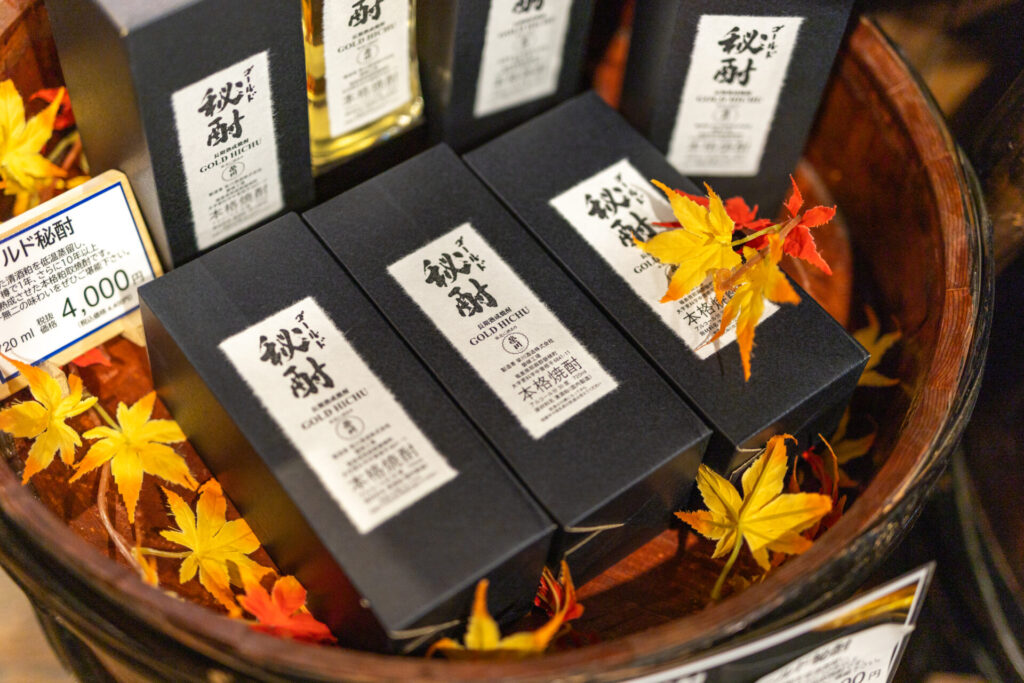
Today, on the same grounds, the partner facility Tenkyo Distillery is also producing whisky. This too is a new challenge born from the famous waters of Bandai Town. In a few years, a unique Japanese whisky reflecting the surrounding natural landscape is expected to emerge.
Sake and whisky, both created from the same water. It will be fascinating to see what kind of future this shared source will continue to shape.