Urushi Culture and Japanese Sensibility — Carrying Them into the Future as a Maki-e Artist and Cultural Transmitter
中村光彩
Kousai Nakamura

Aizu [Fukushima]
Kousai Nakamura
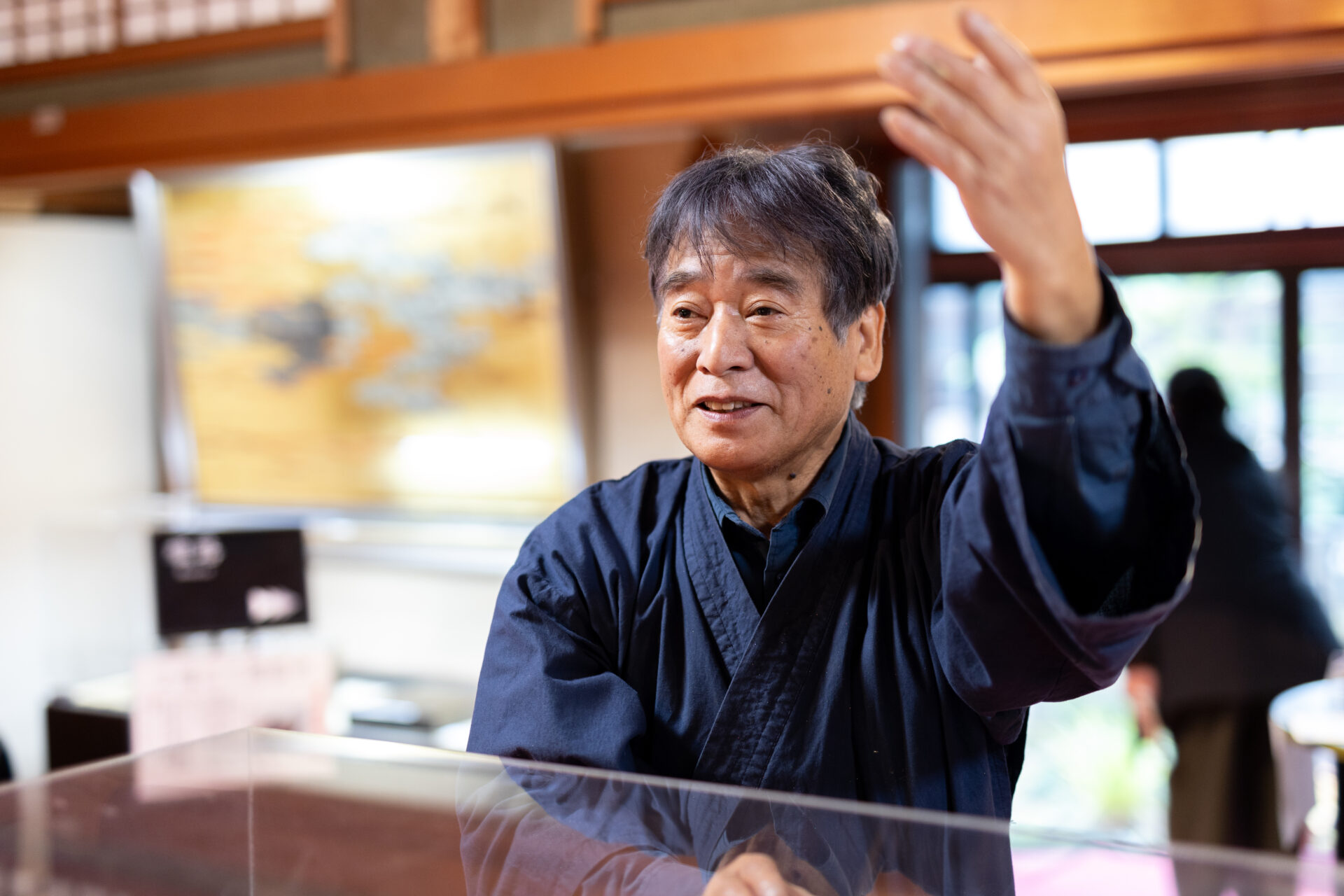
Born in Aizu-Wakamatsu City, Fukushima Prefecture. A maki-e artist specializing in Aizu lacquerware and a certified traditional craftsperson of Aizu-nuri. After studying maki-e techniques in Kanazawa, he returned to Aizu and established Kousai Kobo Nakamura. His signature works include glass maki-e using gold, silver, platinum, and colored foil. He currently serves as a maki-e workshop instructor at Suzuyoshi Shikki-ten, an Aizu lacquerware heritage center, while also working to pass on the culture of Aizu lacquerware alongside his own creative practice.
Maki-e artist Kousai Nakamura carries two responsibilities: creation and transmission. While serving as an instructor for maki-e workshops at Suzuyoshi Shikki-ten, a center for preserving and sharing Aizu lacquerware culture, he has pursued a distinctive mode of expression by combining the practicality of Aizu lacquerware with the decorative techniques he learned in Kanazawa.
Lacquerware culture, nurtured over a long history, now stands at a crossroads as times continue to change. Even so, Nakamura remains deeply engaged with urushi. By tracing his path, we are prompted to ask what the culture fostered by the land of Aizu is trying to hand down to the future.
Maki-e Techniques Born in Aizu and Refined in Kanazawa
“Aizu is a snowy region, so in winter it becomes completely shut in by snow. Living in that environment, I suppose people naturally become patient and resilient. Perhaps that is why Aizu lacquerware artisans apply layer after layer of urushi to the wooden base, repeating the process again and again to complete a piece.”
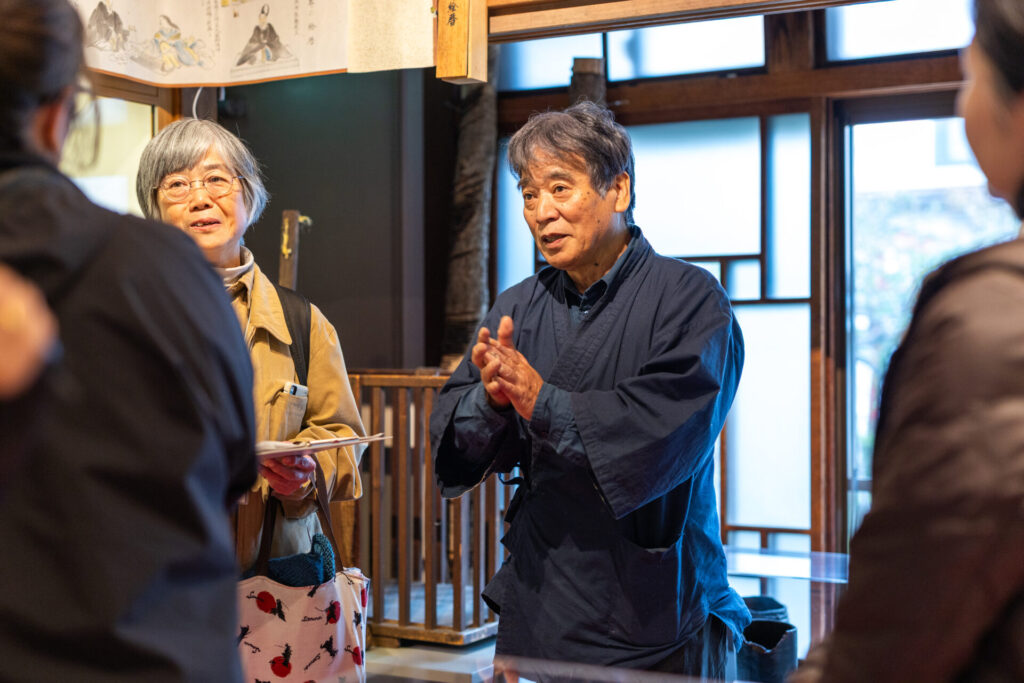
Speaking with a gentle smile is Kousai Nakamura, a maki-e artist working within the 400-year-old tradition of Aizu lacquerware. Alongside continuing his creative work here in the place where he was born and raised, he has spent nearly 18 years serving as an instructor for maki-e workshops at Suzuyoshi Shikki-ten, an Aizu lacquerware heritage center. Participants range widely—from elementary school students on educational trips to general tourists and overseas group visitors.
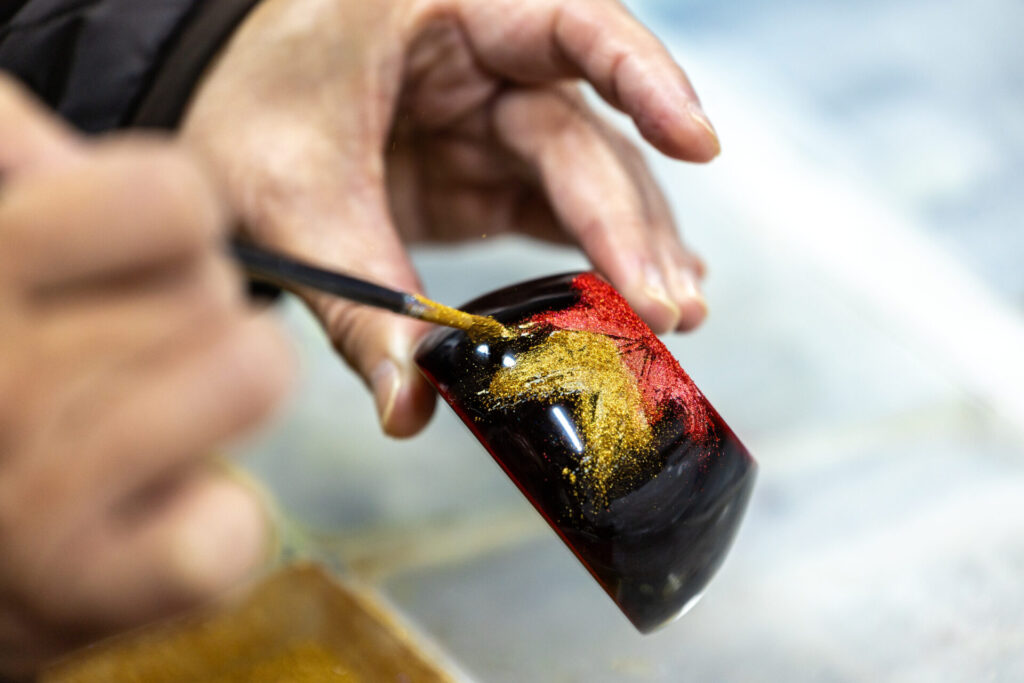
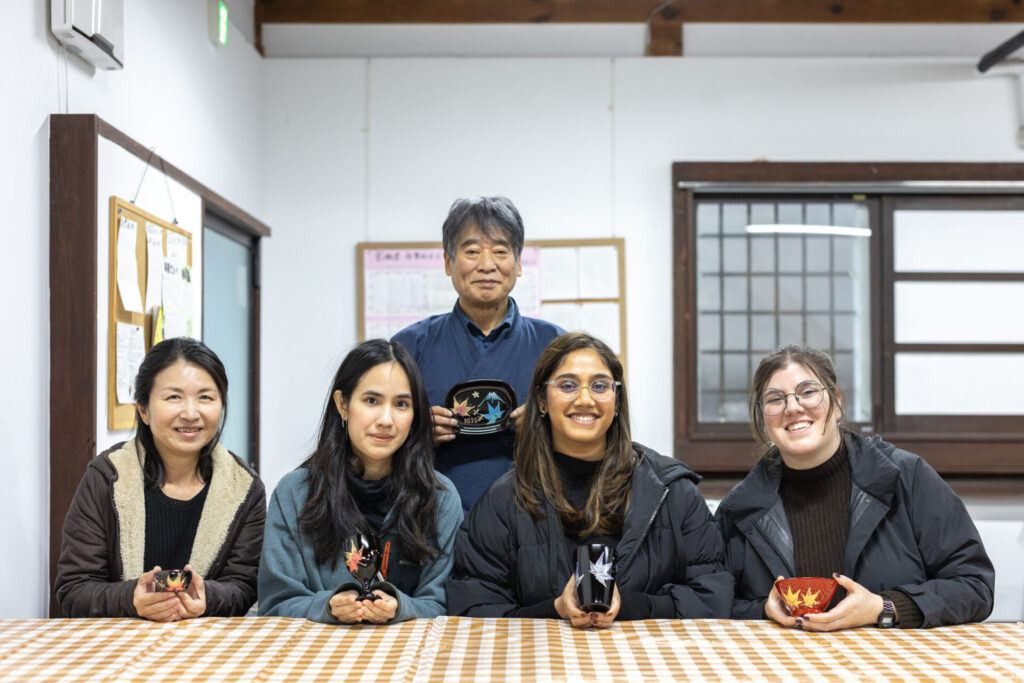
Maki-e is a decorative technique in which patterns are painted onto the surface of a vessel with urushi lacquer, then finished by sprinkling gold or silver powder, or sometimes colored powder, onto the design. In these workshops, participants choose an item such as a plate, bowl, or hand mirror, then create a one-of-a-kind lacquerware piece under Nakamura’s guidance.
“There are lacquerware production regions all across Japan—Aomori, Akita, Ishikawa, Kyoto, and others—but this is about the only place where the general public can casually try maki-e for themselves. People are especially pleased that they can take what they make home the very same day.”
Nakamura was not born into a family of lacquer artisans. He once left Aizu and worked as a company employee, but his attachment to his hometown gradually grew stronger, leading him back. There, he took a job at a retail store dealing in lacquerware from all over Japan.
As a sales representative, he introduced lacquerware produced in Aizu and other regions to department stores around the country. Through this work, he became increasingly drawn to the beauty of lacquerware. What captivated him most deeply was Kaga maki-e, the decorative style of Kanazawa lacquerware from Ishikawa Prefecture.
Japan has what are often called the three major centers of lacquerware (maki-e): Kyoto lacquerware (Kyo maki-e), Kanazawa lacquerware (Kaga maki-e), and Edo lacquerware (Edo maki-e). Kanazawa lacquerware in particular developed under the patronage of the Kaga domain, which invited artisans from Kyoto during the Edo period. Because it uses gold and silver lavishly in its maki-e decoration, it is known for combining brilliance with a sense of weight and grandeur.
“I was stunned by the technique that could make gold shine so brilliantly. Its splendor was enough to take my breath away.
Seeing how taken I was with it, one of our business partners said to me one day, ‘Why not train in Kanazawa?’ That led me to become an apprentice there, where I learned maki-e techniques such as blending urushi, handling gold powder, and working with the brush.”
The Sensibility of Kousai Nakamura — Connecting Urushi Culture to the Next Generation and the World
Meanwhile, the history of Aizu lacquerware goes back to the Sengoku period. In 1590, when Gamo Ujisato entered Aizu-Wakamatsu, he is said to have encouraged lacquerware production as part of the development of the castle town and the promotion of local industry. At that time, woodworkers and lacquer coaters were also brought from Omi, which helped wooden base-making and lacquering flourish and laid the foundations of lacquerware production. Later, in 1661, maki-e was introduced as well, and with the support of the domain, a stable production base was established.
What emerged through this process was a form of lacquerware distinctive in that it spread widely not only as furnishings for samurai households and temples, but also as practical wares for everyday life among ordinary people. Lacquerware finished primarily in black and vermilion became indispensable in both ceremonies and daily living, and a culture of lacquerware as something actively used took root. In maki-e too, relatively simple techniques suitable for everyday use developed. Whereas Kanazawa lacquerware pursued the artistic and decorative possibilities of maki-e, Aizu lacquerware was refined as practical ware to be used in daily life.
“In my family, of course, and really in every household, lacquerware was a necessity. At New Year’s and wedding celebrations, families would receive many guests, so they would have at least enough trays and bowls for around twenty people. But most of them were plain, undecorated pieces. That is probably why I was so fascinated by the glamorous beauty of Kaga maki-e.”
After completing his training and returning to Aizu, Nakamura once again worked for a lacquerware wholesaler while creating his own works at night, further refining in Aizu the techniques he had learned in Kanazawa. It was then that tragedy struck: his wife passed away suddenly.
“My children were still very young, so I had no choice but to think seriously about how I was going to live from then on. It would be difficult to balance child-rearing with a company job. But if I worked as an artisan, I could work from home without being tied to set hours. That was when I decided to become independent as a maki-e artist.”
Throwing himself into work as if to heal his grief, Nakamura gradually built up his own mode of expression. Alongside decorating Aizu lacquerware intended for daily use, he also began creating works that used gold powder brought from Kanazawa and made full use of the techniques he had cultivated during his years of training.
He says that the aspect requiring the greatest care was the blending of urushi itself. The drying behavior of urushi changes depending on the climate, and the ideal mixture also differs according to techniques passed down in each region. Based in Aizu, Nakamura learned to judge the condition of urushi best suited to this land, thereby broadening the range of his creative work.
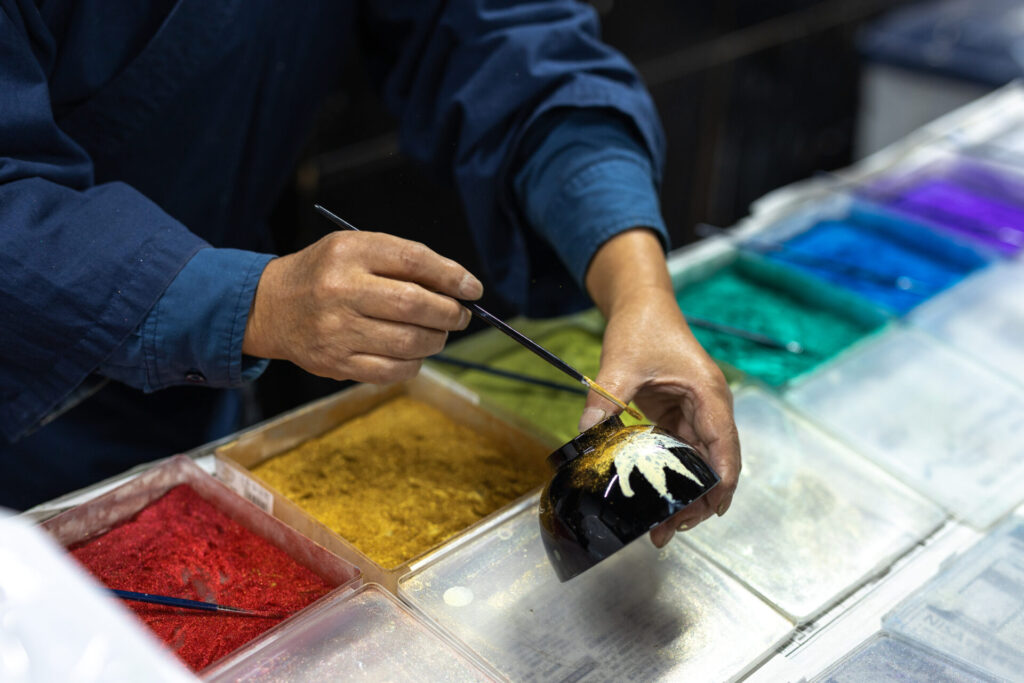
“When I draw fine lines, I make them as delicate as possible, and when bringing out the brilliance of gold and silver, I pay close attention to the degree of polishing.
Even if two maki-e artists use the same materials and paint the same motif, the finished result turns out completely differently. That is probably because what appears in the work is not so much the production region as the artist’s own sensibility.”
Lavish Kanazawa lacquerware and Aizu lacquerware, which places importance on being used—understanding the characteristics of both, Nakamura continued asking how best to draw out the beauty inherent in materials such as urushi, foil, gold, and silver. In doing so, he formed a world of expression that was uniquely his own as a maki-e artist.
However, in the Heisei era, as Japan’s economy stagnated, the environment surrounding Aizu lacquerware also changed drastically. With demand declining, many large lacquerware shops—including wholesalers that had been among Nakamura’s main clients, as well as major retailers in the Kanto and Kansai regions—went bankrupt one after another, and the entire industry entered a difficult period. Nakamura, who until then had never lacked work, lost his means of livelihood as well.
Yet by that time, he had already begun to want to create what he himself wanted to make, on his own terms. He started taking on new kinds of work—most notably glass maki-e, a technique in which maki-e is applied to glass. He wondered whether, with a transparent material, it might be possible to depict images and colors that were difficult to achieve on conventional lacquerware. With that idea in mind, he continued making trial pieces.
The turning point again came through an encounter with another person. A ceramic artist in Mashiko, Tochigi, was exploring forms of expression using urushi on glass and ceramics, and the two began collaborating. The ceramic artist produced glass works, to which Nakamura applied maki-e.
“The difficult part was getting the urushi to adhere to the glass. No matter how many times we tried, it would peel away. So we reexamined the surface preparation of the glass and the blending of the urushi one element at a time, and through repeated trial and error we finally established the technique.”
Today, glass maki-e—now virtually synonymous with the name Kousai Nakamura—sparkles vividly in the light and has earned high praise both in Japan and abroad as a body of work that carries a contemporary beauty within a traditional technique. Born amid the headwinds of a changing lacquerware industry, this style also became, for Nakamura, one answer to how the material of urushi might be led into the next era and into a wider world.
The Role He Plays at the Aizu Lacquerware Heritage Center as a Cultural Transmitter
Today, Suzuyoshi Shikki-ten—where Nakamura teaches maki-e workshops—has long been rooted in the region as a lacquerware store that carries the lacquer culture of Aizu-Wakamatsu into the present. On its grounds stand storehouses built from the Edo through Meiji periods, now used as a shop, studio, gallery, and workshop venue. Designated as a nationally registered tangible cultural property as the Aizu Lacquerware Heritage Center, the architecture itself is a precious cultural asset that tells the history of Aizu.
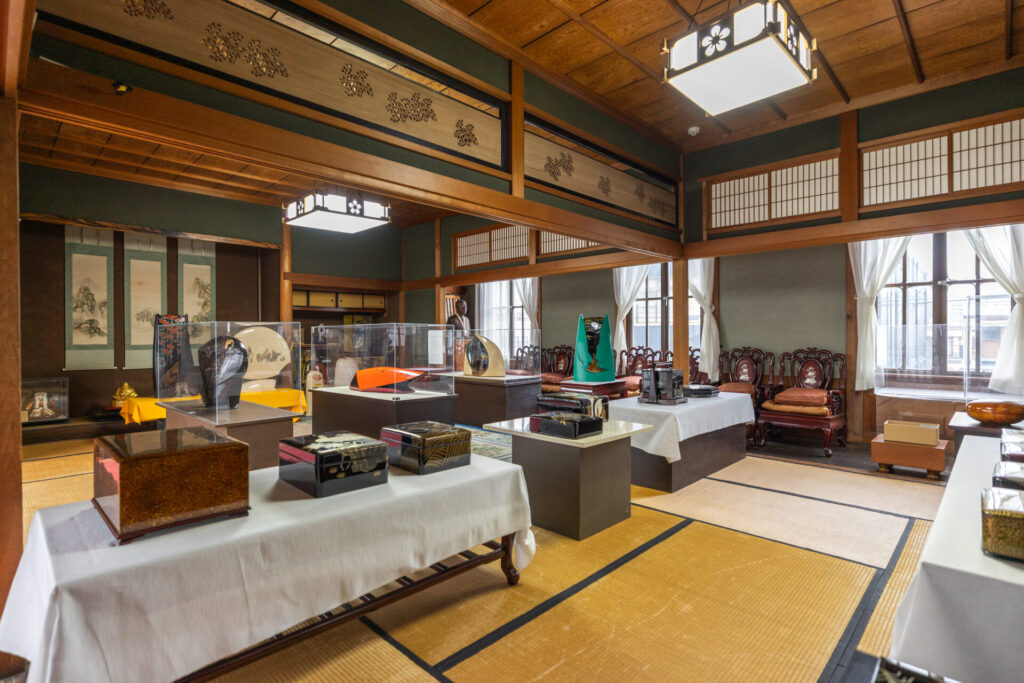
What makes Suzuyoshi Shikki-ten especially significant is that it is not simply a place to sell lacquerware, but also a place to communicate the history of the culture itself. Lacquerware once existed naturally within everyday life. But as lifestyles changed and demand declined, the shop took on the mission of passing its value on to the future.
“Not only Aizu lacquerware, but traditional crafts across Japan are disappearing. As an artisan, I feel that we cannot allow this culture to die out. That was why, when I accepted the role of teaching maki-e workshops, I also moved my workplace to Suzuyoshi.”
By opening its storehouses and creating a place where anyone can encounter urushi, Suzuyoshi Shikki-ten has become a symbolic site for connecting tradition to the next generation. Nakamura, too, in occupying this place, is not only a maki-e artist but also a transmitter of culture.
“To begin with, I was never very good at talking with people. But after meeting so many different people here, I’ve become someone who enjoys talking more than most. Even though I still think artisans are supposed to be quiet, I now find conversations with visitors simply delightful.”
What Do You Wish to Pass On to the Future?
When asked what he hopes to pass on to the future, Nakamura answered as follows.
“Above all, I would say urushi as a coating material.
Even if you look across the world, Japan is the only place where sap is taken from the urushi tree and used as a coating material. In English, it may be translated as ‘paint’ or ‘lacquer,’ but I hope it will come to be recognized simply and directly as Japan’s own material: urushi.
Whether black or vermilion, urushi has a distinctive quality of color unlike anything else. Within it resides the very mystery of nature itself. To share the greatness of urushi widely and leave it for future generations—that is what I believe my role to be.”
At the root of urushi culture lies nature itself. Blessed with mountains, forests, and water, the Japanese people have lived alongside a rich natural environment and, through their everyday lives, cultivated a unique sense of beauty. Traditional crafts, including lacquerware, live on as an extension of that sensibility.
What Nakamura seeks to convey at Suzuyoshi Shikki-ten, a place of cultural transmission, may not be only the beauty and history of Aizu lacquerware. It may also be the very sensibility of the Japanese people—the awareness of gratitude toward nature, and the understanding of oneself as part of nature as well.