Two Thousand Years of Tradition, Carried Into the Future:The Craft of Noto Jofu and the Artisans’ Determination
山崎隆・久世英津子
Yutaka Yamasaki and Etsuko Kuse

Hakui [Ishikawa]
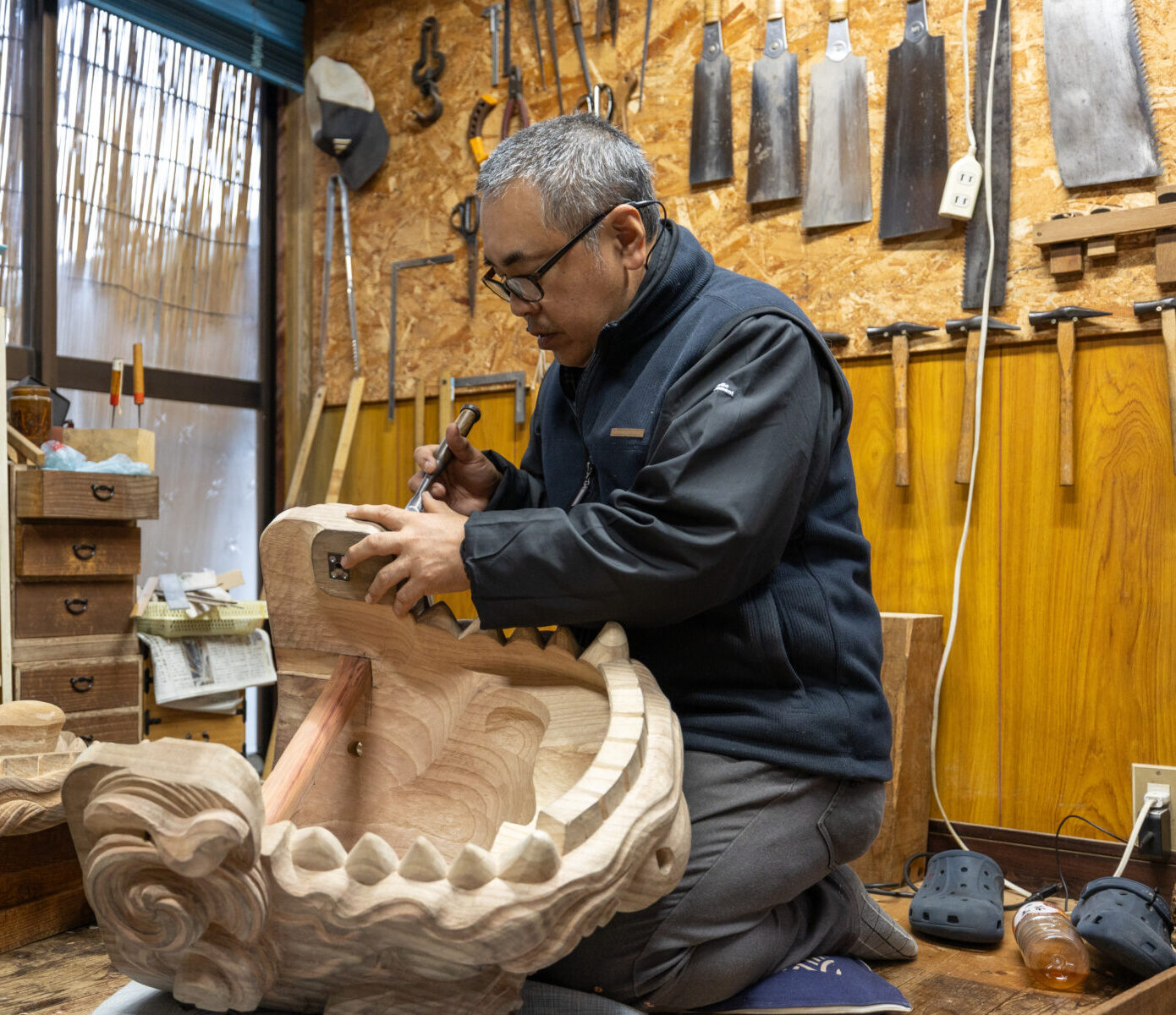
Yutaka Yamasaki
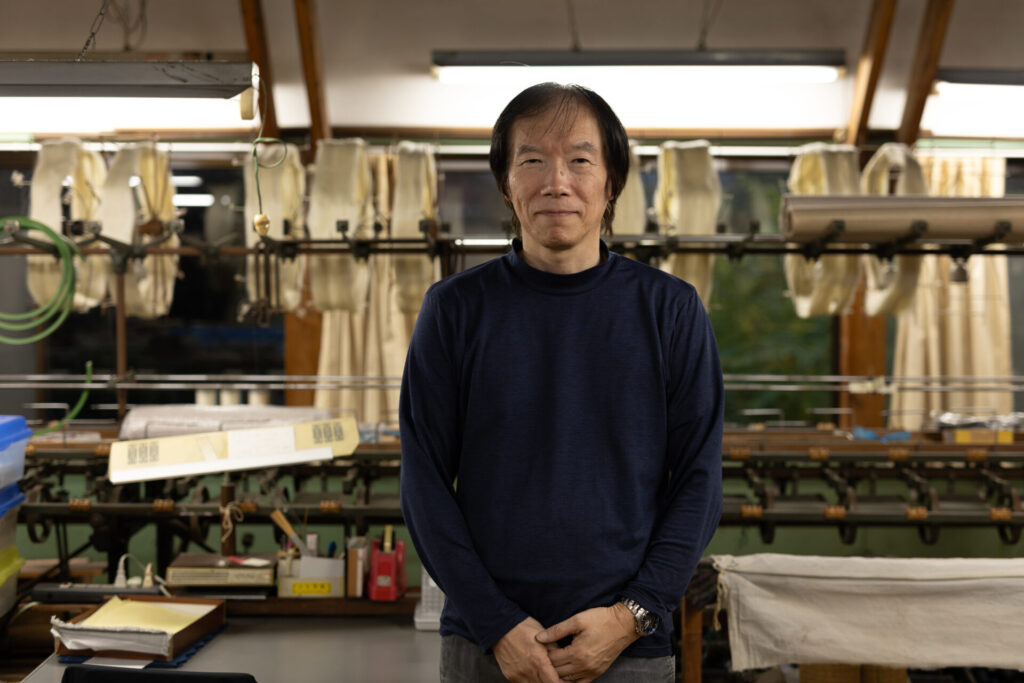
Born in Hakui City, Ishikawa Prefecture. Fourth-generation master weaver and President/CEO of Yamasaki Asa Orimono Kobo Co., Ltd. In his mid-40s, he left his job at an electronics manufacturer to take over the family business. After acquiring the techniques, he now leads the studio as a hand-dyeing artisan—an essential role in creating kasuri patterns—while also overseeing pattern planning and design.
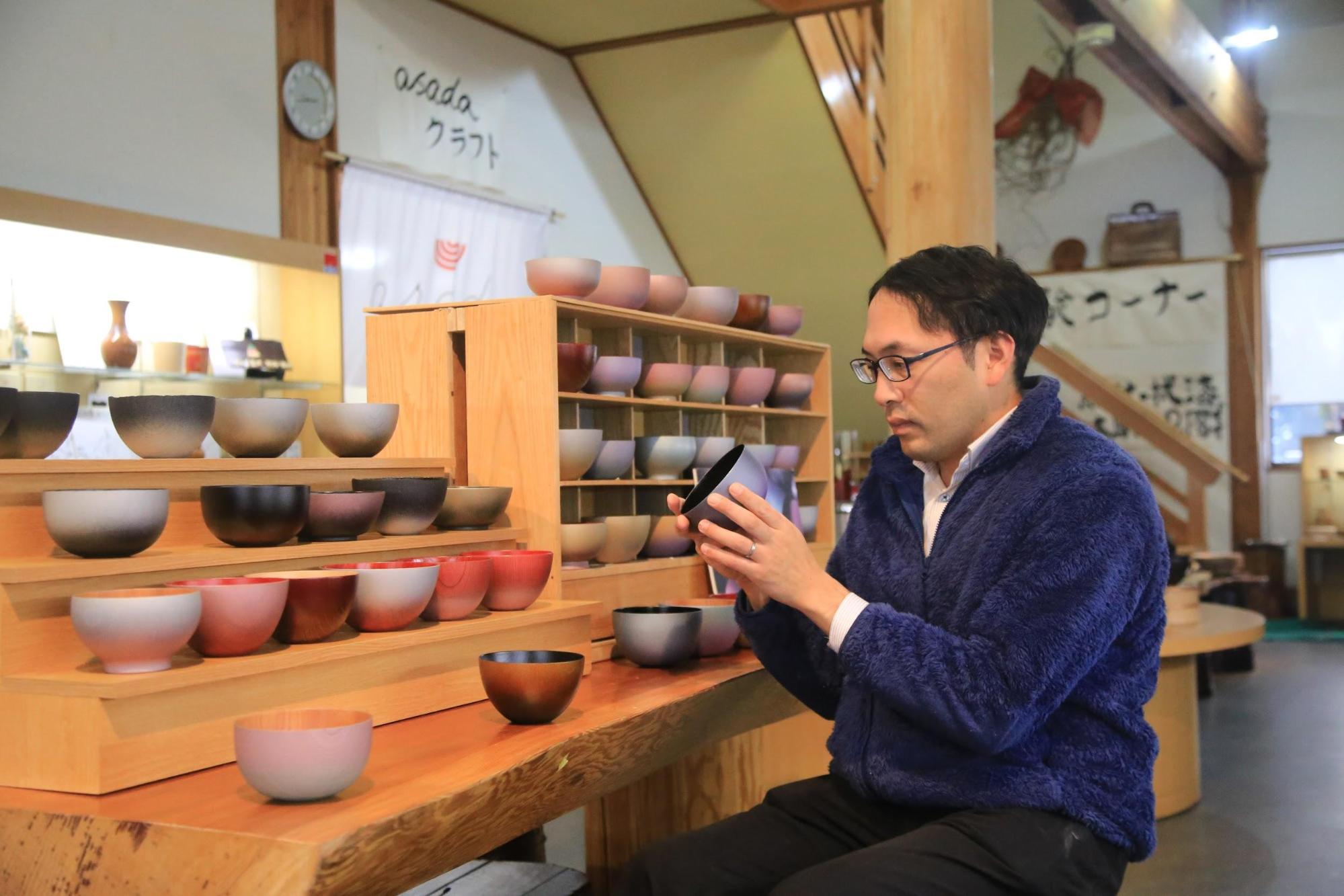
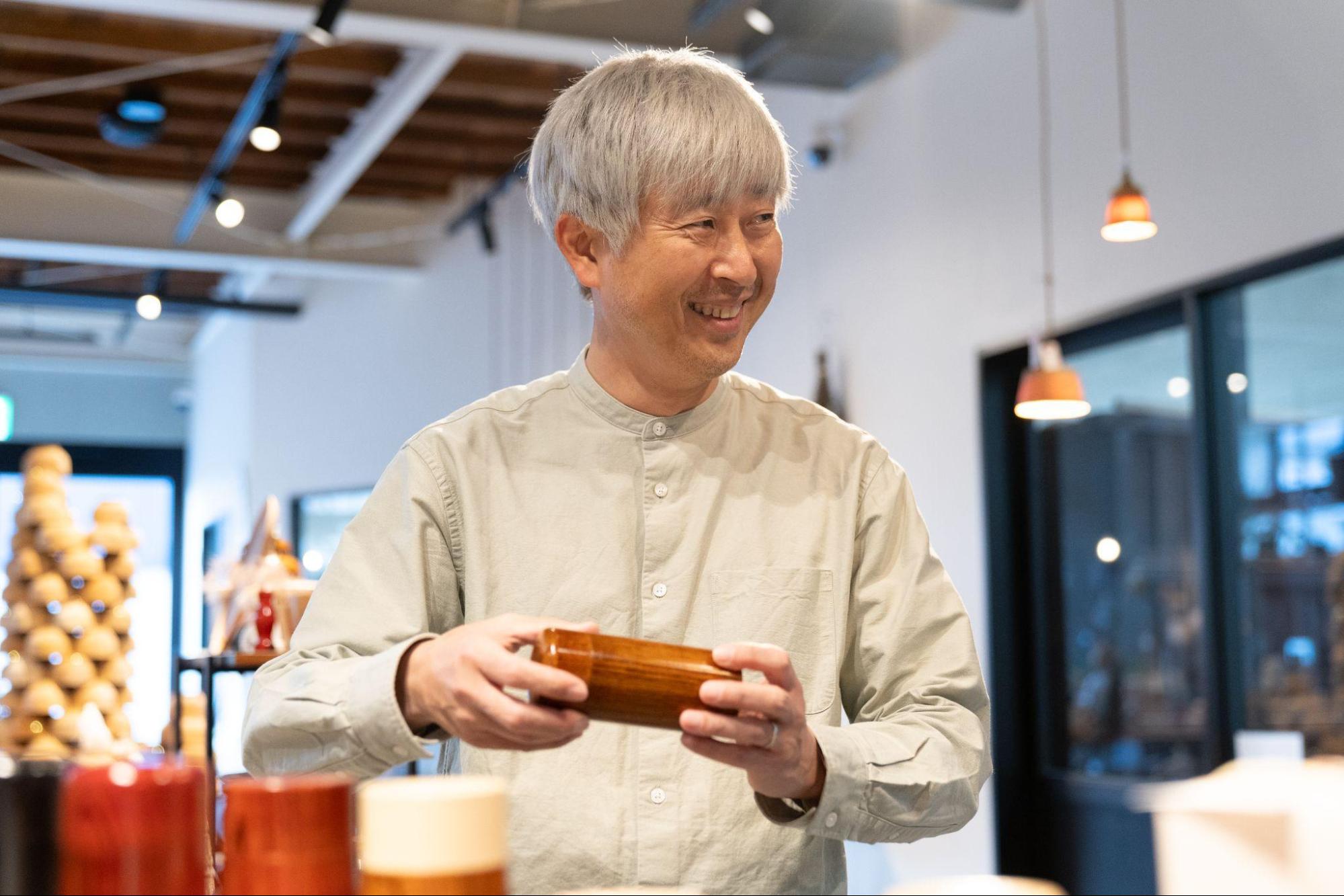
Etsuko Kuse
Born in Kanazawa City, Ishikawa Prefecture. Executive Director of Yamasaki Asa Orimono Kobo Co., Ltd. From an early age, she watched the work of her grandfather, the third-generation head, and developed a strong interest in the craft. After graduating from university, she worked in content production and preservation at a national museum in Osaka. Today, she is responsible for sales, public relations, and product planning, and as a “storyteller,” she proposes the enduring value of Noto Jofu—so it can remain loved and connected to the future.
Noto Jofu is a textile tradition with a history of roughly 2,000 years, said to date back to Japan’s mythic age. Its techniques were passed down through the Edo, Meiji, and Showa eras, reaching a peak—only to see demand decline with changing times. Today, Yamasaki Asa Orimono Kobo stands as the only remaining weaving studio.
The third-generation head once said, “To let something this wonderful disappear would be a sin.” We spoke in depth about the appeal of Noto Jofu and the determination to preserve this cultural tradition—held by the last weaving studio that continues to insist on authentic craftsmanship.
Even as the Last Studio, They Kept the Thread Alive: A Tradition and Culture of Making by Hand
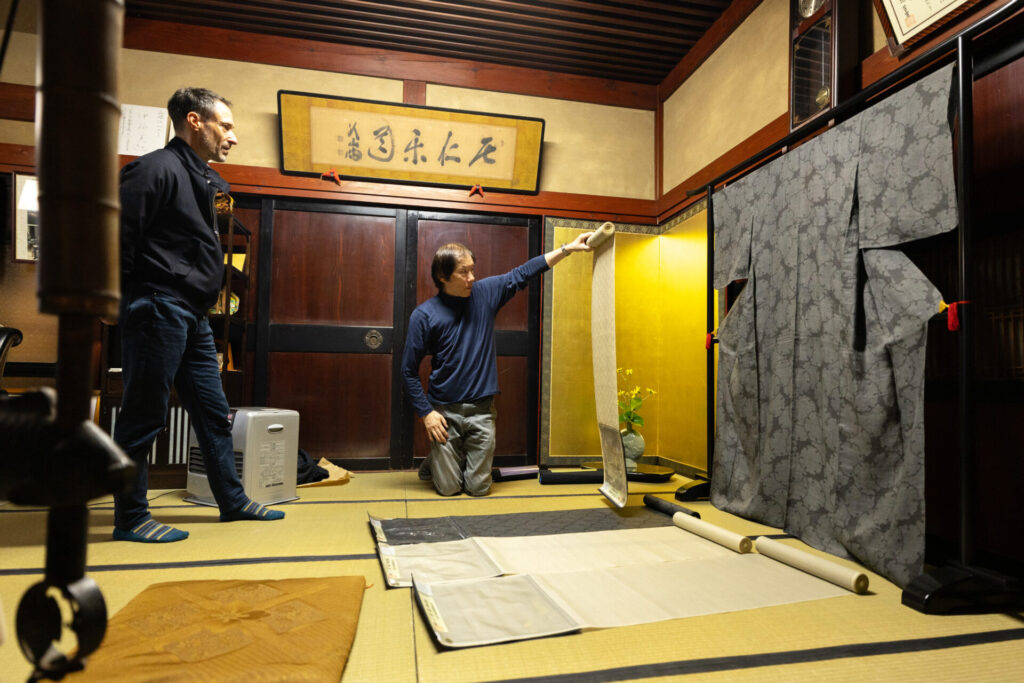
“Noto wa yasashiya, tsuchi made mo.”
This phrase is said to have been used by a Kaga-domain samurai in the Edo period to describe the warmth and kindness of the people he encountered while traveling—so kind, it seemed, “even the soil is gentle.”
On the Noto Peninsula in Ishikawa, the first snow often arrives around mid-November, and cloudy or rainy days become frequent. Yet even in a harsh natural environment, people here are said to live with calm hearts and welcome visitors with warmth.
It is in Noto that Noto Jofu is made—an exceptionally fine linen textile woven in kasuri patterns using threads spun from ramie. Designated as an Intangible Cultural Property of Ishikawa Prefecture, Noto Jofu is now produced by only one studio: Yamasaki Asa Orimono Kobo, where handcraft techniques have been carefully preserved.
In the workshop, where around twenty artisans—primarily women—work each day, the sounds of winding thread and weaving echo from morning onward. Fourth-generation head Yutaka Yamasaki is a hand-dyeing artisan, responsible for one of the most crucial steps in creating kasuri patterns.
The history of Noto Jofu is ancient—tracing back about 2,000 years. It is said to originate in Japan’s mythic age, when a princess of Emperor Sujin taught weaving with hemp in the Nakanoto area. The technique became rooted as a regional tradition, improving during the Edo period. In the Meiji era, it was selected as an offering to the Imperial Household. By the Showa era, more than 120 weaving studios in Ishikawa were producing it, and the craft reached its peak.
However, postwar changes in lifestyle profoundly affected Noto Jofu. As Western clothing became the norm and people moved away from kimono, studios gradually disappeared—until the textile was even described as “vanishing Noto Jofu.” Finally, in 1982, only Yamasaki Asa Orimono Kobo remained.
At that time, the third-generation head—Yamasaki’s father—reportedly said:
“To let something this wonderful disappear would be a sin.”
Those words likely held both deep love for Noto Jofu and respect for the predecessors who had sustained it for centuries. Yet he also told his son, “You don’t have to inherit it.”
“He probably felt the difficulty of running the business more than anyone,” Yamasaki says. “In fact, there were times when we couldn’t survive on Noto Jofu alone, and we earned a living through yarn twisting.”
Etsuko Kuse, Yamasaki’s niece, recalls that period as well.
“From childhood, I watched my grandfather pouring everything into making Noto Jofu. Looking back, I think he felt a mission—to carry the tradition forward as the last remaining studio.”
Even while knowing how difficult it would be to pass on, the third-generation head still said, “Not preserving it would be a sin.” The reason lies in what Noto Jofu represents: an ultimate beauty born from handwork shaped through centuries. From sourcing the ramie thread to weaving a single finished bolt of cloth, every step is done by human hands, without reliance on machines. There are more than 100 processes, and it can take as long as a year to complete a single piece.
Master Craftsmanship That Creates Exquisite Kasuri Patterns
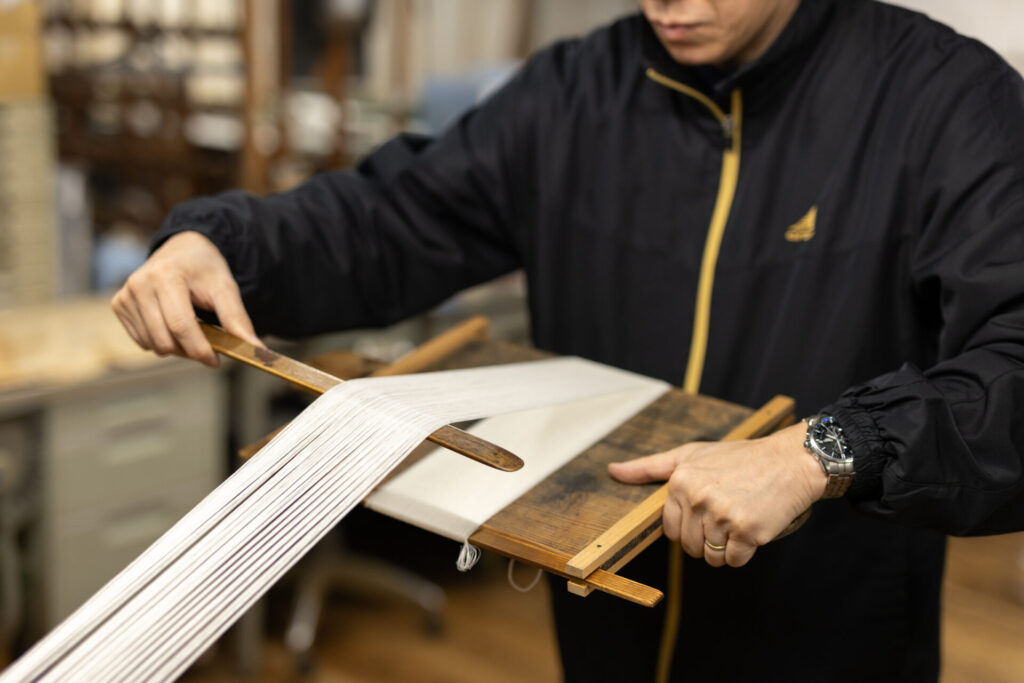
One hallmark of Noto Jofu is its delicate kasuri patterns created through hand-dyeing and hand-weaving. It also has a distinctive translucency—often compared to a “cicada’s wing”—and a lightness so airy you may forget you are wearing it.
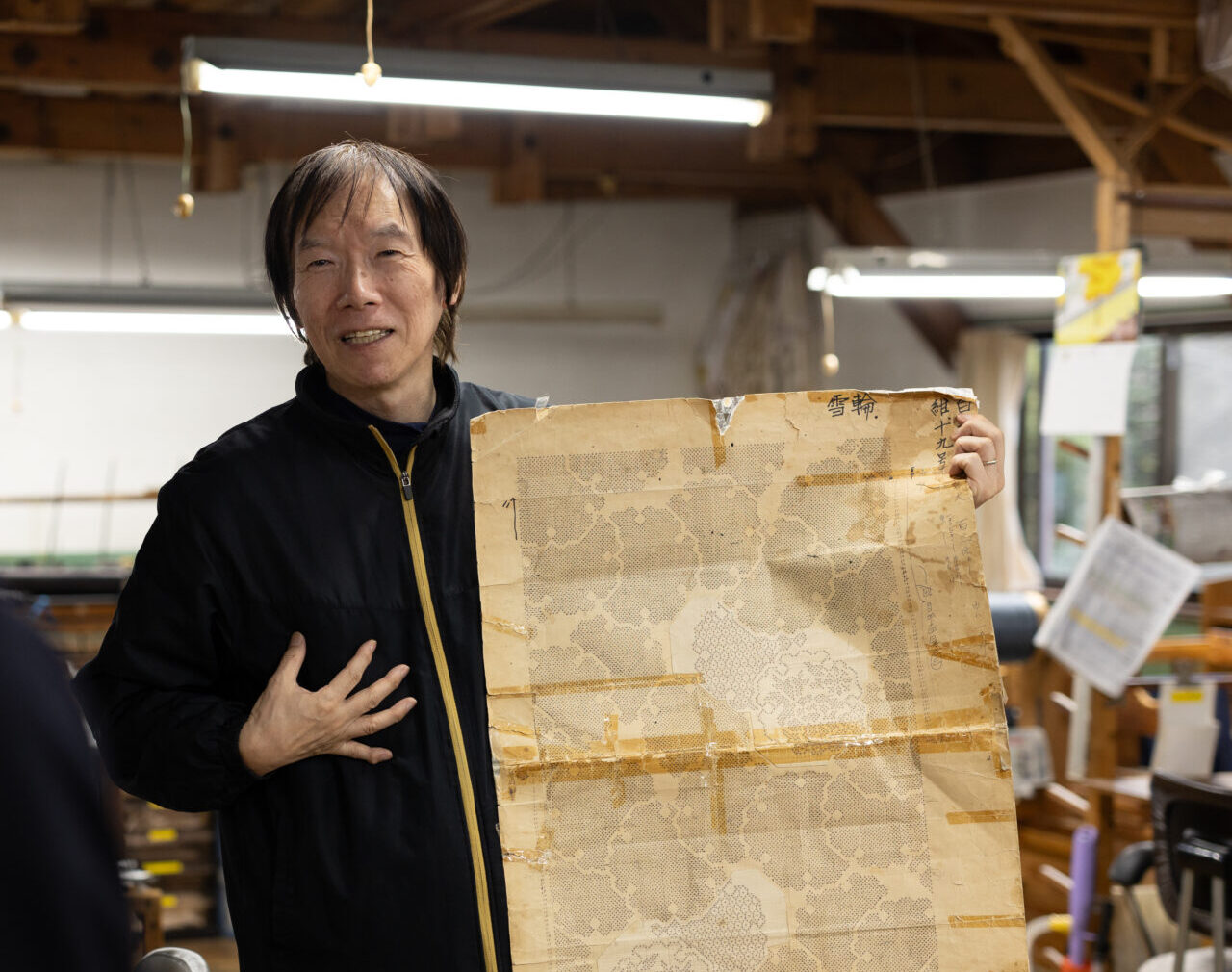
“From geometric patterns like mosquito kasuri and cross kasuri, to motifs inspired by Noto landscapes such as snow rings and cloud shapes—we have more than 100 kasuri patterns for kimono and more than 50 for obi,” Yamasaki explains. “They emerge only when hand-dyed threads are woven forward with exact precision.”
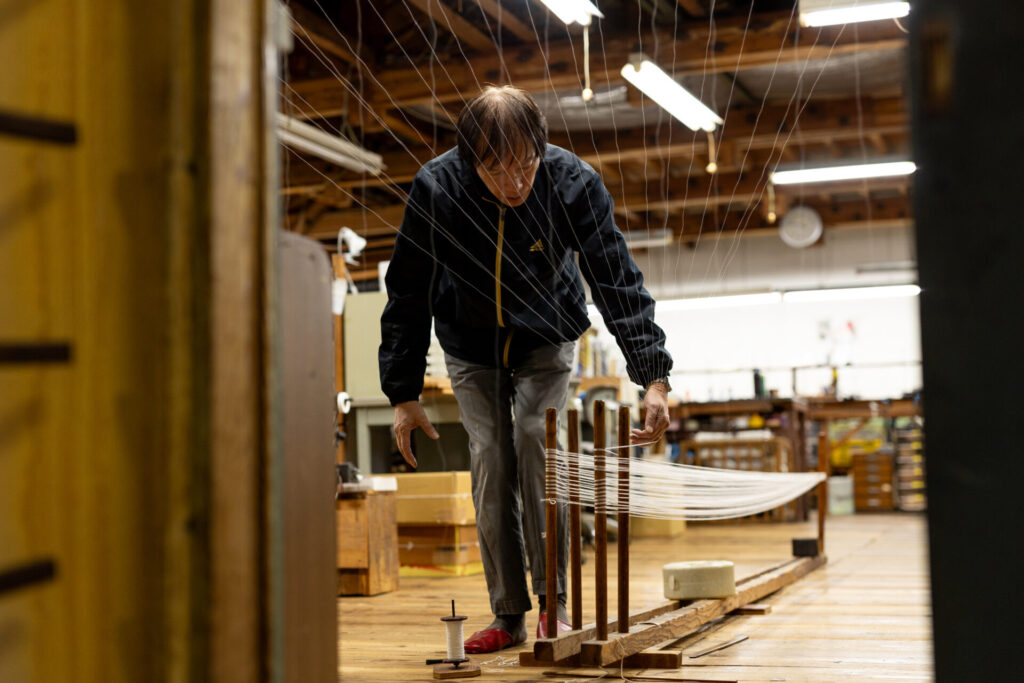
Unlike the more common method of tying thread and immersing it in dye, Noto Jofu primarily uses a technique known as kushi-oshi nassen—an approach unique to this craft. Using a comb-shaped tool and a ruler, the artisan rubs dye directly into threads stretched taut on a wooden frame.
As a dye artisan, Yamasaki presses the dye-loaded comb carefully onto the threads, ensuring the kasuri pattern will align perfectly. Only someone who knows the pattern thoroughly—and can visualize the precise positioning of the finished warp threads—can perform this work. The process is so exact and beautiful it can be overwhelming to watch. The resulting kasuri patterns, once woven, show not the slightest deviation—combining refined elegance with a distinctly modern impression.
Comparing the more than 100 processes to the flow of a river, Yamasaki explains further:
“If you make even one mistake upstream, it affects the weaving downstream. For example, in thread winding—an upstream process—you may handle more than 1,200 warp threads alone, and they’re extremely fine. You must work carefully so they don’t break, because a knot will form and the finish won’t be clean. From there, through dyeing and into weaving, every step continues like a river’s flow. Even as each artisan focuses on their own task, they never forget consideration for the person in the next process. This craft exists because of teamwork.”
Tradition and Innovation:The Value of Noto Jofu That Speaks to the Present
In recent years, Yamasaki Asa Orimono Kobo has welcomed two or three new weavers each year. In the world of traditional crafts—where many businesses are forced to end because artisans cannot be trained—this is remarkably rare. One factor supporting this is social media.
“Many people become interested in Noto Jofu after seeing our social media, and then they visit the workshop themselves,” Kuse says. “I think they also resonate with our philosophy.”
Those who choose to inherit Noto Jofu learn weaving techniques slowly over two to three years. With experience, they come to understand how ramie threads change depending on temperature and humidity, gradually developing true mastery. During training, Yamasaki always tells them one thing: “Imagine who will wear the finished piece.” The intention woven into the work becomes part of Noto Jofu’s value.
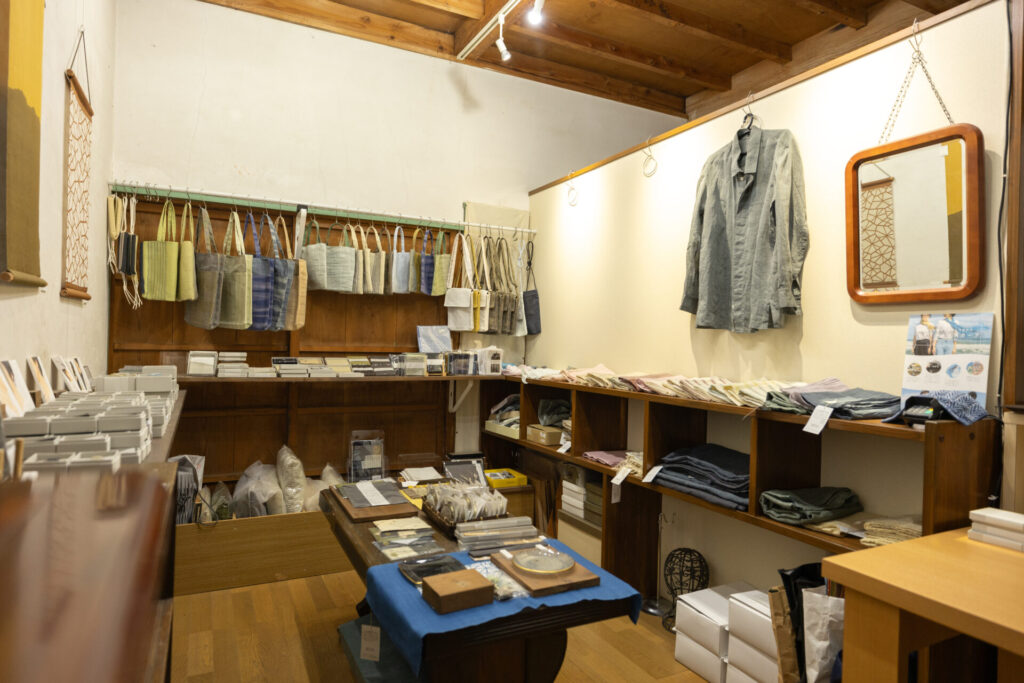
Then, in 2021, the studio launched an in-house brand that allows people to enjoy Noto Jofu in everyday life—not only through kimono and obi, but also through scarves, accessories, and other items: Noto Jofu YAMAZAKI NOTOJOFU. Its logo arranges elements inspired by a kimono collar and a cross-kasuri pattern, expressing a wish for traditional craftsmanship to remain the foundation while bringing Japanese aesthetics and kasuri motifs into modern life.
At the same time, they reexamined their distribution model and began delivering their work directly to customers. Kuse, who leads PR and product planning, says:
“In recent years, we’ve taken Noto Jofu YAMAZAKI NOTOJOFU ourselves to department store events and fairs. Even first-time customers say they love how easily they can incorporate Noto Jofu into daily life, and we’ve received a wonderful response.”
As a “storyteller,” Kuse values communication with customers. She carefully explains the artisans’ work and processes. When she returns to the workshop, she always shares customers’ words of excitement with the artisans—because she believes in connecting people’s feelings through the textile.
The studio’s challenges continue. To communicate the comfort of Noto Jofu—something you truly understand only by wearing it—they launched a fashion brand for “special everyday wear” the following year: RINSO. Shirts, jackets, and pants incorporate Japanese elements into Western clothing, reflecting the aesthetic sensibility cultivated by traditional culture in a modern form. People who learned about Noto Jofu for the first time—and even those who rarely wear kimono—often say they are struck by the distinctive ramie texture and the translucency born from hand-weaving.
“What matters is conveying the value of Noto Jofu,” Kuse says. “Even if the form is different, we want to keep creating work that allows people to feel the beauty of kasuri and the airy translucency of hand-woven cloth.”
The launch of Noto Jofu YAMAZAKI NOTOJOFU marks a new step for the studio. For many Japanese today—who have few opportunities to encounter kimono, much less wear them—it offers a precious gateway into traditional culture. Moreover, people overseas, where kimono culture does not exist, sometimes purchase RINSO as well. The beauty, texture, and undeniable quality of what they hold in their hands transcends language.
Overcoming the Earthquake, Renewing Their Resolve: Authentic Craftsmanship Connected to the Future
Then came the Noto Peninsula earthquake. Kuse arrived at the workshop just 30 minutes after it struck, and what she saw was devastating: shattered glass scattered across the showroom, and many machines toppled on the second floor of the workshop.
“Even so, we were able to restart work in the workshop about a month later. I can’t express enough gratitude to the artisans who worked so hard while dealing with their own damage and losses,” she says.
“What I can do now is help more people learn about Noto Jofu, and protect the artisans right in front of me. When I think of my grandfather continuing to produce with all his strength even as the last studio, I feel it’s my role to create an environment where artisans can work comfortably. Noto Jofu exists because of artisans. My uncle and I value that above all.”
What Do You Wish to Pass On to the Future?
Finally, we asked Yamasaki about the future of Noto Jofu.
“Everything I imagine is filtered through Noto, because I was born and raised here. The beauty of nature, the sincerity of people—those things shape my sensibility, and I express them through my work. From here on, cherishing that sensibility and continuing to create what we genuinely believe is good—together with the artisans—may be my mission.”
In Noto, for two thousand years, artisans have carried these techniques forward. A single bolt of Noto Jofu woven by their hands holds not only the craft itself, but also a renewed determination—to connect authentic craftsmanship to the future.