Weaving the Future of Wajima Lacquerware:Craftsmanship That Inherits Tradition and Innovation
大向裕子・角有伊
Yuko Omukai and Yui Kado

Ishikawa []
Yuko Omukai
Originally from Toyama Prefecture. She works as a producer specializing in Wajima lacquerware. After getting married, she joined Koushudo and began her journey as part of the community supporting Wajima lacquerware traditions. Rather than simply selling lacquerware, she serves as a bridge between artisans and customers, planning and producing projects related to lacquerware and creating opportunities for many works to reach the public. She is also deeply committed to supporting young artists and craftspeople, dedicating herself to sharing the appeal of Wajima lacquerware. In addition, she is currently developing an art project that combines Wajima techniques with ceramic fragments damaged by the earthquake that struck the Noto Peninsula on New Year’s Day in 2024, exploring new possibilities for applying Wajima’s advanced craftsmanship.
Yui Kado
A lacquer artist from Wajima and the head of Kado Urushi Studio. While grounded in the traditional techniques of Wajima lacquerware passed down from her father, Isaburo, she is a creator who pursues her own distinctive expressions. Her works are characterized by free, imaginative approaches that go beyond conventional frameworks—such as drawing patterns with her fingers or splashing lacquer to embrace chance and improvisation. As a key figure connecting tradition and innovation in Wajima lacquerware, she continues to attract significant attention.
Wajima lacquerware is one of Hokuriku’s most celebrated traditional crafts. Its refined techniques and elegant designs have earned high praise both in Japan and abroad, captivating people for generations.
In this article, we speak with Ms. Omukai of Koushudo and lacquer artist Ms. Kado about the appeal of Wajima lacquerware, the challenges of preserving tradition, and their hopes for the future.
The Tradition and Uniqueness of Wajima Lacquerware — Stories Woven Through Restoration
Wajima lacquerware is widely known as one of Japan’s representative lacquer traditions, distinguished by its unique production process and exquisite finish. One defining feature is its system of division of labor. Koushudo does not operate its own workshop; instead, it collaborates closely with skilled artisans to complete each piece.
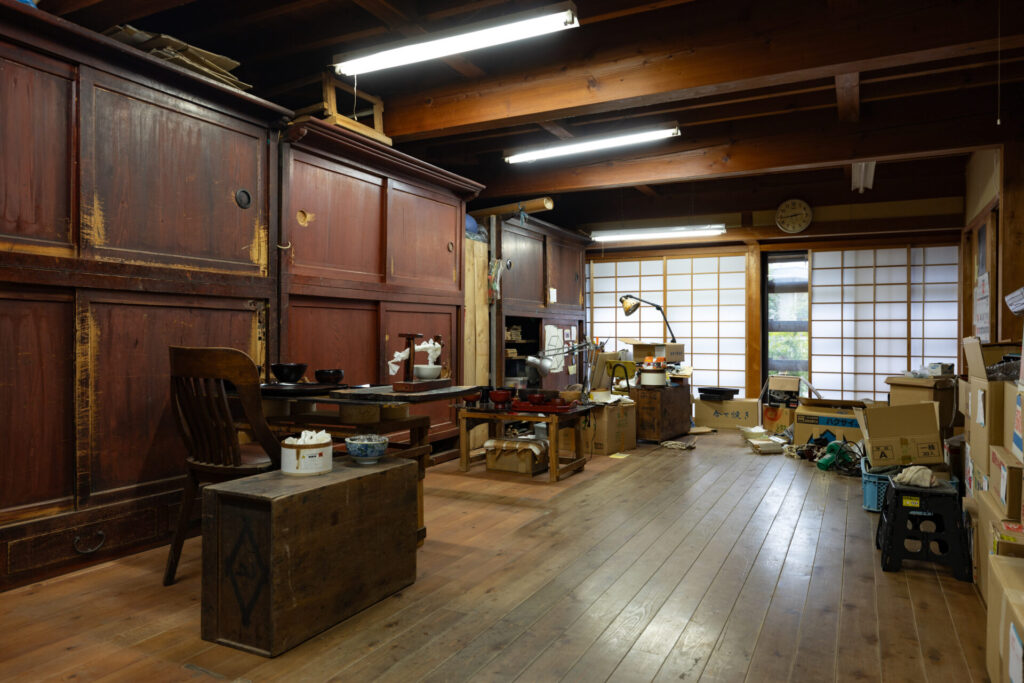
“When customers tell us what they’re looking for, we connect them with the artisan best suited to that request,” Omukai explains. “Because Wajima lacquerware is produced through specialized processes, having experts for each step is what ensures such high quality in the finished work.”
One of the greatest appeals of Wajima lacquerware lies in its durability and its ability to be restored. Thanks to advanced techniques, pieces can be repaired repeatedly and revived to look as good as new. Restoration gives objects a second life.
In Wajima lacquerware, restoring an item so that no trace remains is essential, and the artisans’ skills are what support this level of quality. The process of reviving well-used vessels encapsulates the depth of their craftsmanship. Beyond the objects themselves, repair deepens the relationship between the user and the piece. Long-used vessels are restored, passed on, and inherited by the next generation—reflecting the Wajima philosophy that “true value is revealed through use.”
“In the new project connecting ceramic fragments, one option is to return pieces to their original form through kintsugi,” Omukai says. “But instead, we intentionally avoid making them ‘perfectly whole’ again. By using Wajima techniques, we focus on drawing out the beauty born from chance. That’s where the artisans’ skill really comes into play.”
Innovation and Originality of Lacquer Artist Yui Kado
Lacquer artist Kado continues to open new possibilities for Wajima lacquerware by incorporating original techniques while respecting tradition. Her workshop is known for its improvisational methods, such as hand-painting and splashing lacquer to create patterns.
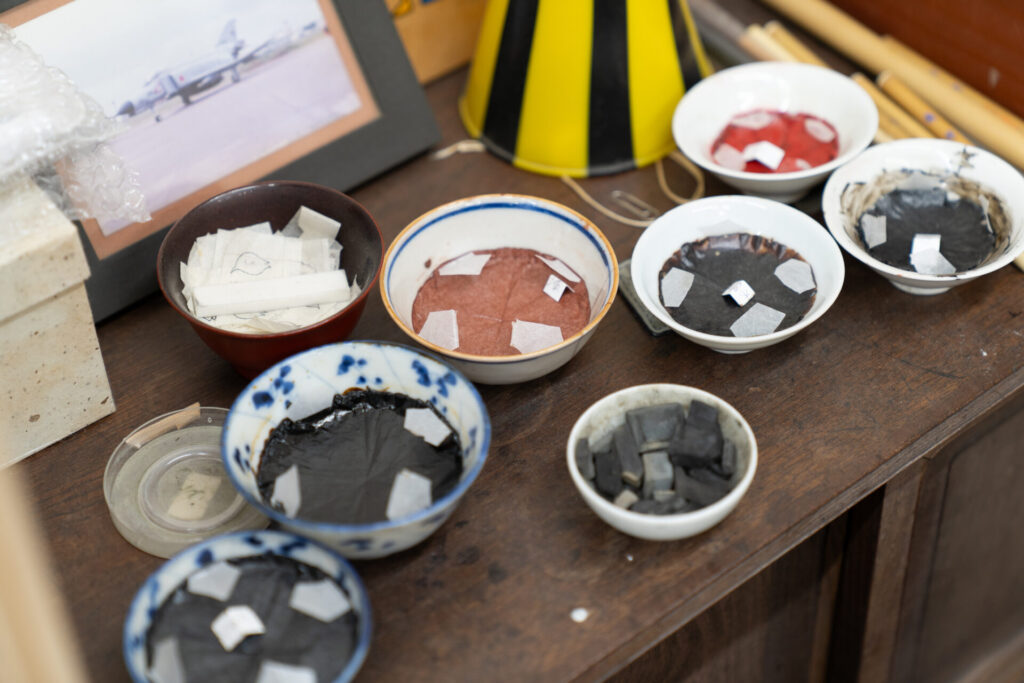
“The appeal of splashing lacquer is its unpredictability,” she explains. “The expression changes in every moment, and no two pieces are ever the same. I also experiment with drawing directly using my fingers instead of tools. It’s difficult—there’s the risk of skin irritation, and the results aren’t always clean—but that sense of chance is what leads to new forms of expression.”
Behind this creativity lies her lifelong connection to lacquer culture. “The scent and feel of lacquer were always part of my life. Eating meals with lacquerware was normal. The workshop was my playground—I often watched the work being done.”
Kado also draws inspiration from nature and everyday life. “Stones I find while walking in the mountains, wrinkles in newspapers, contemporary art—everything can become a hint,” she says, revealing the breadth of her sensibility. Her work shines with originality precisely because she honors tradition while continuously exploring new expressions.
Passing the Craft to the Next Generation — Challenges Ahead
One of the most critical issues facing traditional crafts is passing them on to the next generation. In the Wajima lacquerware industry, the shortage of successors has become increasingly serious due to declining birthrates and changes in industrial structures. Lacquerware production requires advanced skills, long training periods, and significant financial commitment.
“It’s important to create more opportunities for younger generations to encounter lacquerware and develop interest,” Omukai emphasizes.
“At Koushudo, we help organize exhibitions for artists who haven’t yet had a public platform, giving them opportunities to present their work. Seeing their joy when they sell their first piece makes us feel the meaning of our role.”
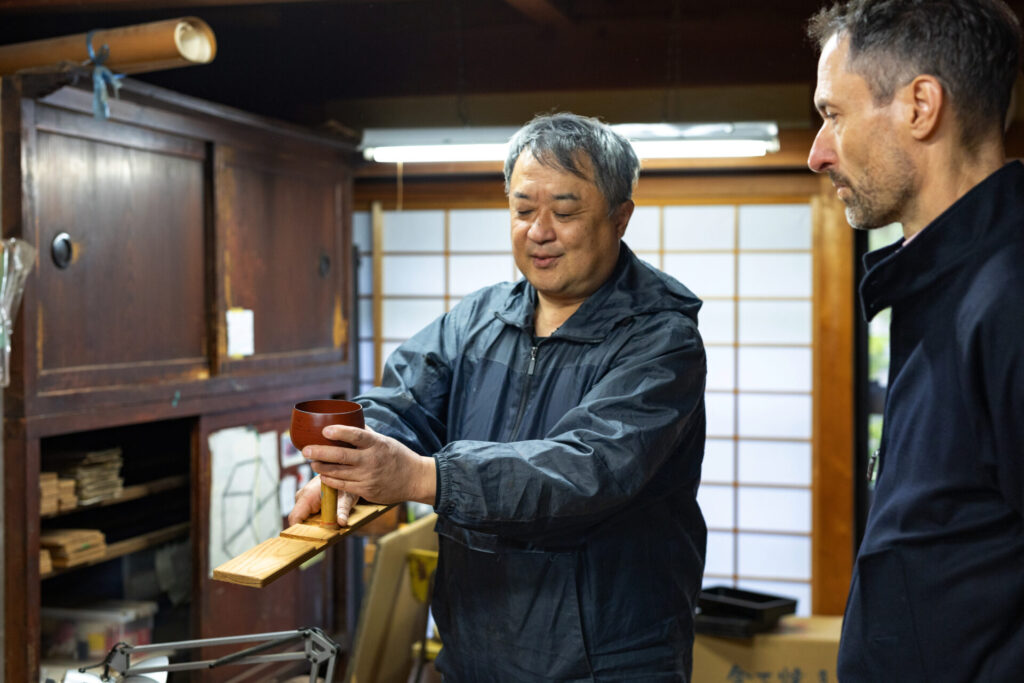
Meanwhile, Kado reflects from a creator’s perspective: “Training successors is difficult. For now, I want to continue making my own work and sharing its appeal, hoping it sparks interest. Through my work, I want to show new values in Wajima lacquerware.”
Koushudo and Kado also share a deep, long-standing relationship built on mutual trust.
“Our connection with the Kado family goes back to my husband’s father’s generation,” Omukai recalls. “We worked together on exhibitions and sales projects even then. That relationship has continued into my husband’s generation, and I hope it will carry on into our son’s as well.”
Overcoming Disaster and Looking Ahead
The Noto Peninsula earthquake in early 2024 had a profound impact on the Wajima lacquerware industry. Many workshops were damaged, forcing artisans to work in temporary facilities.
“Many artisans are now in temporary workshops, and Wajima as a tourist destination has also suffered,” Omukai says. “The morning market streets are still uneven, and many houses remain damaged.”
At the same time, the disaster has inspired new explorations. Projects using ceramic fragments broken in the earthquake have begun to take shape.
“By using broken fragments as they are, we can create new expressions,” Omukai explains. “Often, the chipped parts themselves are beautiful. It’s important not to overwork them.”
These fragments are being used as chopstick rests, objects, and even in dining and tea gatherings. Such initiatives add new value to past works and represent efforts to carry them forward into the future.
Encouraging Wajima Lacquerware in Everyday Life
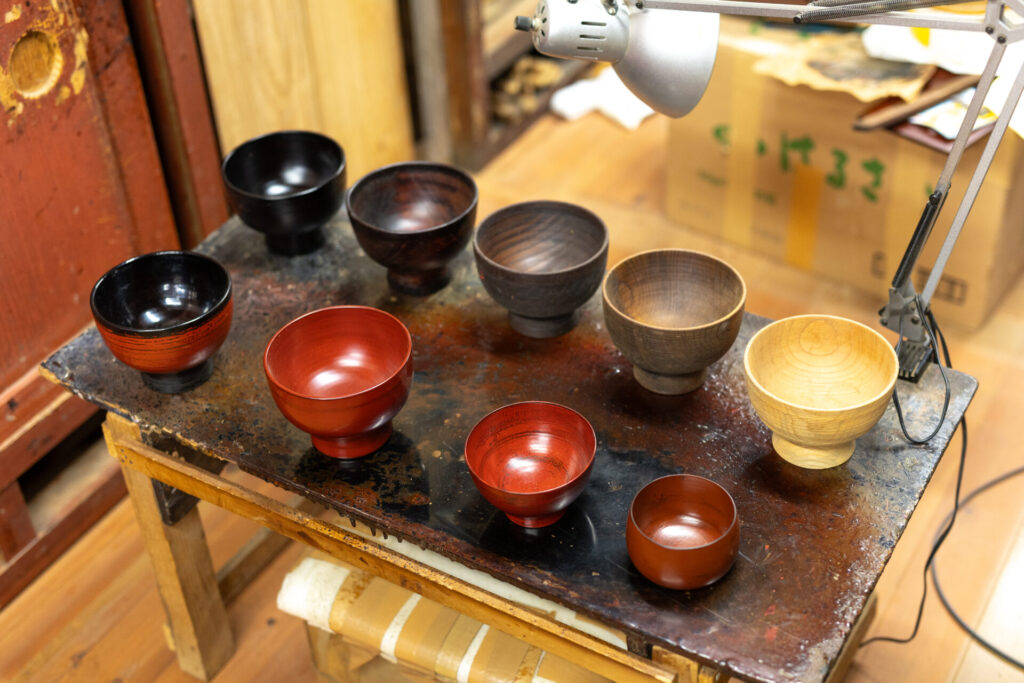
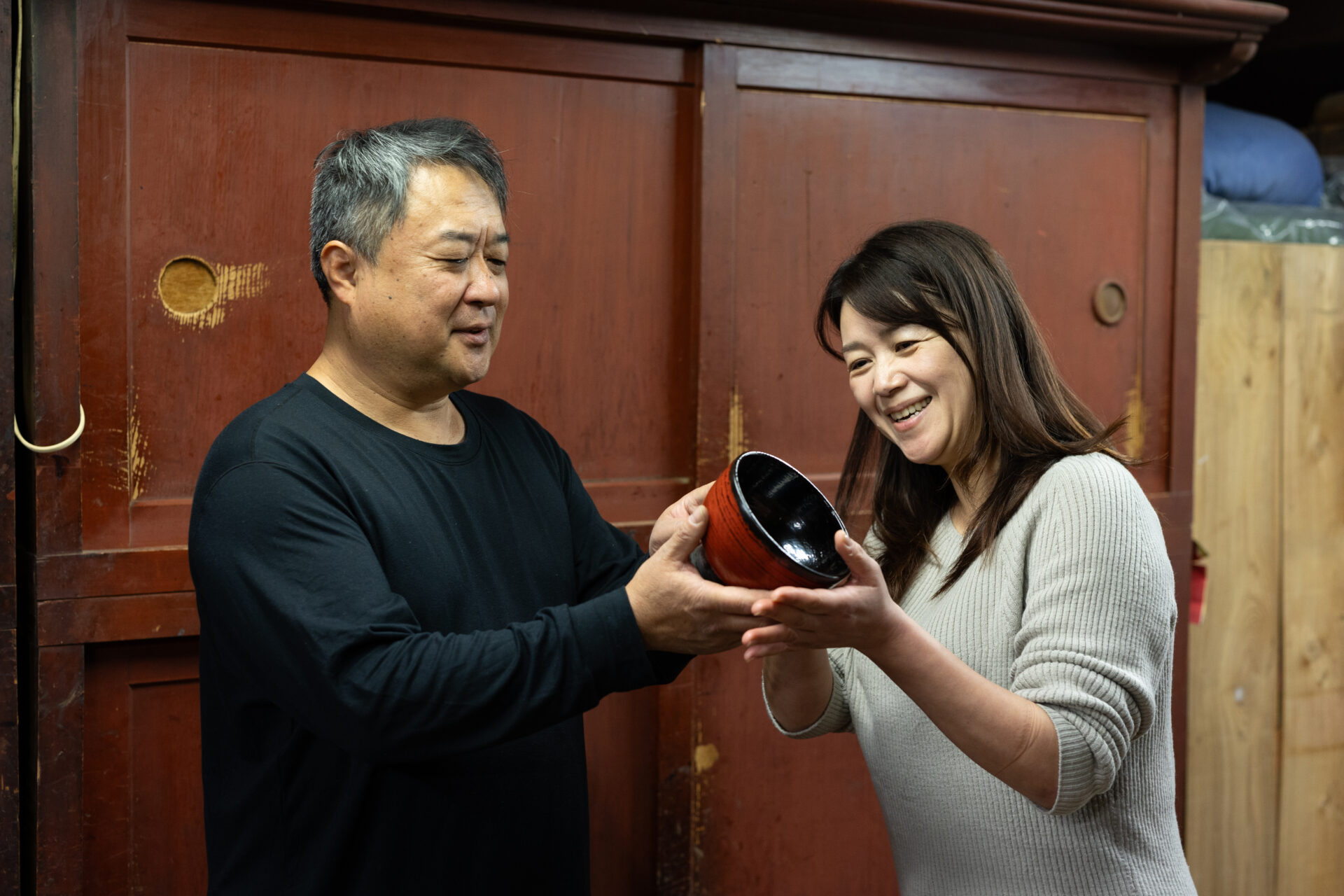
“Wajima lacquerware truly reveals its value through use,” Omukai says, emphasizing the importance of incorporating it into daily life. While often perceived as luxury items, lacquerware gains character through regular use, enhancing its beauty over time.
Kado agrees. “I want people to experience the warmth and texture of lacquerware in their everyday lives. When you hold a bowl, you can feel its lightness and the natural texture of the wood directly.”
Omukai shares a personal tradition: “At New Year’s, we pack homemade osechi into jubako passed down through generations and welcome guests. Fewer households use jubako these days, but I want to continue these traditions.”
For her, Wajima lacquerware is more than tableware—it symbolizes family bonds and local culture. Used on special occasions, lacquerware becomes something far more meaningful than a simple object.
She has also organized experiential events for international visitors, serving shojin cuisine using Wajima lacquerware.
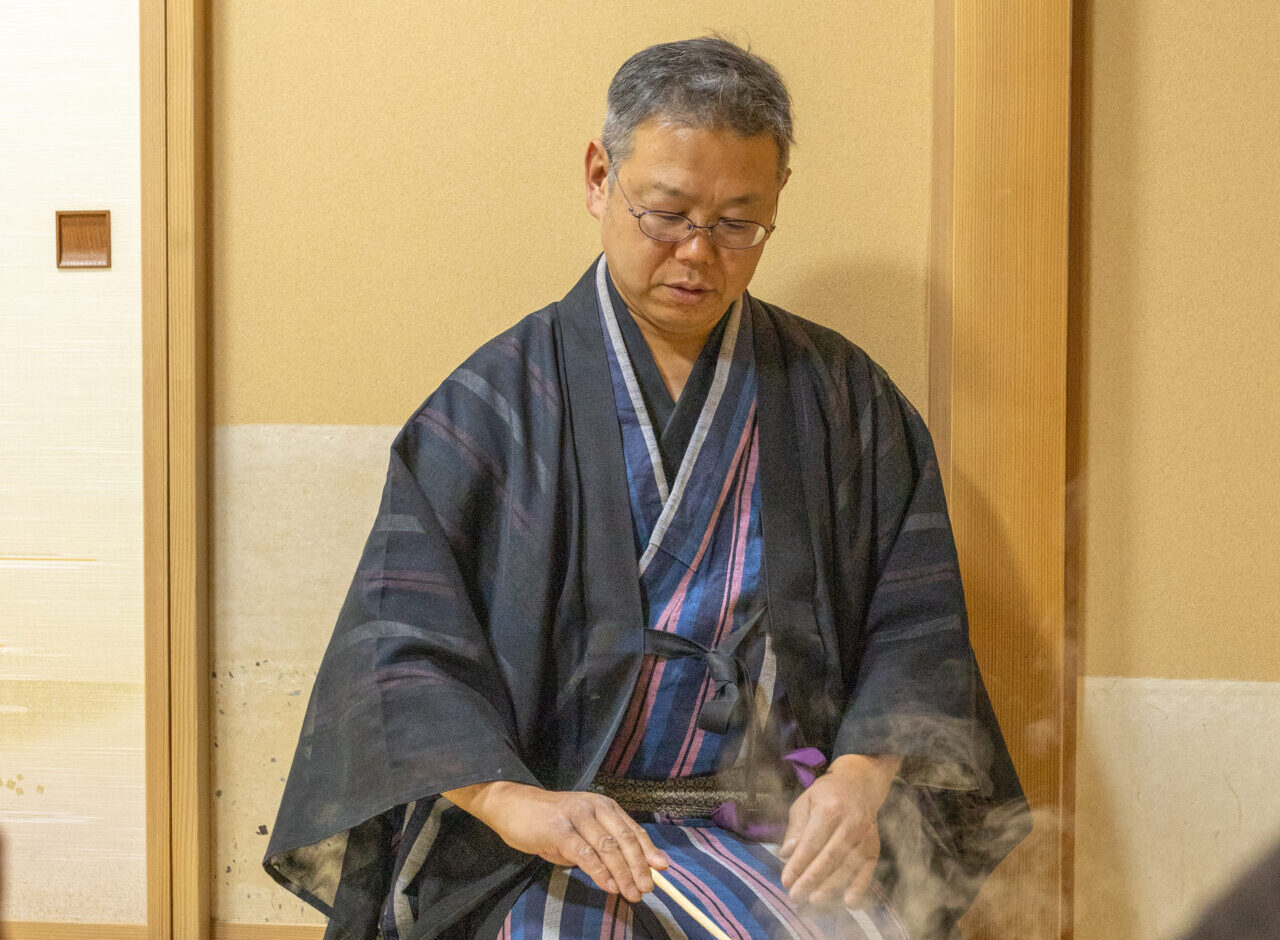
“When visitors from the UK came a couple of years ago, we planned an experience using red Wajima lacquer trays and bowls to serve shojin cuisine. They sat seiza-style in a tatami room, and we wore kimono and ate together. They were vegan, so shojin cuisine was perfect—and they were delighted.”
Through such experiences, Wajima lacquerware is expected to serve as a bridge between cultures.
What Do You Wish to Pass On to the Future?
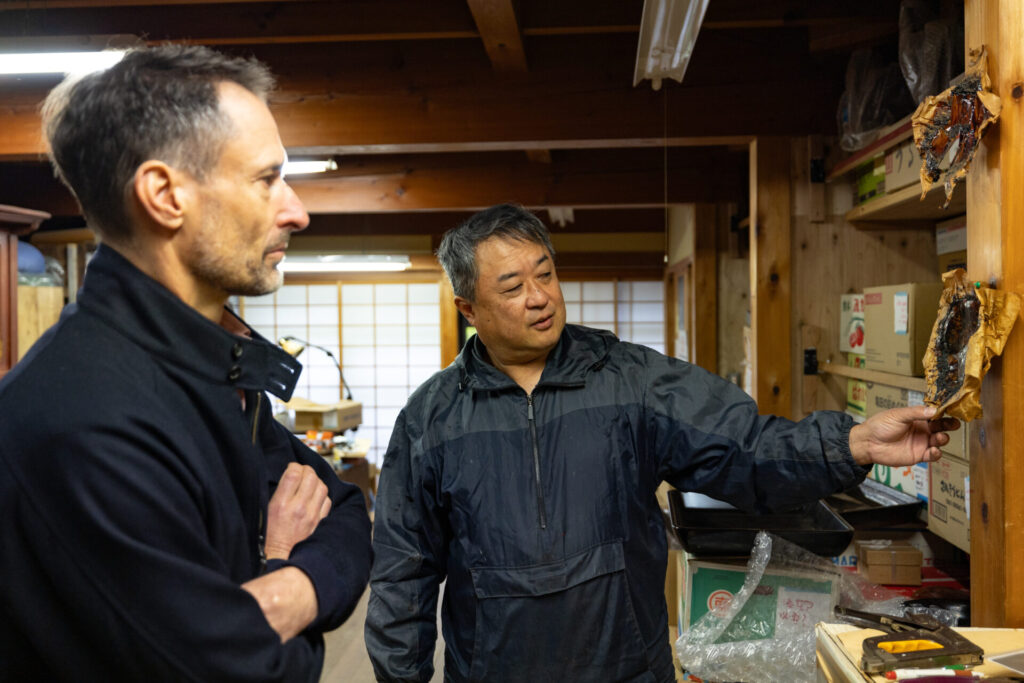
Speaking about the future of Wajima lacquerware, Omukai says, “Each artisan’s skill supports Wajima lacquerware. If even one process is lost, the craft cannot be completed. We need to strengthen industry-wide support systems to ensure these techniques are not lost. While pride as a traditional industry is important, it’s equally vital to explore new designs and ways of use.”
Kado adds, “I’m constantly thinking about how Wajima lacquerware can fit into modern life. We don’t need to be bound by traditional forms—I want to create more freely. That’s how we can generate new value for Wajima lacquerware.”
Wajima lacquerware, with its centuries-long history, continues to evolve even today. Behind this evolution are the passion and challenges embraced by its makers. The efforts of Koushudo and Kado vividly demonstrate the enduring potential of this craft.
What they wish to pass on is not only technique, but Wajima lacquerware as a living culture—one that adapts with the times while remaining close to people’s lives.
Preserving tradition while creating new value.
Wajima lacquerware will no doubt continue to inspire and move people for years to come.