Weaving the Memories of a Hanamachi Through the Mikuni Shamisen. The Life Journey of Shamisen Master Yoshimura Takeshishi in Mikuni Minato
長沼 慶江
Yoshie Naganuma

Fukui []
Yoshie Naganuma (Yoshimura Take yoshi)
Born in Kanda-Jimbocho, Tokyo. During World War II, she was evacuated to Mikuni, Fukui Prefecture, her father’s hometown, where she later settled permanently. After marrying in her twenties, she encountered the shamisen and began formal training under a local master. Fourteen years later, she received her professional name, Yoshimura Take yoshi, from the seventh-generation Yoshimura Itojiro, a Living National Treasure. She has trained over 100 students to date and continues to dedicate herself to preserving the shamisen tradition and nurturing the next generation.
Mikuni Minato, a port town with roots stretching back to the Edo period.
Even today, in the narrow lanes lined with traditional wooden townhouses and lattice doors, the light, resonant sound of the shamisen can still be heard.
The musician behind that sound is Yoshie Naganuma, known by her professional name Yoshimura Takeshishi, a licensed master (natori) of the shamisen. Having lived alongside the shamisen for more than 65 years, she witnessed the final era of Mikuni Minato as a flourishing hanamachi—a traditional entertainment district.
This is the story of one woman’s journey to carry forward the culture and memories of a hanamachi that has been passed down in this town, and to connect them to the future.
The Hanamachi Culture Passed Down Through the Shamisen
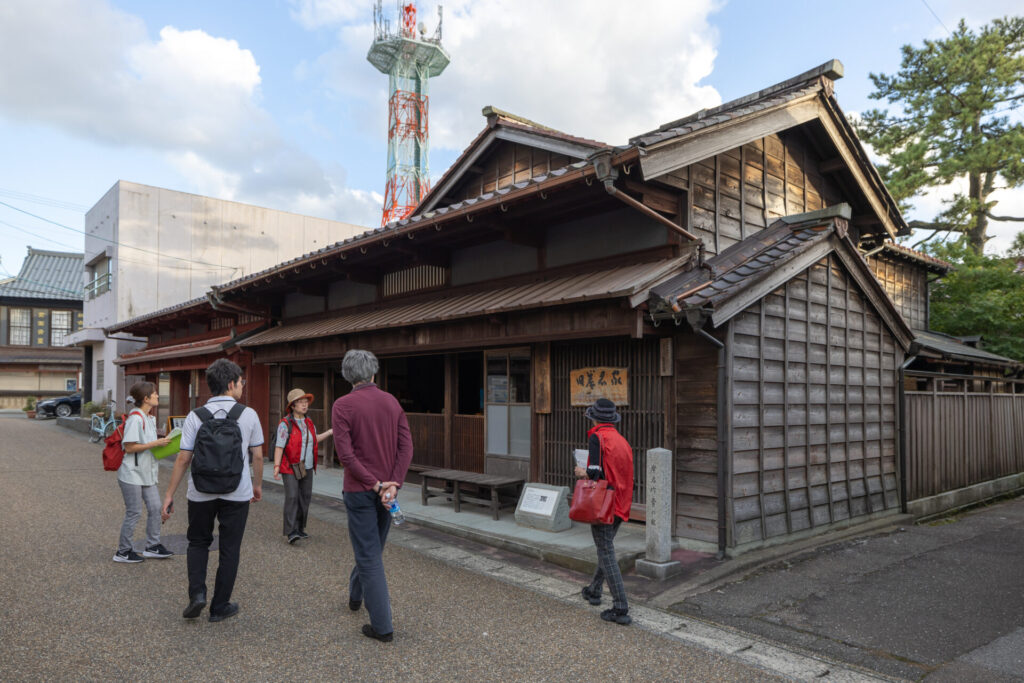
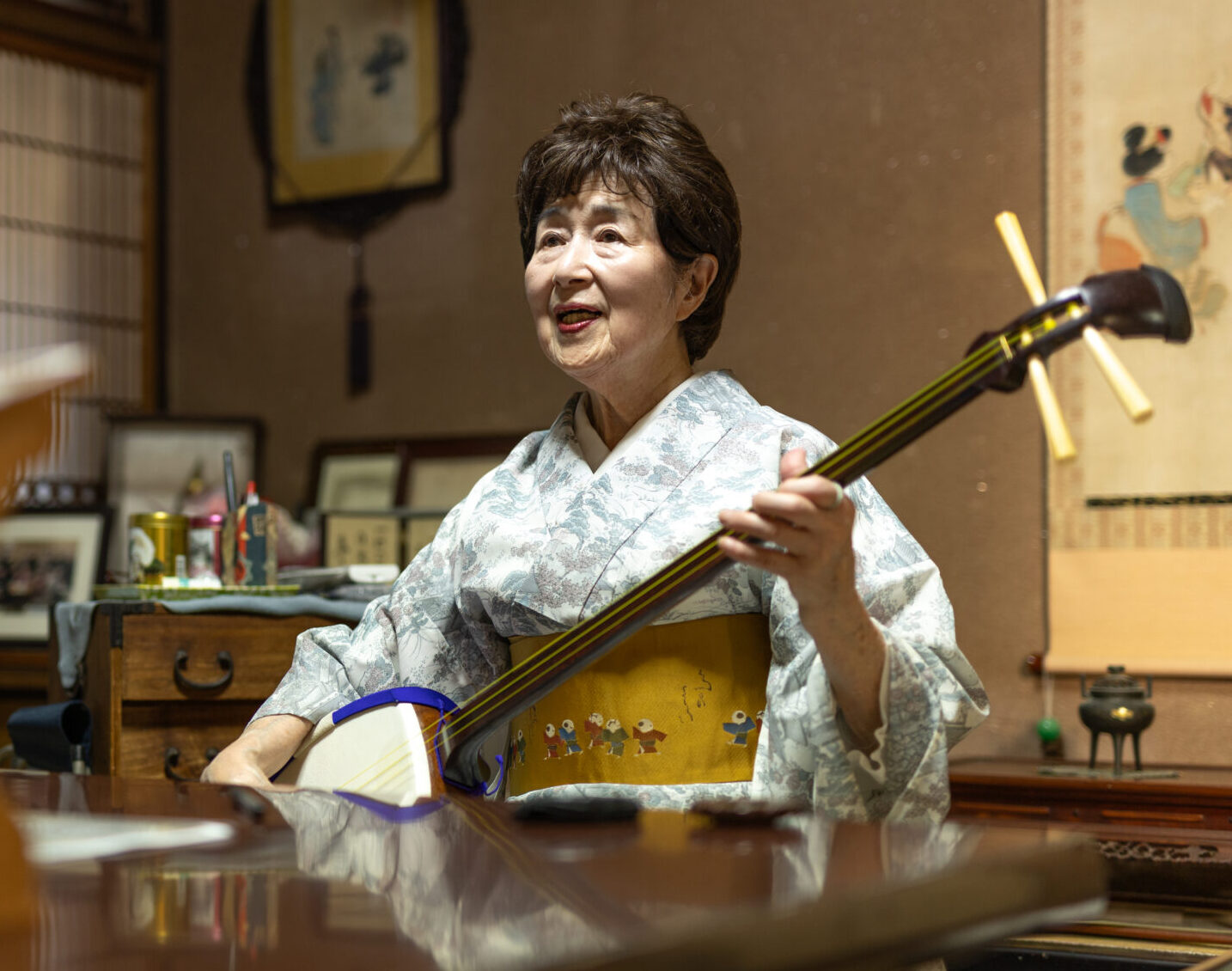
Mikuni Minato is home to many atmospheric machiya townhouses. Walking through streets that have retained their Edo-period appearance, one can sometimes hear the gentle sound of a shamisen drifting through the air. Following that sound down a narrow alley leads to a single townhouse. Passing beneath the noren curtain, one finds a woman playing the shamisen with quiet dignity—Yoshie Naganuma, known as Yoshimura Take yoshi.
Since marrying in her twenties, she has lived a life intertwined with the shamisen.
“Mikuni Minato flourished as a hanamachi,” she recalls.
“When I first married into this town, you could hear the sound of shamisen played by geisha just by walking down the street. The sound was utterly captivating.
One day, a geisha in the neighborhood was giving up her shamisen, and I was able to receive it. I asked my father-in-law for permission, and he allowed me to attend lessons.”
At the time, the traditional household system was still strict, and it was difficult for a married woman to go out freely for anything beyond household duties or the family business. To continue practicing the shamisen, Naganuma never neglected her responsibilities as a daughter-in-law. Such was her devotion to the instrument.
When she began learning, Mikuni Minato was in the final period of its prosperity as a hanamachi. Even then, around twenty geisha gathered at the kenban—the practice hall—to train in shamisen and singing. Through rigorous lessons, Naganuma found herself drawn ever deeper into the music.
Fourteen years later, she earned her natori license and was bestowed the name Yoshimura Take yoshi. She soon began accepting students of her own. To date, she has trained over 100 disciples, 12 of whom have become licensed natori. Three of them are now actively working to pass on the Mikuni shamisen tradition to the next generation.
Hanamachi: districts where geisha and courtesans entertained guests through music, dance, and refined arts.
The Sound and Song That Carry the Spirit of the Hanamachi
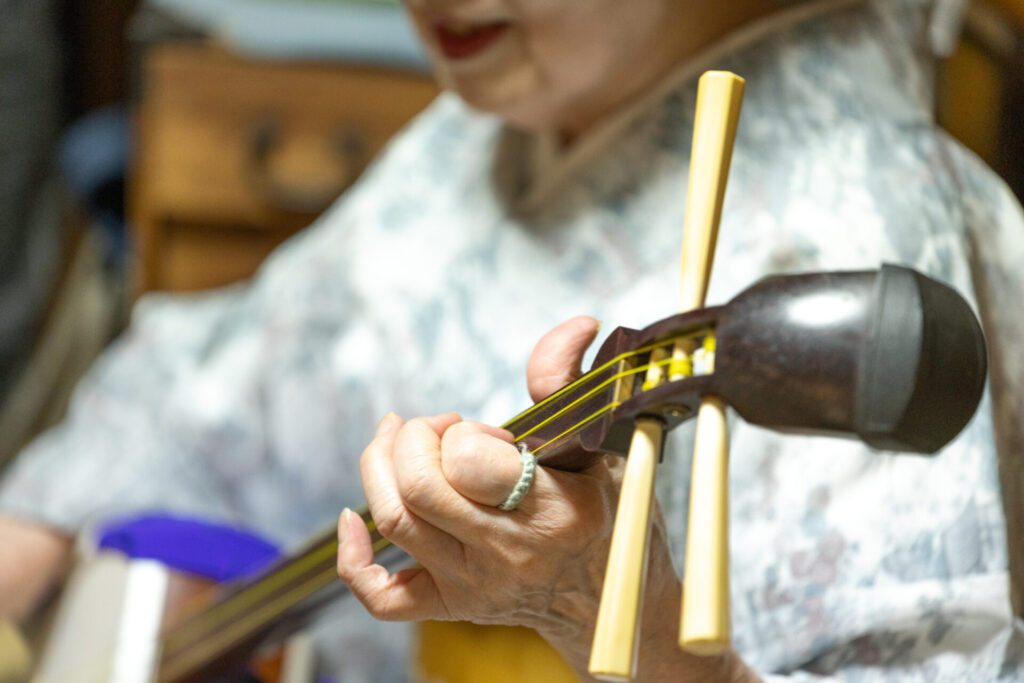
Naganuma’s fascination with sound began in elementary school. Whenever her teacher played the organ in class, she was enchanted by its mysterious resonance and longed to play it herself. However, in the turbulent years following the war, most families struggled simply to get by, and asking for an instrument was out of the question. Instead, she spent brief moments after school touching the classroom organ whenever she could.
Looking back, she feels she has always been searching for “sound.” Perhaps her encounter with the shamisen was a reunion with the same excitement she felt as a child.
Originally from Tokyo, Naganuma was born and raised in Kanda-Jimbocho, an area once lined with samurai residences, and grew up as a true Edo native. When World War II began, her family evacuated to Mikuni, her father’s hometown, for safety. She was only in first grade at the time. Since then, she has spent most of her life in this town.
Located in northern Fukui Prefecture, Mikuni is a port town facing the Sea of Japan. From the Edo to Meiji periods, it prospered as a port of call for Kitamaebune trading ships, serving as a hub of maritime commerce that connected regions across Japan. This trade fostered a distinct merchant culture and gave rise to a hanamachi. One can imagine the fleeting romances between sailors stopping briefly at port and the women who entertained them. Walking through town today, the remaining townhouses and lattice-fronted buildings evoke that bygone prosperity.
“At its peak during the Edo period, there were said to be around 100 courtesans here.
Considering that Mikuni’s population was only about 1,000 at the time, that number speaks volumes. It also shows just how many sailors came through the port.
The number of geisha was about the same.”
The performing arts were essential to hanamachi culture. Dance, song, shamisen, and drums—performed by geisha—became deeply rooted alongside its development. Tea ceremony and etiquette were also cultivated as refined forms of hospitality. Among the traditions that continue to this day in Mikuni Minato are shamisen and song.
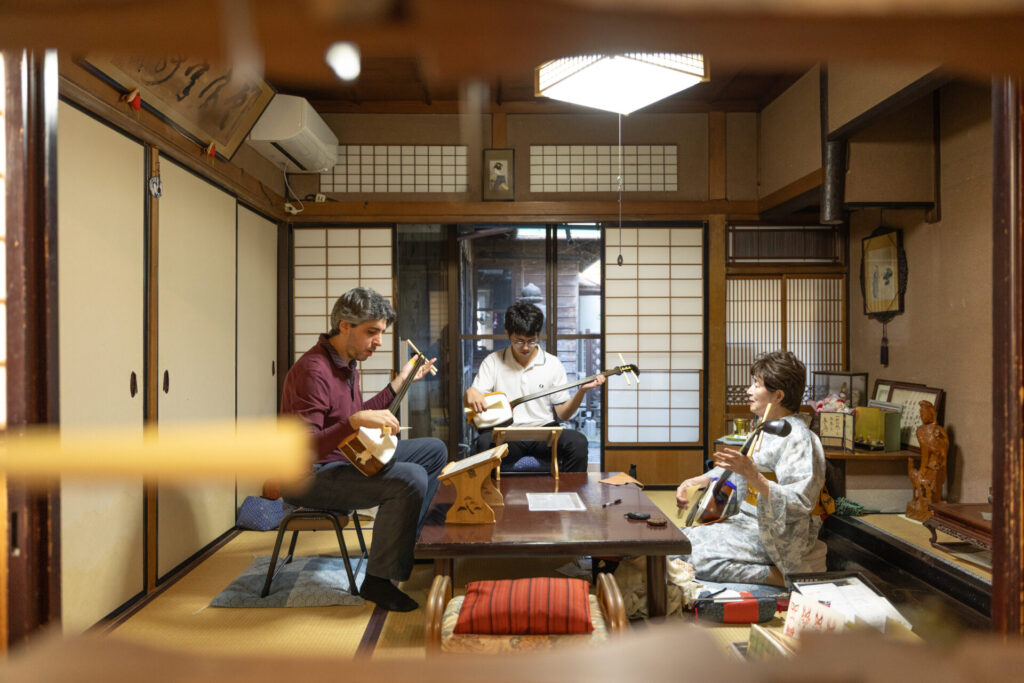
“I mainly teach nagauta, kouta, and hauta.
Nagauta, often used in kabuki, can last over 20 minutes per piece, but kouta and hauta are usually no longer than three minutes.
For beginners, they’re just the right length to sing while playing.”
Kouta and hauta emerged in the late Edo period as popular songs, often depicting romance and seasonal scenes accompanied by shamisen. Closely tied to ozashiki (banquet) culture, many are set in Edo’s famed hanamachi such as Yoshiwara and Fukagawa.
“The lyrics are filled with the stylish elegance and sensuality of Edo culture.
In the hauta ‘Fukagawa,’ for example, a samurai crosses the river by boat, then rides a palanquin toward Yoshiwara.
It captures his excitement as he goes to meet a beautiful courtesan.”
Listening to the song brings Edo’s scenery to life, while the shamisen deepens the imagery. The instrument carries the atmosphere of the hanamachi into the present.Kitamaebune: large trading ships that traveled the Sea of Japan from the Edo to Meiji periods, transporting goods and culture.
The Unique Sound of the Shamisen That Evokes Japan
Today, Naganuma teaches students ranging from their 40s to their 80s. Though she says she has stepped back from performing publicly since passing 80, those who seek her guidance continue to arrive. Many begin learning after the age of 40. Why does the shamisen draw people at this stage of life?
“It’s that sound—something uniquely Japanese.
String instruments exist all over the world, but what’s fascinating about the shamisen is that you search for the sound yourself. There are no frets like on a guitar, so you rely on your senses to find the right tone.
It’s difficult, but that freedom is part of the joy.”
The sound also varies greatly depending on the materials used. Naganuma’s longtime instrument is made of kouki (red sandalwood), with extremely fine grain so dense it sinks in water. The wood used for the neck is especially important, as it determines the quality of sound produced when struck with the plectrum. Its deep resonance now captivates even overseas visitors.
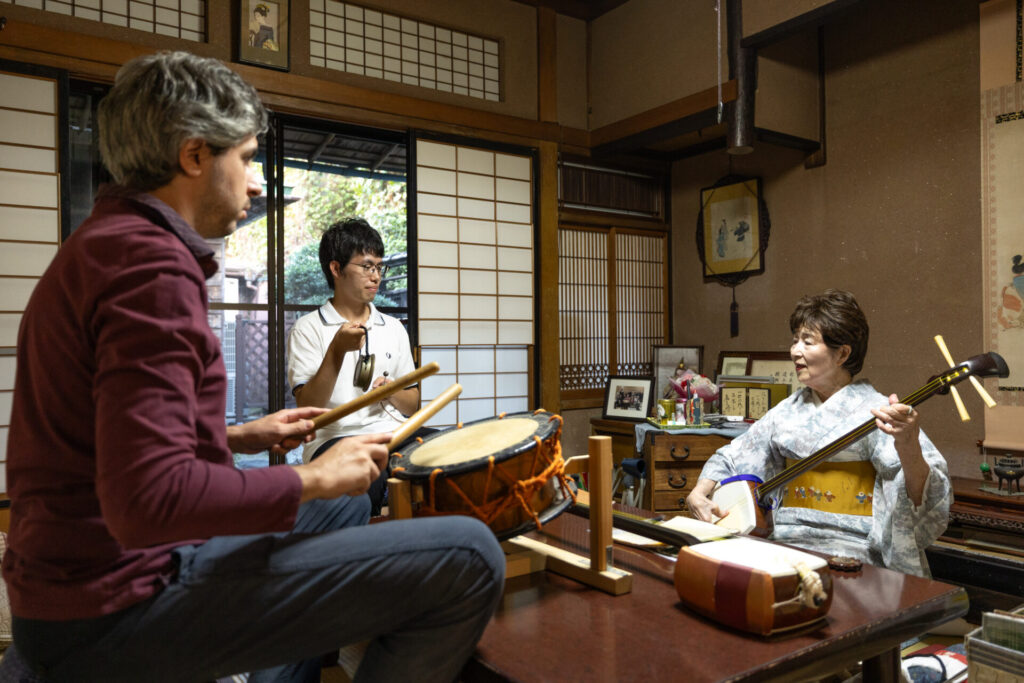
“Many foreign guests come for shamisen experiences.
Watching them eagerly engage with Japanese culture—even using bits of Japanese—is wonderful.
They’re also fascinated by this townhouse itself: the tatami rooms, the garden, the sliding doors. Through these elements, they sense traditional Japan.”
Experiencing shamisen and song in a townhouse imbued with history offers a rare opportunity to connect with Japanese culture and sensibility.
What She Hopes to Pass On to the Future
Finally, we asked Naganuma what she hopes to carry into the future.
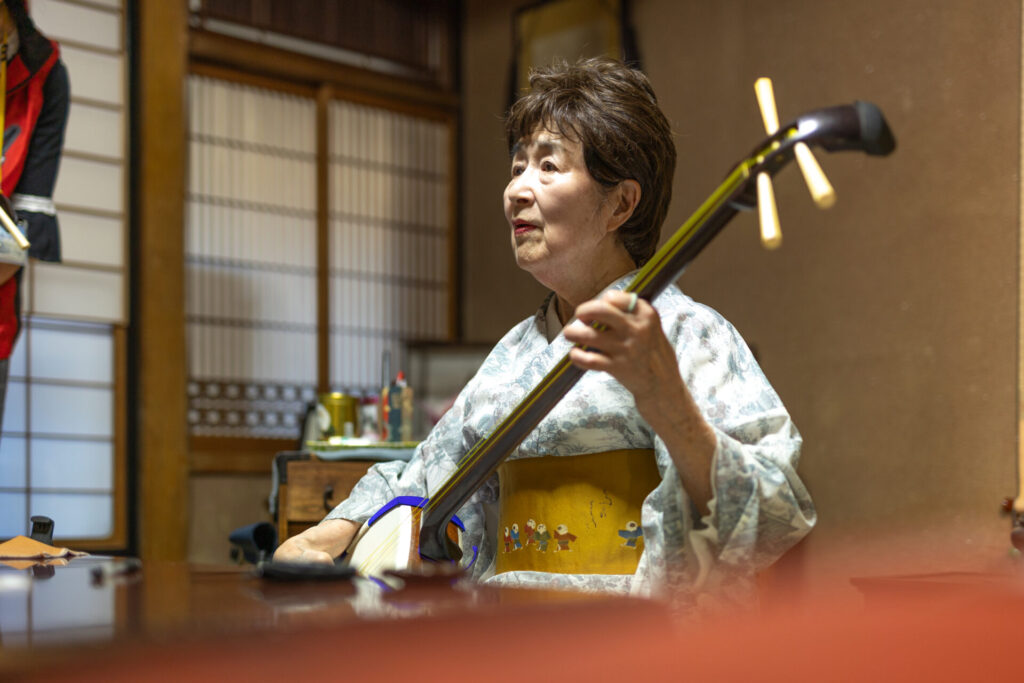
“I hope that someone who loves Mikuni will inherit the Mikuni shamisen tradition.
I don’t know how many more people I’ll be able to teach as I grow older.
But if even one of my students can carry this culture forward to the next generation…
I want this history, dating back to the Edo period, to continue into the future.”
After saying this, she performed the hauta Fukagawa for us.
Her voice—clear and resilient, belying her age—combined with the lively, elegant sound of the shamisen. Her gentle smile conveyed a deep love for the instrument that has accompanied her for over six decades.
As long as the sound of the shamisen continues to resonate, the refined spirit of Mikuni Minato will never fade.
That sound will continue, like a quiet guiding light, illuminating the town’s future.