A Cup Crafted by the Okami of Awara Onsen:The Heart and “OUR LOVE” Behind the Sake Okami
立尾 清美
Kiyomi Tatsuo

Awara [Fukui]
Kiyomi Tatsuo
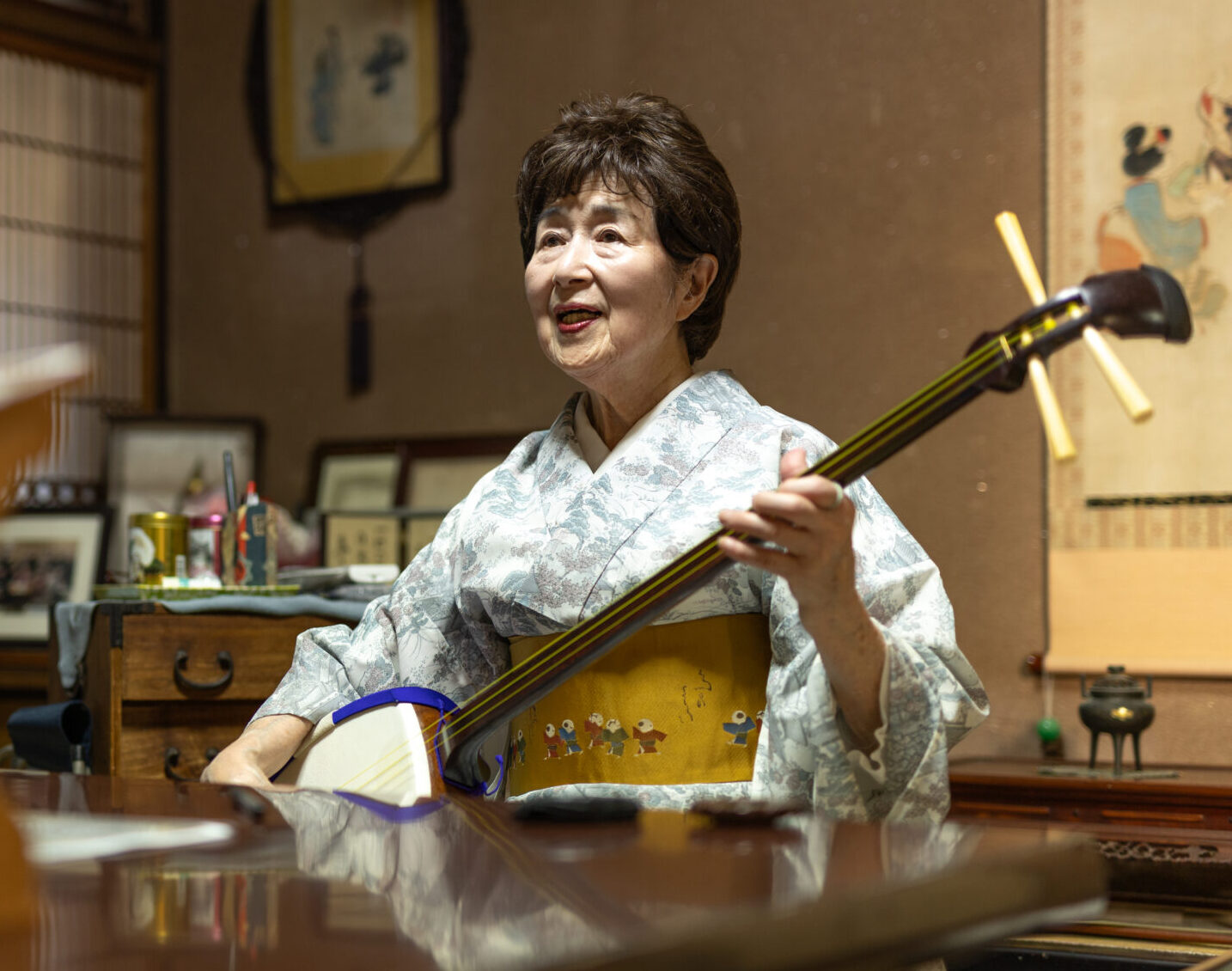
Born in Sakai City, Fukui Prefecture. Okami of hakuwasou, a long-established inn in Awara Onsen. As vice chair of the Awara Onsen Okami Association, she has long been involved in community revitalization and promotional efforts, as well as the development of the sake Okami since its earliest stages. With years of experience in the tea ceremony, she delivers heartfelt hospitality to guests each day—guided by the symbolic phrase of Awara Onsen, “OUR LOVE.”
Sake reflects the land, climate, and the people who shape it.
In Awara Onsen—Fukui Prefecture’s northern hot spring town, blessed with fine rice and pure water—the okami (female proprietors of traditional inns) cultivate their own sake rice and brew their own sake. Its name is Okami.
What began as a challenge to envision the future of the hot spring town gradually grew into something more—an emblem of hospitality expressed through a single cup.
We spoke with Kiyomi Tatsuo of the Awara Onsen Okami Association about the journey so far, and the meaning she places in the words at the heart of it all: “OUR LOVE.”
The Okami’s Challenge Entrusted to Them in Sake Country, Fukui
High-quality rice and water are essential to making sake. Across Japan, several regions that possess both conditions are known as sake-dokoro—renowned sake-producing areas—and Fukui is one of them.
As the birthplace of Koshihikari, Japan’s most widely grown rice variety, the fertile clay soils of the Fukui Plain have supported rice cultivation for centuries. The underground water flowing from sacred Mt. Hakusan—long revered as a mountain of worship—further enriches the land. With such exceptional rice and water, it is no surprise that more than twenty sake breweries stand in the region.
Among the many labels crafted in this environment, one stands out for its vivid story: Okami. This sake is brewed from rice grown by the okami of Awara Onsen themselves, from seedling to harvest, and completed through hands-on involvement in the brewing process.
“Around 2013, right before the opening of the Hokuriku Shinkansen, the prefecture suggested that we start an initiative unique to Awara Onsen—something that would appeal to the increase in visitors the new railway would bring. That initiative was for the okami of local inns to obtain certification as kikizakeshi (professional sake tasters).
To be honest, I wasn’t much of a drinker myself, so I was more bewildered than anything,”
says Kiyomi Tatsuo, okami of hakuwasou, a historic inn with more than half a century of history in Awara Onsen.
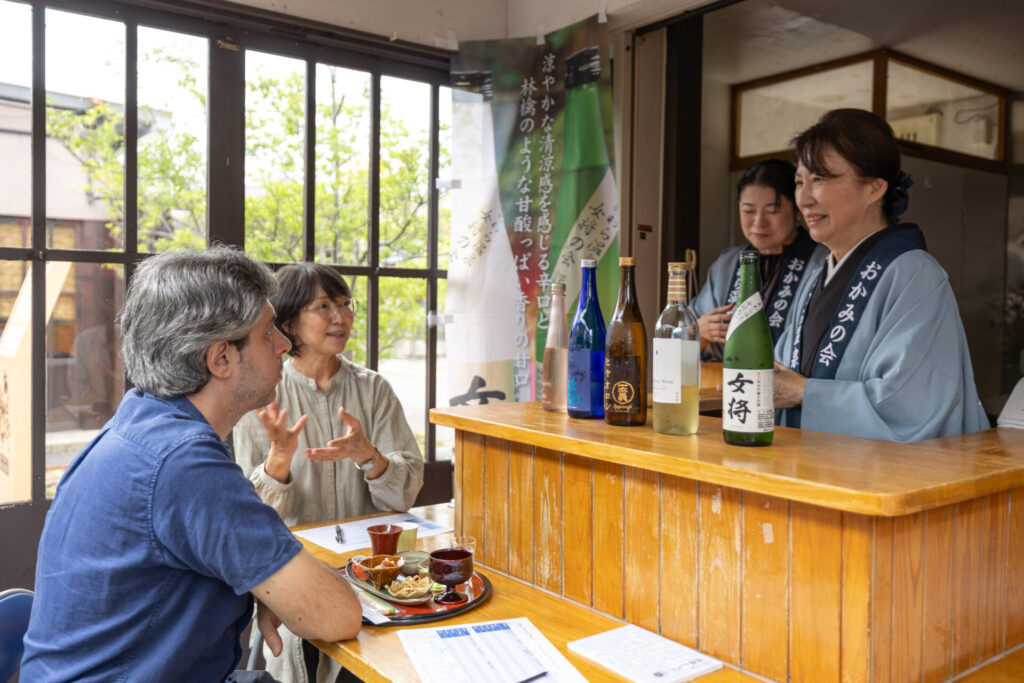
Married into the inn through fate and now serving as vice chair of the Okami Association, Tatsuo remembers the moment she and a dozen other okami were given the mission to pursue the demanding kikizakeshi qualification.
Despite knowing how difficult the challenge would be, they stepped forward with one shared wish: to bring as many visitors as possible to Awara Onsen.
“The Okami Association was formed about 35 years ago. It began as a place where okami could share concerns and support one another as women who sustain their inns. Soon, we also became mascots of sorts, helping promote Awara Onsen.
That experience made us start thinking about what we—in our position—could do to uplift the region.
Naturally, the association became more active in PR as well.”
With the future of the hot spring town in mind, they viewed the kikizakeshi qualification as another step they could take. So began months of studying thick textbooks late at night, after finishing their inn duties—starting from 11 p.m. onward.
Supporting one another through the challenge, the okami all passed. Their first major milestone had been reached.But the challenge did not end there.
The following year, they took an even bolder step: brewing their own sake.
What Kind of Sake Should They Create?
Arriving at Awara’s Blessings and Its Original Landscape**
Awara Onsen first opened during the Meiji era in 1883. The hot spring’s origins lie in an attempt by local farmers—struggling through a severe drought—to dig wells in search of water for their fields. When hot water unexpectedly gushed forth, word spread quickly, attracting visitors from surrounding areas and transforming Awara into a flourishing retreat once known as “the back parlor of Kansai.”
One of Awara’s defining features is its abundance of hot spring sources—seventy-four in total. The springs are not centrally managed; instead, each inn secures its own unique source, allowing guests to experience differing mineral qualities and therapeutic effects.
Yet for many years, Awara’s visitor base remained mostly local, as transportation to the Hokuriku region was limited. It was during a period of uncertainty—when the community was searching for ways to revitalize the hot spring town—that news arrived of the Hokuriku Shinkansen’s future opening.
From there, the Okami Sake Project began to take shape.
Fukui is a renowned sake-producing region, so what kind of sake could embody the spirit of the okami themselves—distinct from existing brews?
Tatsuo recalls that defining this concept was the greatest challenge.
“We first needed to ask ourselves:
What message do we want to convey through a sake we create with our own hands?
To explore that question, we visited Eiheiji Temple, the head temple of Soto Zen Buddhism. Through zazen, shojin cuisine, and exposure to Zen teachings, we realized just how deeply we are blessed by nature.
Rice and water—the fundamental ingredients of sake.
We wanted to craft a sake that allows people to truly taste the richness of this land. And if we could achieve that, then the locally sourced dishes we serve at our inns would become even more flavorful and meaningful.”
The okami did not stop at concept-building—they took part in growing the sake rice themselves.
In May, they stepped into the paddies and planted seedlings, unsteady on the soft mud. Throughout the summer, they visited the fields between their inn duties to monitor growth. In October, as the golden heads of rice ripened, they harvested the fields with sickles in hand.
Then came the work inside the brewery: cultivating koji, conducting the traditional three-step mashing process, and participating in the pressing of the finished sake. They were involved in every step.
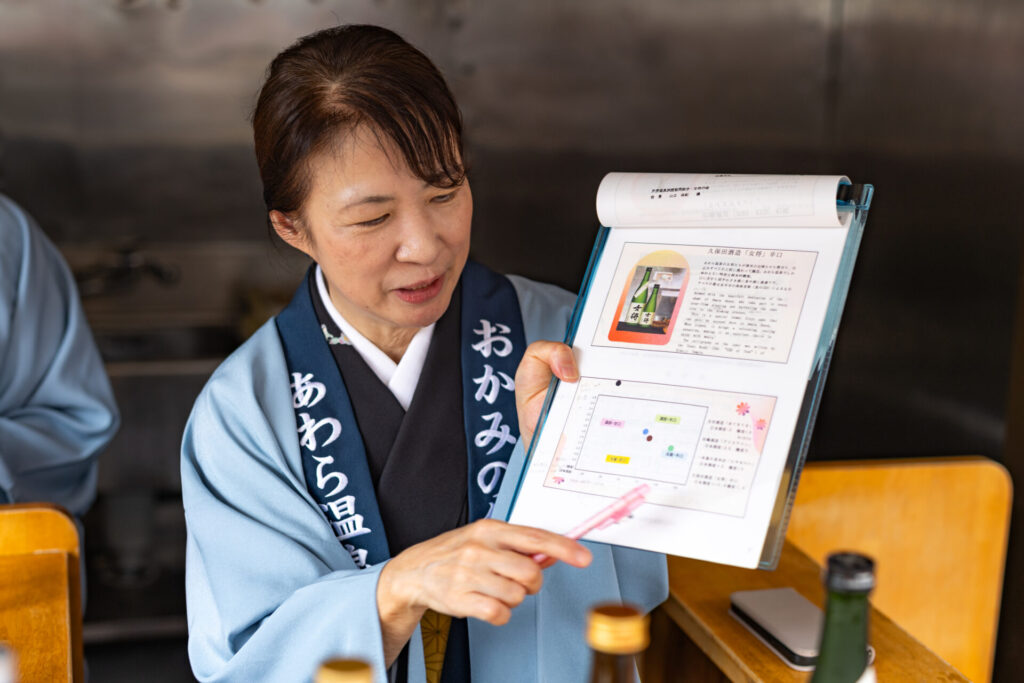
“Our kikizakeshi training was incredibly helpful. Because we already understood the overall brewing process, we were able to work with confidence. In 2015, we finally released the first batch: Okami, a junmai ginjo namachozo sake.
But this sake is not something we created alone. It exists thanks to Kubota Brewery, who guided us through the brewing; the farmers who provided the rice fields; and the team at the Sakai Agricultural and Forestry Office, who supported the project at every stage.
Our gratitude for their cooperation has never changed.”
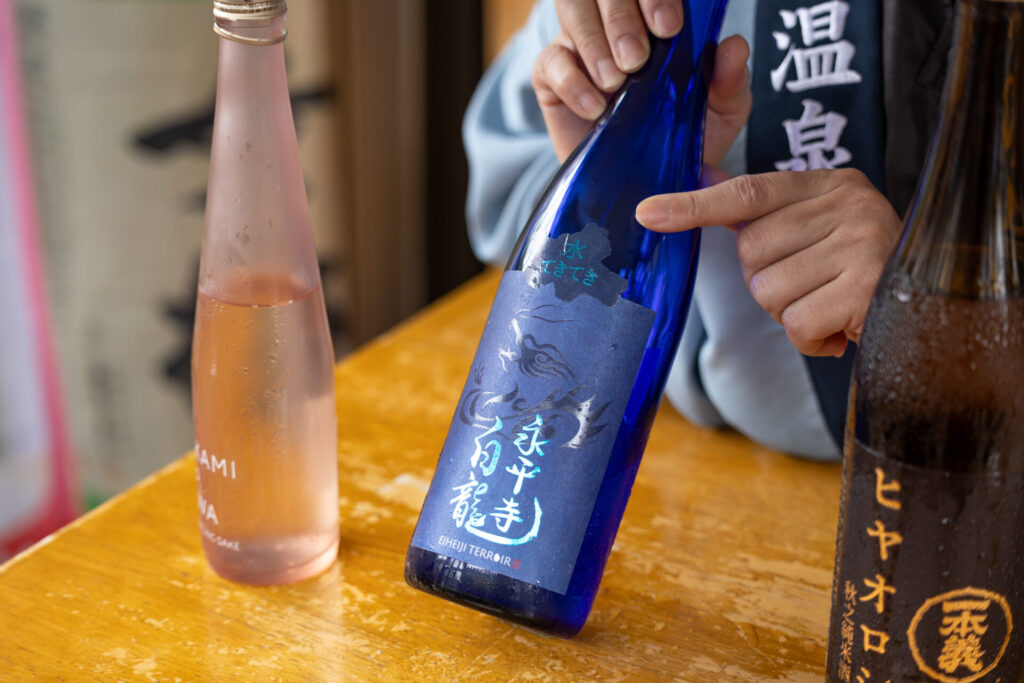
More than ten years have passed since then.
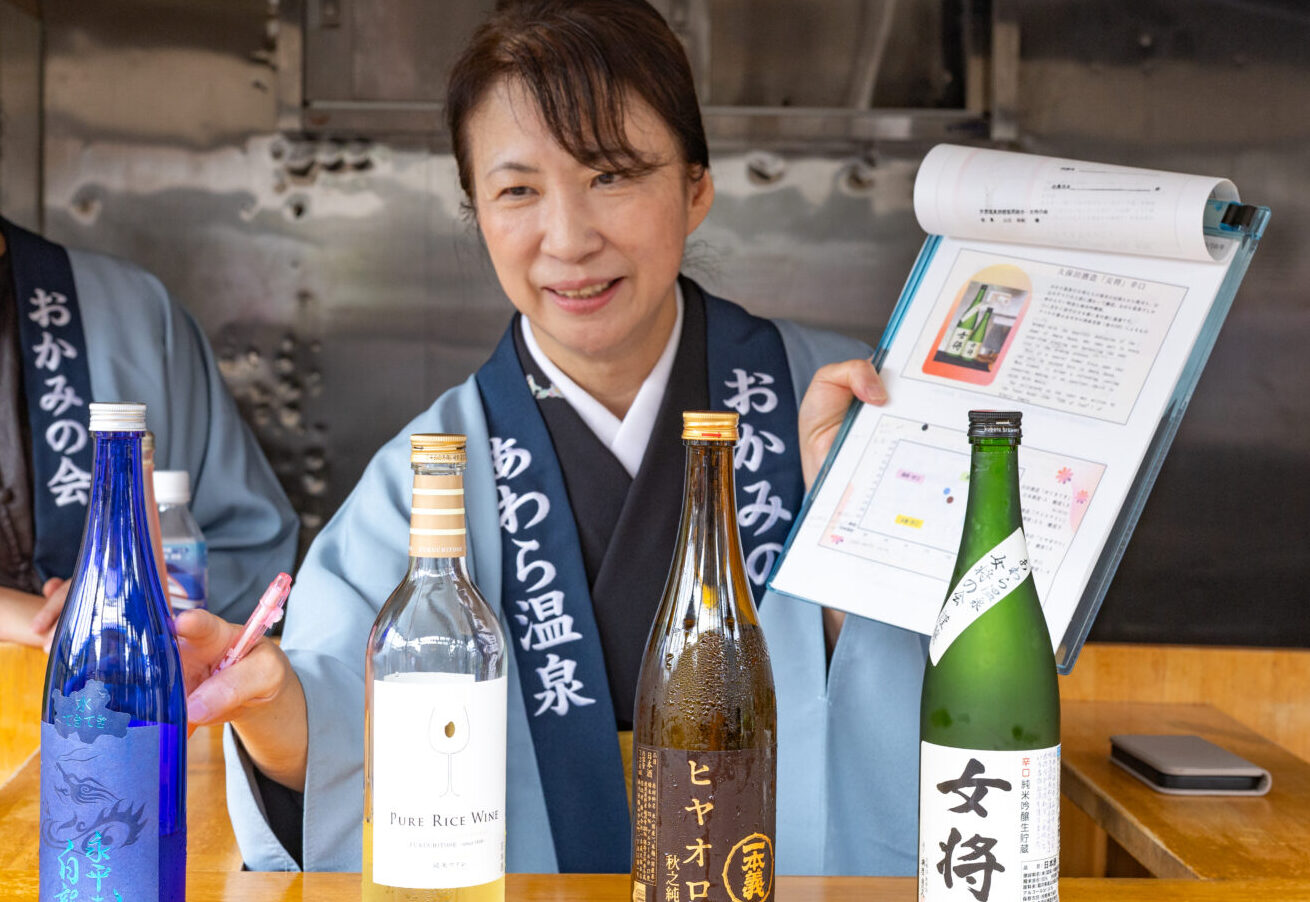
Today, the okami produce about 6,000 bottles a year across three varieties—dry, sweet, and sparkling.The dry type features a grapefruit-like aroma with a crisp, refreshing finish, highly regarded by seasoned sake drinkers.
The sweet type carries notes of green apple, gentle sweetness, and soft acidity, with a lower alcohol content that appeals especially to women.
The sparkling variation, OKAMI NO AWA, blends the sweet version with carbonation, earning praise as an elegant aperitif.
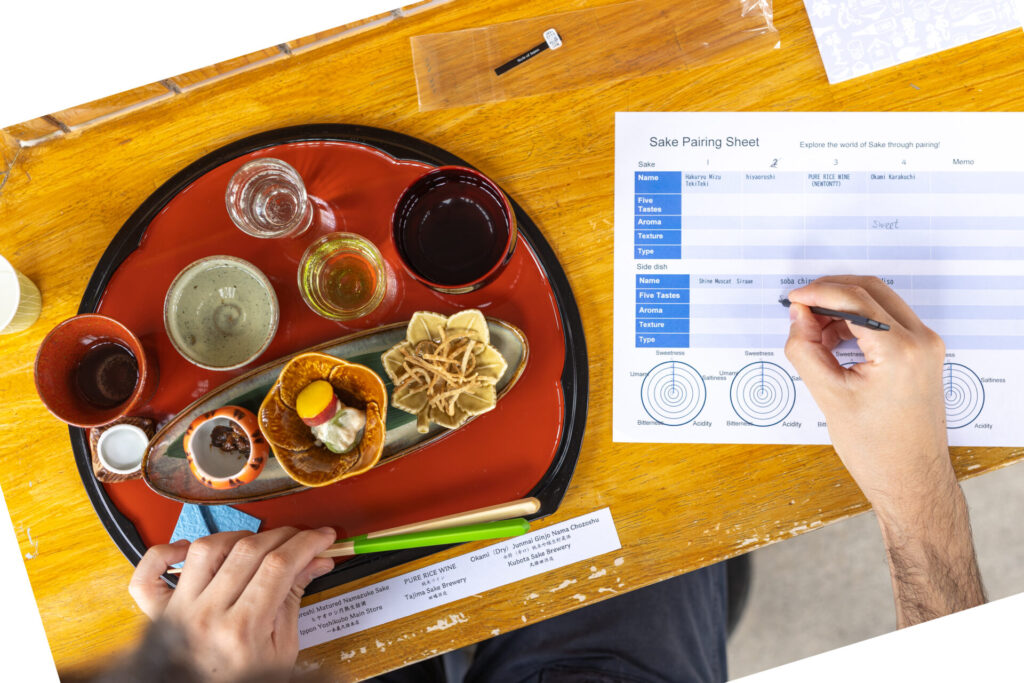
Now, visitors can enjoy these brews through curated tasting experiences.
Guests sample Okami alongside other local sakes, comparing aromas and flavors using different styles of ochoko cups. They also enjoy pairings with fermented foods traditional to the region.
A highlight is the “Okami no Maroyaka Heshiko”—made by desalting and finishing traditional heshiko fish using Okami sake lees. The pairing is so harmonious that many participants fall silent the moment they taste it.
“What I want people to feel through Okami is the original landscape of this place—the endless rice fields, the quiet murmur of the nearby river.
If these scenes come to mind as you drink it, nothing would make me happier.
That’s why we only serve Okami here in Awara Onsen—it belongs to this land.”
Every sake reflects the character of the land where it is brewed, and behind each cup lies a story.
In fishing towns, robust sake revived fishermen returning from the sea; in warm regions, gentle sake mirrored the climate.
The deeper we connect with a sake’s background, the more profoundly each sip resonates.
“OUR LOVE”: The Hospitality at the Heart of This Sake
The journey of more than a decade was far from smooth.
In the early years, both rice farming and sake brewing were entirely new to the okami. Some skeptics remarked that “it might last five years at best.” Balancing the project with their demanding inn responsibilities brought constant challenges.
And then came the pandemic, when tourism vanished almost overnight, casting doubt on the project’s very survival.
“Countless times, we were saved by the encouragement we received—
‘You okami are doing such a wonderful job.’
No matter the circumstances, we wanted to honor those words. We wanted to welcome our guests wholeheartedly.
I believe it was that feeling that allowed us to keep going.”
The spirit that encapsulates this heartfelt hospitality is the phrase “OUR LOVE.”
Born a few years ago, the phrase—often accompanied by the gesture of forming a heart with one’s hands—has begun to take root as a symbol of Awara Onsen.
At each inn, the okami dedicate themselves to offering the finest hospitality, while also devoting serious effort to sake brewing. At the foundation of all their actions lies their love for Awara—OUR LOVE.
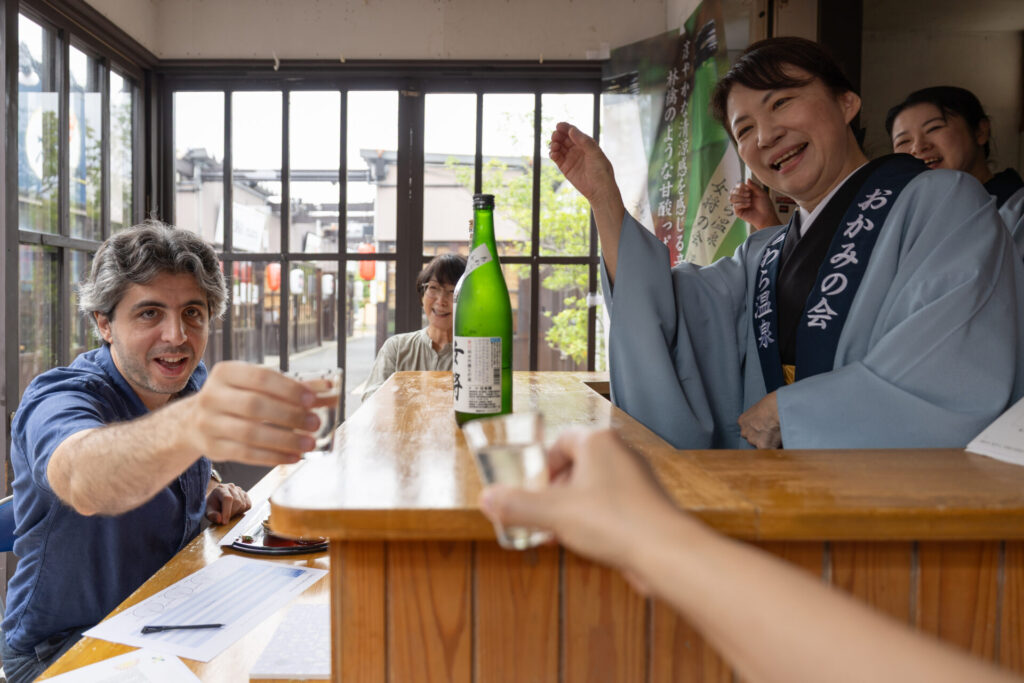
“Originally, Okami was simply a tool to encourage people to visit Awara Onsen.
But now, I can proudly say it is a sake that expresses our shared spirit of hospitality.
It truly embodies OUR LOVE.”
Overcoming hardships year after year, the okami poured not only time and labor into this sake, but also their determination and profound affection for the land.
What Do We Wish to Pass On to the Future?
Finally, we asked Tatsuo what she hopes to carry into the future.
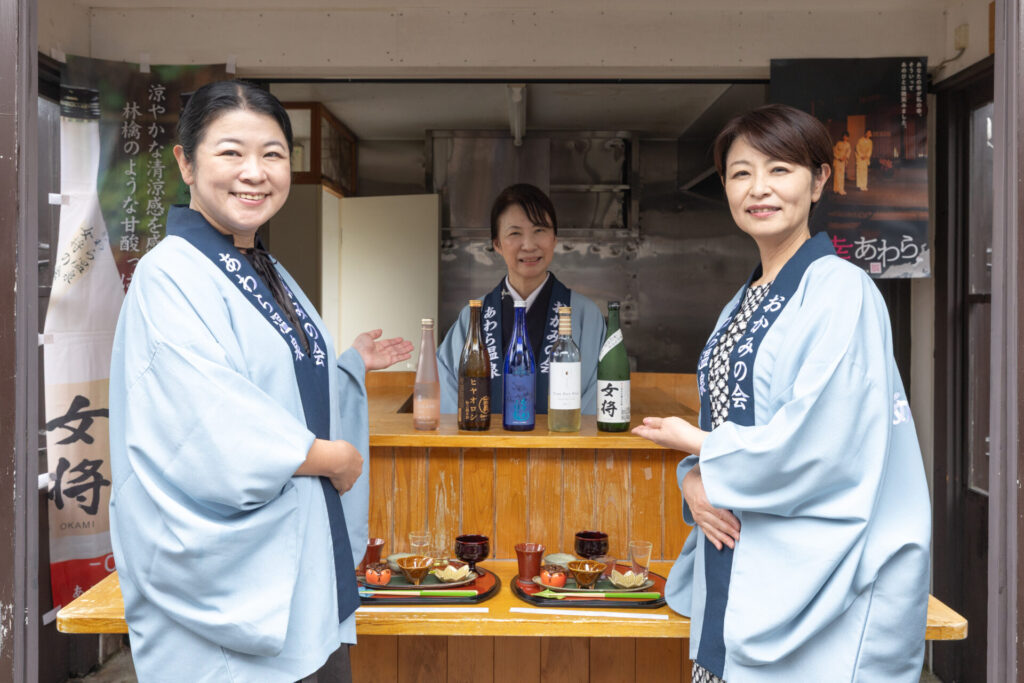
“Let me see… perhaps the heart,
the heart that loves Awara— ‘OUR LOVE.’
Whether it’s the sake Okami or the future of Awara Onsen itself, this spirit is essential.
If we can continue to share that, I believe the love for Awara will naturally spread to our guests as well.”
To Tatsuo, Okami is like a part of herself.
For more than a decade, she has tended to the rice each year and devoted herself to brewing with sincerity. Through that steady journey, a quiet yet unwavering pride has taken root within her.
“Actually, today is the wake for my tea ceremony master.
She was the person who taught me the very foundation of hospitality.
She also watched over the growth of Okami for many years.”
When you take a sip of Okami, you sense the hearts of Tatsuo and the other okami.
You feel the support of those who helped bring the sake into the world.
And you feel the joy of those who look forward to its arrival each year.Sake is born from human hands—and human hearts.
Here in Awara Onsen, a sake that can be savored nowhere else continues to be passed lovingly into the future.